
What Are the Top Industrial Process Automation Companies?
Industrial process automation keeps factories, refineries, water plants, and food-production lines running with greater consistency. Sensors track pressure and temperature. Controllers adjust pumps, valves, and motors in seconds. Yet choosing an automation partner is not as simple as comparing product lists. A plant needs equipment that fits its processes, works with existing systems, and can be supported over time. The right choice may look different for a packaging line than for a chemical facility.
Quality-management expert W. Edwards Deming offered a useful warning: “A bad system will beat a good person every time.” His words are not a ranking of automation vendors, but they capture why system design and execution matter. This article examines leading companies, including Siemens, Rockwell Automation, ABB, Schneider Electric, Emerson, and Honeywell, and considers their strengths across control platforms, industrial software, instrumentation, and lifecycle services. Readers will find practical points to compare, from integration capabilities to the realities of maintenance and operator training. Small details count. A clear alarm on a control-room screen can matter as much as a sophisticated analytics platform. Still, no comparison is perfectly neat: product portfolios overlap, and regional support can change the experience. The goal is not to declare one universal winner, but to help readers identify which provider may fit their operational needs.
What Industrial Process Automation Companies Do
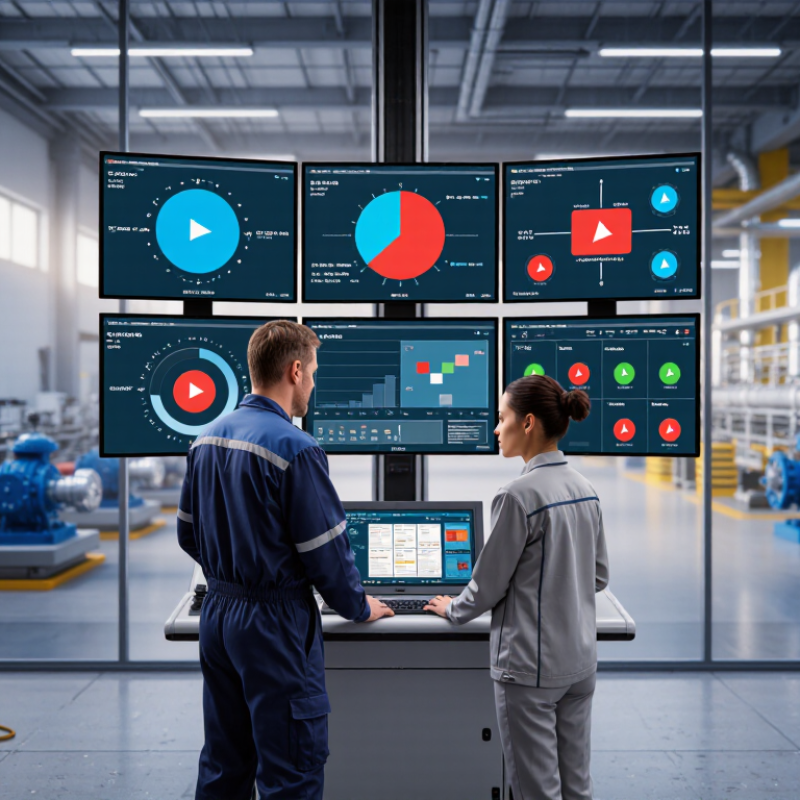
Industrial process automation companies help plants control equipment and keep production steady. Their work connects sensors, controllers, software, and machinery into one operating system. A temperature sensor may detect a rising tank temperature, while a controller adjusts a valve before product quality shifts. Small details count.
Teams typically study the process, select suitable control hardware, and configure alarms, data displays, and operating sequences. They may also link production equipment with maintenance or planning systems. In a packaging line, for example, automation can coordinate conveyors, filling machines, and safety stops. Operators still need clear screens and practical training; complex controls can make a routine fault harder to diagnose.
Installation is only part of the job. Engineers test sequences, verify sensor readings, and check how equipment responds to faults before a system enters regular use. They often document settings and train plant staff to handle common issues. The imperfect part is often the process itself: old equipment, incomplete records, or inconsistent procedures can limit what new controls achieve. A careful team identifies those gaps instead of promising that software alone will fix them. It matters. Ongoing support may include reviewing alarms, updating control logic, and helping staff understand changes without disrupting production.
What Are the Top Industrial Process Automation Companies? — What Industrial Process Automation Companies Do
| Automation Capability | What It Does | Typical Technologies | Common Applications |
|---|---|---|---|
| Distributed Control Systems | Monitor and control complex, continuous industrial processes through coordinated controllers, operator stations, and field equipment. | Process controllers, operator consoles, control networks, alarms, and engineering tools | Chemical production, power generation, refining, and water treatment |
| Programmable Logic Control | Execute reliable, real-time control logic for machines, equipment, and discrete or sequential operations. | Programmable controllers, input/output modules, sensors, actuators, and human-machine interfaces | Packaging lines, material handling, machine control, and production equipment |
| Supervisory Control and Data Acquisition | Collect operational data from geographically distributed assets and provide centralized monitoring, alarms, and supervisory control. | Remote terminal units, communications networks, operator displays, and historian software | Pipelines, electrical utilities, water networks, and remote facilities |
| Safety Instrumented Systems | Detect hazardous conditions and initiate defined protective actions to help reduce process risk. | Safety controllers, sensors, final control elements, and safety lifecycle tools | Process plants, offshore facilities, and other safety-critical operations |
| Manufacturing Operations Management | Coordinate and record production activities, including work orders, quality checks, material use, and production performance. | Manufacturing execution software, production tracking, quality management, and plant data systems | Discrete manufacturing, food and beverage, pharmaceuticals, and consumer goods |
| Industrial Instrumentation | Measure process conditions and provide control outputs so operators and automation systems can manage equipment and product conditions. | Pressure, temperature, flow, and level instruments; analytical sensors; and control valves | Process measurement and control across manufacturing and infrastructure facilities |
| Industrial Data and Analytics | Organize operational data to support performance monitoring, troubleshooting, maintenance planning, and process improvement. | Data historians, dashboards, condition monitoring, and analytics software | Asset performance programs, energy monitoring, and production optimization |
| System Integration and Lifecycle Services | Design, connect, test, and maintain automation systems, including interfaces between control equipment and business or plant applications. | Control system engineering, network integration, commissioning, cybersecurity support, and maintenance services | New plant projects, system upgrades, equipment integration, and ongoing operations |
Related Posts
-
China Top Industrial Control Systems Suppliers?
-
What Are the 10 Best Tips for Industrial Process Automation?
-

What Are Process Automation Projects?
-
China Top Automatic Control Systems Manufacturers?
-
10 Best Automatic Control Systems for Global Buyers?
-
China Top Industrial Automation Solutions Manufacturers