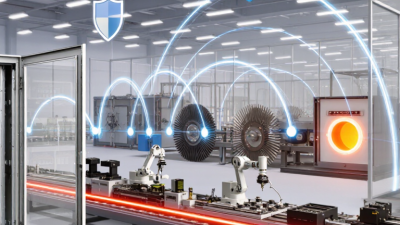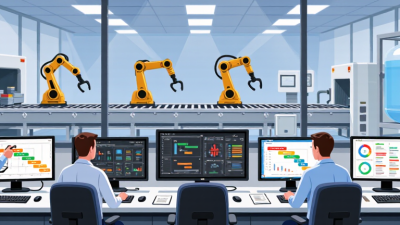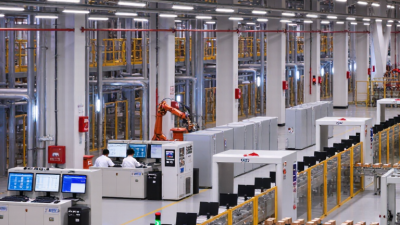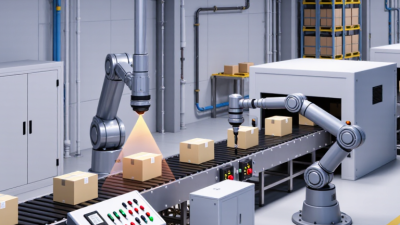
China’s industrial control sector sits at the intersection of factory automation, software, and precision hardware. Its manufacturers supply programmable logic controllers, drives, sensors, and supervisory systems for production lines. In a real plant, these components coordinate conveyor speeds, monitor motor temperatures, and help operators respond to alarms. The details matter: reliable support and long-term compatibility can be as important as headline specifications.
The International Federation of Robotics’ World Robotics 2024 report recorded 276,288 industrial robot installations in China during 2023, about 51% of global installations. The figure measures robot deployments, not the industrial control market itself. Still, it shows the scale of the automated production environment that control suppliers serve. IFR President Marina Bill observed, “The global trend towards automation and robotisation is continuing unabated.” That perspective helps frame the demand, though robotics growth alone cannot predict which control manufacturers will succeed.
This overview compares leading industrial control manufacturers in China through product focus, application experience, technical capability, and service reach. It also considers how domestic suppliers compete alongside established international brands. The comparison is not perfectly tidy. Public disclosures differ, and vendor claims do not always use the same performance measures. Buyers should verify specifications, integration requirements, and local support for each project. A strong shortlist starts with evidence, not slogans.
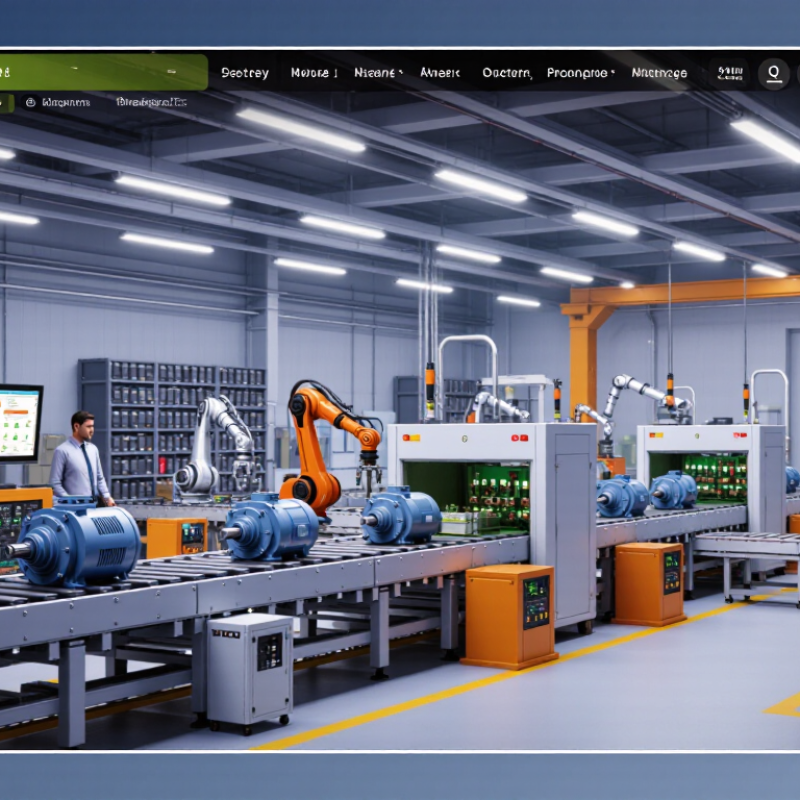
Industrial control in China brings together programmable logic controllers, sensors, drives, human-machine interfaces, and industrial networks. These components coordinate equipment and help operators monitor production conditions. At a packaging line, a photoelectric sensor can detect a carton, while a controller times a conveyor and signals the next station. Small details matter. A poorly placed sensor or noisy signal can cause repeated stoppages.
IEC 61131-3 provides a common framework for PLC programming. It describes languages including ladder diagram, function block diagram, structured text, and sequential function chart. Teams often choose ladder logic for clear interlocks and structured text for calculations or data handling. The best choice depends on the task and the people who will maintain it. Shared conventions help, but they do not guarantee readable code.
Applications range from water treatment and material handling to machine tools and building systems. Before specifying equipment, engineers should check I/O capacity, response time, network compatibility, environmental conditions, and available maintenance skills. Test sequences should include sensor faults and communication loss, not just normal operation. There is no perfect design. In practice, documentation can lag behind a hurried change, and that weakness deserves honest review. Regular backups, version records, and careful commissioning make troubleshooting more reliable.
Top Industrial Control Manufacturers in China
China’s Automation Demand: 276,288 Robot Installations in 2023 (IFR)
China installed 276,288 industrial robots in 2023, according to the International Federation of Robotics’ World Robotics 2024 report. That represented about 51% of global installations. The scale is striking. IFR also reported that China’s operational industrial robot stock reached approximately 1.76 million units.
These figures point to sustained demand for the control systems behind automated production: programmable controllers, drives, sensors, and motion-control equipment. On a factory floor, that demand can mean more robotic welding cells, faster packaging lines, and tighter coordination between machines. For industrial control manufacturers, reliable integration matters as much as component performance. A robot may move precisely, but a poorly tuned line can still produce bottlenecks or inconsistent output.
Robot installations are only one measure of automation, not a complete picture of factory investment. They do not show how efficiently each system is used, or how much older equipment remains in service. That distinction is easy to overlook. IFR’s figures are a useful benchmark, but companies should assess local production needs, maintenance capacity, and integration costs before drawing conclusions from national totals. The data is impressive; it is not the whole story.
China installed 276,288 industrial robots in 2023, about 5% fewer than in 2022.
Source: International Federation of Robotics (IFR), World Robotics 2024.
China’s industrial-control manufacturers serve several distinct segments: programmable logic controllers (PLCs), distributed control systems (DCS), CNC systems, servo drives, and motion controllers. PLCs suit machine-level tasks, such as coordinating sensors and conveyor motors. DCS platforms manage continuous processes across larger facilities. MarketsandMarkets’ PLC Market report estimated a global market of $11.2 billion in 2023 and projected $15.2 billion by 2028. That figure is a forecast, not a confirmed outcome. DCS selection depends on process complexity, redundancy needs, and how operators monitor alarms.
CNC manufacturers focus on precise machine-tool coordination, while servo and motion-control suppliers handle speed, torque, and axis positioning. A small servo-tuning error can leave visible marks on a machined part. IFR’s World Robotics 2024 reported 541,302 industrial robot installations worldwide in 2023. This is not a measure of China’s control-equipment sales, but it signals the scale of automation that control systems must support. Scale matters. Yet compatibility and commissioning quality can matter just as much.
Tips: Compare controller cycle time, supported communication protocols, spare-parts access, and local engineering support. Ask suppliers to demonstrate performance using your actual motor, load, and operating cycle. A datasheet may look convincing; a factory-floor test is more revealing. Be candid about integration limits, because even a capable controller may need careful tuning.
China’s industrial-control suppliers serve different factory needs. One major group focuses on variable-frequency drives and servo systems, where stable torque and quick response matter on packaging lines. Another specializes in process automation, connecting controllers, instruments, and operator stations across chemical plants. A third brings experience in distributed control and rail-related systems. The fourth is known for motion control and industrial robotics. These profiles are not interchangeable. Demand is substantial.
Buyers should compare more than catalog specifications. Check local service coverage, spare-part lead times, controller compatibility, and commissioning support. In a real plant, a drive that stops a conveyor for hours can cost more than a small price difference. Ask suppliers for test records under comparable loads, plus clear warranty and software-update terms. Public data rarely offers a consistent, audited comparison of these four suppliers’ control-system revenue or failure rates. That is a real limitation. Vendor claims can also emphasize different metrics, so procurement teams should verify performance through site references and controlled trials.
When comparing industrial control manufacturers in China, start with standards and evidence, not catalogue size. Check whether programmable controllers follow IEC 61131-3 and whether cybersecurity practices align with relevant IEC 62443 requirements. Ask for current certificates, test scopes, and product-specific documentation. A company-level statement is not proof that every device is certified. Details matter.
Product coverage should match the actual line: controllers, operator panels, drives, I/O modules, and safety components need to work together. The International Federation of Robotics reported that China installed 276,288 industrial robots in 2023, about 51% of global installations, in World Robotics 2024. That scale makes integration and lifecycle planning important. Ask for compatibility lists, spare-parts availability, firmware policies, and sample wiring diagrams. A broad range can still hide gaps.
Support is practical. Request response-time commitments, commissioning assistance, local-language manuals, and a clear escalation path. Test these claims with a technical question before ordering; note how quickly the team responds and whether its answer is specific. Ask for a reference installation with similar operating conditions, such as dust, vibration, or temperature swings. A polished presentation is reassuring, but it does not reveal how support performs at 2 a.m. I would still verify service coverage in writing.
| Cookie | Duration | Description |
|---|---|---|
| cookielawinfo-checkbox-analytics | 11 months | This cookie is set by GDPR Cookie Consent plugin. The cookie is used to store the user consent for the cookies in the category "Analytics". |
| cookielawinfo-checkbox-functional | 11 months | The cookie is set by GDPR cookie consent to record the user consent for the cookies in the category "Functional". |
| cookielawinfo-checkbox-necessary | 11 months | This cookie is set by GDPR Cookie Consent plugin. The cookies is used to store the user consent for the cookies in the category "Necessary". |
| cookielawinfo-checkbox-others | 11 months | This cookie is set by GDPR Cookie Consent plugin. The cookie is used to store the user consent for the cookies in the category "Other. |
| cookielawinfo-checkbox-performance | 11 months | This cookie is set by GDPR Cookie Consent plugin. The cookie is used to store the user consent for the cookies in the category "Performance". |
| viewed_cookie_policy | 11 months | The cookie is set by the GDPR Cookie Consent plugin and is used to store whether or not user has consented to the use of cookies. It does not store any personal data. |