Best Industrial Control Manufacturers in China

China’s industrial control sector serves factories where a brief stoppage can disrupt an entire production line. Buyers comparing manufacturers need more than product catalogs. They need evidence of stable performance, compatible components, clear documentation, and dependable technical support.

Automation demand is substantial. The International Federation of Robotics reported 276,288 industrial robot installations in China in 2023, representing 51% of global installations that year (World Robotics 2024). Robots are only one part of factory automation, but the figure signals the scale of the market surrounding industrial control systems. That matters.

This guide examines Chinese manufacturers across key areas, including programmable logic controllers, variable-frequency drives, human-machine interfaces, motion control, and industrial networking. It considers product range, engineering capability, service coverage, and suitability for different factory environments. These factors deserve close attention. A low purchase price may look attractive, yet commissioning time, spare-part access, and long-term maintenance also shape the real cost. A polished catalog is not proof of field reliability. Still, public information rarely tells the whole story; buyers should verify specifications and support directly before making a shortlist. The manufacturers featured here offer a starting point for that assessment, not a substitute for project-specific evaluation.
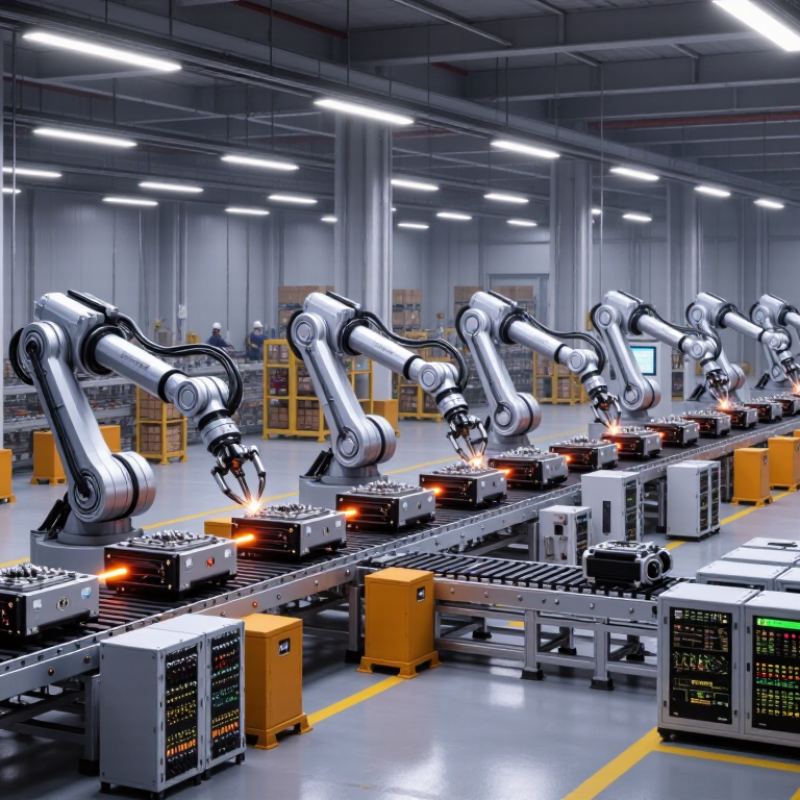
Best Industrial Control Manufacturers in China

Defining Industrial Control Manufacturing in China

Industrial control manufacturing in China covers the design, assembly, testing, and support of systems that coordinate machines and production lines. Products can include programmable controllers, variable-frequency drives, sensors, operator panels, communication modules, and control cabinets. Inside a cabinet, wiring, heat management, grounding, and clear labels all affect reliable operation. Small details matter. A controller that works on a test bench may behave differently when exposed to vibration, electrical noise, or a hot factory floor.

China’s automation environment is substantial: the International Federation of Robotics reported 276,288 industrial robot installations in China in 2023, equal to 51% of global installations that year, in World Robotics 2024. This figure describes robot installations, not the size or quality of the industrial control manufacturing sector. It does, however, show the scale of equipment that control systems may need to connect and manage.

When assessing a manufacturer, examine test records, component traceability, communication compatibility, and after-sales engineering support. Ask how products are tested under realistic operating conditions.

A polished factory can still have uneven documentation; that gap deserves attention. Good engineering is not always visible in a brochure.

Key Technologies and Product Categories

China’s industrial control manufacturers cover a broad range of technologies, from programmable logic controllers (PLCs) and distributed control systems to human-machine interfaces (HMIs). PLCs handle repeatable machine sequences, while DCS platforms coordinate processes across larger facilities. HMIs turn operating data into clear alarms, trends, and control screens. Good design is practical. An operator should be able to spot a fault without searching through crowded menus.

Product categories also include variable-frequency drives, servo systems, remote I/O modules, industrial sensors, and safety controllers. Drives regulate motor speed; servo systems support precise positioning on packaging or assembly lines. Compatibility matters: check support for common industrial communication protocols, response times, and integration with existing equipment. In a control cabinet, heat, vibration, and electrical noise can expose weaknesses that a catalogue cannot show. Specifications do not tell the whole story.

When comparing suppliers, review test documentation, technical support, spare-part availability, and firmware update practices. Ask how products perform during network interruptions and whether diagnostic logs are easy to export. A low-cost controller may fit a simple machine, but complex processes need careful validation. Some documentation can be uneven; that deserves attention, not assumption. A pilot installation often reveals wiring, usability, or integration problems before wider deployment.

Criteria for Evaluating Industrial Control Manufacturers

Best Industrial Control Manufacturers in China

Criteria for Evaluating Industrial Control Manufacturers

A reliable evaluation starts with evidence, not a polished brochure. The International Federation of Robotics reported 276,288 industrial robots installed in China in 2023, representing 51% of global installations. This scale makes dependable controls, integration, and technical support especially important. Ask manufacturers for test records from applications similar to yours, including response times, alarm handling, and performance under electrical noise. A short live demonstration can reveal more than a catalog.

Check component traceability, quality-control procedures, software update policies, and the availability of replacement parts. Request clear documentation for commissioning and troubleshooting. Compare warranty terms and service response commitments, including support outside major cities. For safety and cybersecurity, ask how products address applicable standards and how vulnerabilities are reported and patched. Verify claims against dated documents. One awkward detail: published uptime figures may come from very different operating conditions, so they are not always comparable.

Tips: Bring a real wiring diagram and a sample fault scenario to supplier meetings. Ask the engineering team to explain its response step by step. Keep the scoring simple, but leave room for judgment; no checklist captures every factory’s constraints.

Profiles of Leading Chinese Industrial Control Manufacturers

Chinese industrial control manufacturers serve factories that need programmable logic controllers, human-machine interfaces, servo drives, and motion-control systems. Their product ranges differ: some focus on compact components for packaging lines, while others build broader automation platforms for process plants. A useful profile looks beyond catalog size. It examines engineering support, product testing, and how clearly technical documentation explains installation and troubleshooting.

One group specializes in core control hardware. Its strengths may include practical PLC configurations, readable interface screens, and drive units designed for frequent production changes. Another group combines control equipment with software integration and system commissioning. That can help when a plant needs several machines to share operating data. Details matter: ask how products handle cabinet heat, electrical noise, and repeated start-stop cycles. These conditions are easy to overlook in a polished brochure.

Manufacturing scale can support shorter lead times and responsive customization, but capacity alone does not prove reliability. Request test records, sample manuals, and references from comparable applications. Check how firmware updates are managed and whether spare parts remain available. The picture is uneven. A strong factory profile may still leave questions about long-term service or overseas support; buyers should verify those points directly rather than assume every supplier offers the same depth.

Best Industrial Control Manufacturers in China - Profiles of Leading Chinese Industrial Control Manufacturers
Anonymous Capability Profile Core Product Focus Typical System Role Relevant Standards and Protocols Common Application Areas Evaluation Points for Buyers
PLC, PAC, and Remote I/O Programmable controllers, modular I/O, distributed I/O, and engineering software. Executes machine or line logic and connects sensors, actuators, and operator interfaces. IEC 61131-3 defines programming languages for programmable controllers. Industrial Ethernet and fieldbus options vary by product. Packaging, material handling, machinery, water treatment, and production lines. Check I/O capacity, scan and communication requirements, environmental ratings, programming-tool support, and availability of technical documentation.
Variable-Frequency Drives and Servo Motion AC drives, servo drives, motors, motion controllers, and related commissioning tools. Controls motor speed, torque, positioning, and coordinated machine movement. IEC 61800-5-1 covers safety requirements for adjustable-speed electrical power drive systems. Motion-network and feedback compatibility should be verified for each application. Pumps, fans, conveyors, machine tools, textile equipment, and automated assembly. Confirm motor compatibility, power and overload requirements, braking needs, control interfaces, EMC conditions, and applicable safety functions.
HMI, SCADA, and Industrial Computing Operator panels, supervisory software, industrial PCs, data collection, and visualization tools. Provides operator interaction, alarm handling, process visualization, and operational data access. IEC 62541 specifies the OPC UA architecture. IEC 62443 is a series of standards addressing cybersecurity for industrial automation and control systems. Factory monitoring, utilities, equipment supervision, and multi-station production operations. Assess supported controller interfaces, user and access controls, backup and recovery, software lifecycle, and data-export requirements.
Process Control and DCS Distributed controllers, process I/O, operator stations, engineering systems, and process-control software. Coordinates continuous or batch processes across multiple control loops and operating areas. OPC UA (IEC 62541) can support interoperable data exchange. IEC 61511 addresses safety instrumented systems in the process industry; it is not a general DCS product certification. Chemicals, power and utilities, water and wastewater, and other process industries. Review redundancy design, control-loop requirements, system integration, alarm management, lifecycle support, and separation between basic control and safety functions.
Safety Control and Industrial Networking Safety controllers, safety I/O, industrial switches, gateways, and communication infrastructure. Supports risk-reduction functions and connects control devices across machines or production systems. IEC 61508 provides a general functional-safety framework. IEC 61158 and IEC 61784 cover industrial communication networks and profiles. Verify the exact protocol and safety scope of each product. Machine guarding, emergency-stop systems, production-cell networking, and plant-floor communications. Check required safety integrity or performance targets, certificates and their scope, network topology, interoperability, diagnostics, and cybersecurity practices.

These entries are anonymized capability profiles, not named companies, brands, rankings, or claims about any specific manufacturer. Standards and protocols are included as selection references; verify current editions and product-specific compliance with the supplier.

Industries and Applications Served by These Manufacturers

Industrial control manufacturers in China serve automotive, electronics, food processing, chemicals, water treatment, and power industries. Their systems coordinate sensors, programmable controllers, drives, and safety equipment. On an automotive line, they may synchronize robot cells and conveyors; in food plants, they can regulate mixing temperatures and packaging speeds. The International Federation of Robotics reported 541,302 industrial robot installations worldwide in 2023, with Asia accounting for 70%. That matters. It signals strong regional demand for reliable control and integration.

Energy-intensive sectors also depend on process controls to reduce waste and keep production stable. The International Energy Agency estimated that industry used about 37% of global final energy in 2022. That makes motor control, temperature measurement, and energy monitoring practical priorities.

Not everywhere. A modern control platform cannot compensate for a poorly calibrated sensor or an undocumented legacy machine. Manufacturers and plant teams still need to test equipment under real operating conditions, including dust, vibration, and shift changes. A dashboard may look precise, yet operators know where readings drift. Automation helps most when it fits the process, the maintenance skills, and the actual production floor.