Top Industrial Automation Solutions for Global Buyers
Global manufacturers are rethinking production as labor shortages, energy costs, and supply disruptions reshape industrial priorities. The right industrial automation solutions can connect machines, people, and data across factories, warehouses, and distribution networks. Yet automation is not a magic switch. It is a measured investment.
Joseph F. Engelberger, widely recognized as the father of industrial robotics, said, “The goal of automation is to make work more productive, not to eliminate people.” This principle still matters. A robotic palletizer may reduce repetitive lifting, while sensors can identify temperature changes before equipment fails. However, these gains depend on accurate data, trained operators, secure networks, and practical maintenance plans.
Global buyers should examine more than machine speed or purchase price. They need scalable controls, open communication protocols, strong cybersecurity, and documented safety features. Regional service coverage also matters when a production line stops at midnight. Standards, certifications, workforce skills, and local regulations can influence the final decision. A system that performs well in Germany may need changes for a plant in Brazil, India, or the United States.
The strongest industrial automation solutions usually combine robotics, programmable logic controllers, industrial Internet of Things platforms, machine vision, and analytics. Integration remains difficult. Sometimes, a simpler system creates better results. Buyers should question optimistic return-on-investment claims, test suppliers through pilot projects, and measure downtime, quality, energy use, and operator experience. Perfect automation does not exist. Careful selection does.

Industrial Automation: Definition, Scope, and Core Technologies
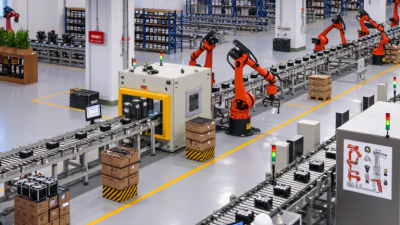
Industrial automation is the use of control systems, software, and machines to perform industrial tasks with limited manual intervention. It covers production, inspection, material handling, packaging, energy management, and maintenance. A practical system may include sensors beside a conveyor, a controller inside a cabinet, and software tracking output on a plant dashboard.
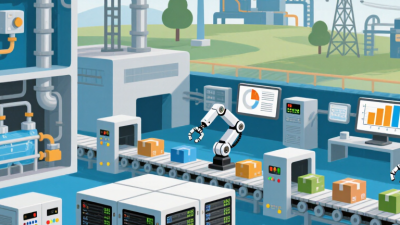
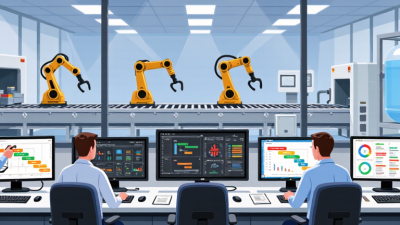
Its scope extends from one automated station to a connected facility. Sensors collect temperature, pressure, position, and vibration data. Programmable controllers process signals and direct motors, valves, and robotic equipment. Industrial networks exchange information between machines, while supervisory software helps operators monitor alarms, production rates, and quality results. Data platforms can also support predictive maintenance, but their value depends on accurate measurements and disciplined data management.
Core technologies must work together. Motion control improves speed and positioning. Machine vision checks labels, dimensions, and surface defects. Safety systems use guarded zones, emergency stops, and controlled access. Cybersecurity protects operational networks from unauthorized changes. Global buyers should examine compatibility, training, spare parts, local service capacity, and compliance requirements before selecting equipment. A technically impressive system may still disappoint if workers cannot maintain it. That weakness is easy to underestimate. Small pilot tests, clear performance measures, and honest reviews of downtime can expose problems before full deployment.
Top Industrial Automation Solutions for Global Buyers
Industrial Automation: Definition, Scope, and Core Technologies
Industrial automation combines control systems, sensors, robotics, software, and industrial networks to operate production processes with limited manual intervention. Asia accounted for the largest share of global industrial robot installations in 2023, followed by Europe and the Americas, reflecting strong demand for robotics, machine vision, motion control, and connected manufacturing systems.
Source: International Federation of Robotics, World Robotics 2024. Regional shares are rounded estimates for 2023.
Key Automation Solutions for Manufacturing and Industrial Operations
Modern manufacturing depends on connected automation, not isolated machines.
Core solutions include PLC control, SCADA monitoring, MES scheduling, machine vision, robotics, and industrial sensors. Together, they link a production order to a measured physical result.
The International Federation of Robotics reported 541,302 industrial robots installed worldwide in 2023, with 4.28 million operating globally.
This scale shows demand, but it does not prove every factory needs robots. Bad fit is expensive.
For discrete manufacturing, vision systems can inspect labels, welds, and surface defects at line speed.
For process plants, sensors and control platforms can track temperature, pressure, flow, and energy use continuously. Manufacturers should connect these tools through secure industrial networks, role-based access, backups, and tested recovery procedures.
The International Society of Automation emphasizes lifecycle security, yet many projects still treat cybersecurity as a late purchase.
That mistake can stop production.
The International Energy Agency estimates industry used about 37% of global final energy in 2022, making energy analytics operationally important.
Purchasing should prioritize interoperability, local service skills, spare-part access, and measurable payback.
A small pilot can expose data gaps before a full rollout. However, pilot results can mislead when operators receive little training or maintenance data remains incomplete.
Human experience still matters. Buyers should request acceptance tests, documented change control, and performance baselines before signing.
Some automation promises remain optimistic.
How to Evaluate Industrial Automation Systems for Global Procurement
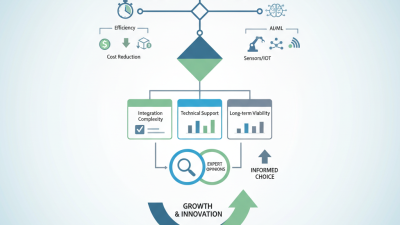
Global buyers should evaluate industrial automation systems beyond purchase price.
The International Federation of Robotics reported 541,302 industrial robots were installed worldwide in 2023. This growth increases pressure to select systems that remain adaptable. Review controller compatibility, communication protocols, safety functions, energy use, and spare-parts availability. Request evidence from factory acceptance tests, not only polished presentations. Cybersecurity also deserves early attention. The International Society of Automation’s ISA/IEC 62443 framework provides a useful structure for assessing industrial control system risks.
A practical evaluation should measure total cost over the system’s working life. Include integration, training, software updates, downtime, maintenance, and regional technical support. Deloitte’s 2023 Smart Manufacturing and Operations Survey found that manufacturers commonly expect smart manufacturing to improve productivity and quality. Yet expectations can hide weak project planning. Compare verified cycle-time data, changeover minutes, fault-recovery time, and operator training hours. Ask suppliers to explain assumptions. A low-cost system may become expensive when local engineers cannot service it. No scorecard is perfect. Procurement teams should revisit their weighting after pilot testing.
Tips:
Build a weighted scorecard before receiving quotations. Test sample products under real production conditions. Confirm electrical standards, documentation languages, warranty terms, and export procedures. Require transparent data ownership and secure remote-access controls. The World Robotics 2024 report also recorded more than four million industrial robots operating globally in 2023, showing the scale of this market. Still, global scale does not guarantee local suitability. A short pilot may reveal integration problems that a long proposal misses.
Integration, Safety, Maintenance, and Workforce Considerations
Top Industrial Automation Solutions for Global Buyers
Integration should begin with the production problem, not the equipment catalog. The International Federation of Robotics reported 541,302 industrial robots installed worldwide in 2023. That scale makes interoperability essential. Buyers should verify communication protocols, data ownership, response times, and upgrade paths before signing contracts. A small mismatch can stop an entire line.
Safety needs physical and digital attention. Risk assessments should cover guarding, emergency stops, access controls, software changes, and maintenance modes. ISO 10218 and ISO/TS 15066 provide useful reference points for robot applications. Still, compliance documents do not replace floor-level observation. Operators may bypass a sensor when a process feels too slow. That detail matters. Predictive maintenance can reduce downtime by 35–45%, according to the U.S. Department of Energy’s Operations and Maintenance Best Practices guide. However, poor sensor placement creates false alarms and wasted labor.
Workforce planning is equally practical. The World Economic Forum’s Future of Jobs Report 2025 estimates that 59% of workers may need training by 2030. Training should include fault diagnosis, safe isolation, data interpretation, and manual recovery. Deloitte’s smart manufacturing research found that 86% of manufacturers view smart operations as a major competitiveness driver. Yet automation projects still underestimate language, shift patterns, and local technical skills. A perfect integration plan rarely survives unchanged. Build room for revision.
Global Sourcing Factors: Suppliers, Standards, Costs, and Scalability
Global industrial automation sourcing demands more than a low equipment quote. The International Federation of Robotics reported 541,302 industrial robot installations worldwide in 2023. Its World Robotics 2024 report also placed the operating stock above 4.28 million units. Demand is rising. Suppliers should provide factory references, traceable component records, cybersecurity procedures, and local service coverage. Ask for response times in writing. Details matter.
Standards reduce integration problems across borders. Specify machine safety under ISO 12100 and ISO 13849-1. Define electrical requirements through IEC 60204-1. ISO’s 2023 survey recorded more than 1.26 million valid ISO 9001 certificates worldwide. Certification supports credibility, but it cannot prove daily production discipline. Request test reports, risk assessments, change-control logs, and sample acceptance criteria. Paperwork can still hide gaps.
Compare total cost, not purchase price. Include engineering hours, tooling, training, spare parts, energy, licenses, customs, and downtime. Deloitte’s 2024 manufacturing outlook identified productivity, labor, and resilience as major investment pressures. For scalability, select modular cells, open communication protocols, documented APIs, and standardized spare parts. Pilot one line before expanding. This feels slower. It may reveal weak assumptions before ten lines repeat them. Use a three-year cost model with sensitivity tests for volume, exchange rates, and service delays.