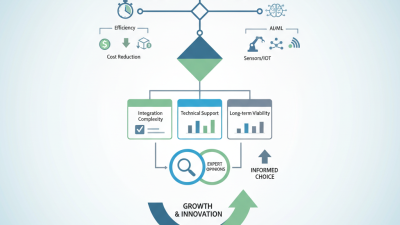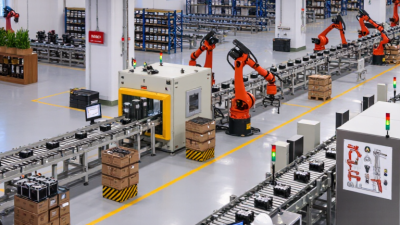
Choosing among China’s best process control systems manufacturers requires more than comparing product catalogs. Buyers should examine control-system architecture, instrument compatibility, cybersecurity practices, commissioning support, and access to spare parts. In a plant, small details matter: a stable controller, clear alarm display, and responsive local service can prevent costly production interruptions.
The International Energy Agency’s Energy Efficiency 2023 report says industry accounted for about 37% of global energy use in 2022. That figure makes efficiency and dependable process control important considerations, though it does not measure the performance of any individual supplier. Fortune Business Insights estimated the broader industrial automation market at USD 205.86 billion in 2023 and projected continued growth. This wider market includes technologies beyond process control systems, so its figures should not be treated as a direct market ranking.
The engineering principle is older than today’s digital platforms. Cybernetics pioneer Norbert Wiener wrote, “Feedback is a method of controlling a system by reinserting into it the results of its past performance.” Feedback remains central to modern process control systems, from temperature loops in chemical production to pressure control in water treatment. But software features alone do not guarantee good results. Integration quality, operator training, and support after installation deserve equal scrutiny. The shortlist should be tested against the buyer’s process, not just a brochure. No comparison is perfect; published market data rarely reveals how well a supplier performs at a specific site.

A process control system measures conditions in equipment and adjusts them to keep production within set limits. In a water treatment line, sensors may track flow, pressure, and tank level. A controller compares each reading with its target. When flow drops, it can signal a valve or pump to respond.
The cycle is continuous: measure, compare, adjust, then measure again.
Sensors provide the data, while controllers run programmed instructions. Actuators, such as control valves and variable-speed drives, carry out commands. Operators usually view readings and alarms on a control screen. They can change targets or switch to manual operation when needed. Small changes matter.
Good results depend on sound installation and regular checks. A poorly placed temperature sensor may report a misleading value, even when the controller works correctly. Calibration, wiring inspections, and careful testing help catch these problems. Control settings also need to match the actual process, not just a design document. This part is often underestimated. No system removes every source of variation, and overly aggressive adjustments can make equipment fluctuate rather than settle. Engineers should review trends and test changes under controlled conditions. A quiet alarm screen is not proof that the process is healthy.
Process control systems serve industries where small changes can affect product quality, safety, or operating costs. In chemical plants, sensors monitor pressure, temperature, and flow through pipes and mixing vessels. Operators can spot a drifting reading before it disrupts a batch. Small deviations matter. Automation helps, but experienced staff still need clear alarms and reliable procedures.
Water and wastewater facilities use control systems to manage pumps, tank levels, and treatment stages. A sudden rise in flow can trigger a response before storage capacity becomes a problem. Food processors use them to maintain cooking temperatures, mixing times, and refrigeration conditions. Clean records matter. Still, ingredients vary, and a fixed setting does not solve every production issue.
Energy plants rely on control systems to coordinate boilers, turbines, and cooling equipment. Pharmaceutical manufacturers use precise monitoring to keep production conditions consistent and records traceable. These applications demand careful calibration and maintenance, not just sophisticated software. Dust, vibration, and aging instruments can distort readings. Buyers comparing system providers should check whether the proposed design fits their process, staff skills, and maintenance capacity. A technically advanced system may be the wrong fit if operators cannot use it confidently.
Global freshwater withdrawals by sector, showing areas where process controls help manage flows, treatment, and distribution.
Agriculture, industry, and municipal water services use process control systems to monitor and regulate pumps, flow rates, treatment, and distribution. Shares are rounded global estimates of freshwater withdrawals: agriculture 70%, industry 19%, and municipal use 11%. Source: FAO AQUASTAT / UN-Water.
Evaluating Chinese process control manufacturers requires more than comparing quoted prices or polished demonstrations. Ask for references from plants with similar fluids, temperatures, and operating cycles. The International Energy Agency’s Energy Efficiency 2023 report estimates that industry accounts for about 37% of global final energy consumption. That makes measurement quality consequential: request sample trend logs showing flow, pressure, energy use, and alarm response during a real operating shift. Numbers matter. Check whether the supplier documents factory and site acceptance tests, instrument calibration, software changes, and recovery after power loss. A tidy control cabinet is useful, but it does not prove stable performance.
Assess integration and support with equal care. The International Federation of Robotics reported 276,288 industrial robot installations in China in 2023, or 51% of global installations. This signals a large automation ecosystem, not proof that any one supplier can handle your process. Ask how its system connects with existing sensors, drives, and plant networks, and whether engineers can troubleshoot remotely or on site. Request a cybersecurity plan aligned with IEC 62443, plus clear backup and access-control procedures. Check spare-parts lead times and support commitments in writing. I would also speak directly with a reference-site operator; tender documents can sound complete, while a delayed replacement sensor can still halt a line.
Use these suggested criteria to compare manufacturers of process control systems. The weights are an evaluation framework, not measured ratings of any specific manufacturer. Verify claims against project requirements and documented evidence.
| Evaluation Criterion | Suggested Weight | What to Evaluate | Evidence to Request |
|---|---|---|---|
| Process and application fit | 15% | Compatibility with the process, required control functions, I/O capacity, operating environment, and project scope. | Compliance matrix, system architecture, I/O list, application references, and a documented review of project requirements. |
| Reliability and availability | 12% | Fault tolerance, redundancy options, diagnostics, maintainability, and the availability of reliability data relevant to the proposed configuration. | Reliability assumptions and calculations, redundancy design, diagnostic documentation, failure-response procedures, and service records where available. |
| Functional safety capability | 12% | Ability to support the project’s safety lifecycle and required safety functions. Assess any safety claims against the specific product, configuration, and intended use. | Applicable third-party certificates, safety manuals, product scope and limitations, and documentation aligned with IEC 61508 or IEC 61511 where relevant. |
| Interoperability and integration | 10% | Support for required interfaces, protocols, data exchange, and integration with field devices, supervisory systems, and other project equipment. | Protocol and interface lists, integration test results, configuration examples, and confirmation of compatibility with the project’s existing systems. |
| Cybersecurity practices | 10% | Security features and lifecycle practices, including access control, account management, patching, logging, backup, and vulnerability handling. | Security architecture, hardening guidance, patch and vulnerability-management policies, and relevant IEC 62443 documentation where applicable. |
| Engineering and lifecycle support | 10% | Quality of design, configuration, testing, commissioning, documentation, training, and long-term maintenance support. | Project workflow, factory and site acceptance test procedures, document samples, training plans, and lifecycle support commitments. |
| Customization and scalability | 8% | Ability to adapt the system to project requirements and expand it later without unnecessary redesign or loss of maintainability. | Configuration examples, capacity limits, expansion options, change-control process, and an explanation of product customization boundaries. |
| Manufacturing and quality controls | 8% | Documented quality management, production controls, inspection, traceability, and handling of nonconformities. | Current quality-system certificates where applicable, inspection and test records, traceability procedures, and corrective-action processes. |
| Technical service and spare parts | 8% | Availability of qualified technical support, spare parts, repair services, escalation paths, and support coverage for the project location. | Support organization details, service-level terms, spare-parts plan, escalation procedure, and stated service coverage and hours. |
| Commercial and delivery transparency | 7% | Clarity of scope, exclusions, delivery schedule, warranty terms, change costs, and total cost over the expected service life. | Itemized quotation, delivery milestones, warranty conditions, list of exclusions, payment terms, and lifecycle-cost assumptions. |
| Total suggested weight | 100% | Adjust the weights to reflect project risk, regulatory obligations, site conditions, and operational priorities. | |
Chinese process-control manufacturers cover several distinct specialties. Some focus on distributed control systems for chemical, power, and water-treatment plants, where operators need stable control across many process units. Others concentrate on programmable controllers, transmitters, flow meters, or safety systems. System integrators often combine these components, configure alarm limits, and test control-room displays against actual operating conditions. A neat brochure cannot prove that work is reliable.
The International Energy Agency’s Energy Efficiency 2023 report states that industry accounts for about 37% of global energy use. Better measurement and control can help plants spot steam leaks, unstable temperatures, and oversized pump loads. For buyers, compare documented response times, spare-parts availability, cybersecurity practices, and commissioning support—not only hardware specifications. Ask for references from facilities with similar processes. A system proven in a clean workshop may behave differently beside a hot reactor or a dusty conveyor. That gap deserves scrutiny.
Tips: Request a live demonstration using your own process data, and check how operators acknowledge alarms. Confirm integration with existing instruments before signing. One weak point: some evaluations overvalue purchase price and undervalue long-term maintenance. That is easy to miss.
China Best Process Control Systems Manufacturers?
A process control system should fit the work, not just look impressive in a catalog. Start with the process conditions: temperature range, pressure changes, sensor types, and how quickly operators need to respond. A water-treatment line with steady flow has different needs from a food-processing line with frequent washdowns. Small details matter.
Ask manufacturers for application-specific evidence. Request a sample control narrative, wiring diagrams, and test records from a comparable installation. Check whether the proposed controller supports your existing instruments and communication protocols. Ask how alarms behave during sensor failure, and who helps troubleshoot after commissioning. Clear answers are useful; vague promises are not. Ask for evidence.
Compare lifecycle support as carefully as hardware. Confirm training options, spare-part availability, software update procedures, and typical response times. If your plant runs continuously, ask how maintenance can happen without disrupting production. A factory visit or technical review can reveal practical strengths that a polished presentation may miss. It takes time. Still, scoring every supplier with one neat table can hide important trade-offs; I would treat the score as a starting point, not a verdict.
| Cookie | Duration | Description |
|---|---|---|
| cookielawinfo-checkbox-analytics | 11 months | This cookie is set by GDPR Cookie Consent plugin. The cookie is used to store the user consent for the cookies in the category "Analytics". |
| cookielawinfo-checkbox-functional | 11 months | The cookie is set by GDPR cookie consent to record the user consent for the cookies in the category "Functional". |
| cookielawinfo-checkbox-necessary | 11 months | This cookie is set by GDPR Cookie Consent plugin. The cookies is used to store the user consent for the cookies in the category "Necessary". |
| cookielawinfo-checkbox-others | 11 months | This cookie is set by GDPR Cookie Consent plugin. The cookie is used to store the user consent for the cookies in the category "Other. |
| cookielawinfo-checkbox-performance | 11 months | This cookie is set by GDPR Cookie Consent plugin. The cookie is used to store the user consent for the cookies in the category "Performance". |
| viewed_cookie_policy | 11 months | The cookie is set by the GDPR Cookie Consent plugin and is used to store whether or not user has consented to the use of cookies. It does not store any personal data. |