

Who Are the Top Industrial Robot Manufacturers in China?
China has become a major force in industrial automation, with local manufacturers serving factories that make cars, electronics, batteries, and everyday goods. Its industrial robots now range from compact units for precise assembly to heavy-duty arms that move large components. The market is broad. That makes “top” a useful question, but not a simple ranking.
This guide looks at established Chinese manufacturers, including Siasun, Estun, Efort, GSK, and Inovance. Their strengths differ by product range, control systems, application experience, and service coverage. A robot that performs well on a showroom floor may still need careful integration, operator training, and reliable maintenance to succeed on a busy production line. Real conditions matter.
The comparison focuses on practical questions: Which industries does each company serve? What robot types are available? How accessible are technical support and spare parts? Public information can be uneven, and product specifications change over time. So a single league table may hide important differences. Buyers should check current models, test performance against their own tasks, and request details about installation and after-sales support. Price matters, of course. So does fit.
The aim is not to declare one universal winner. It is to help readers identify manufacturers worth evaluating and understand what to verify before making a purchasing decision.
What Industrial Robots Do in Modern Manufacturing
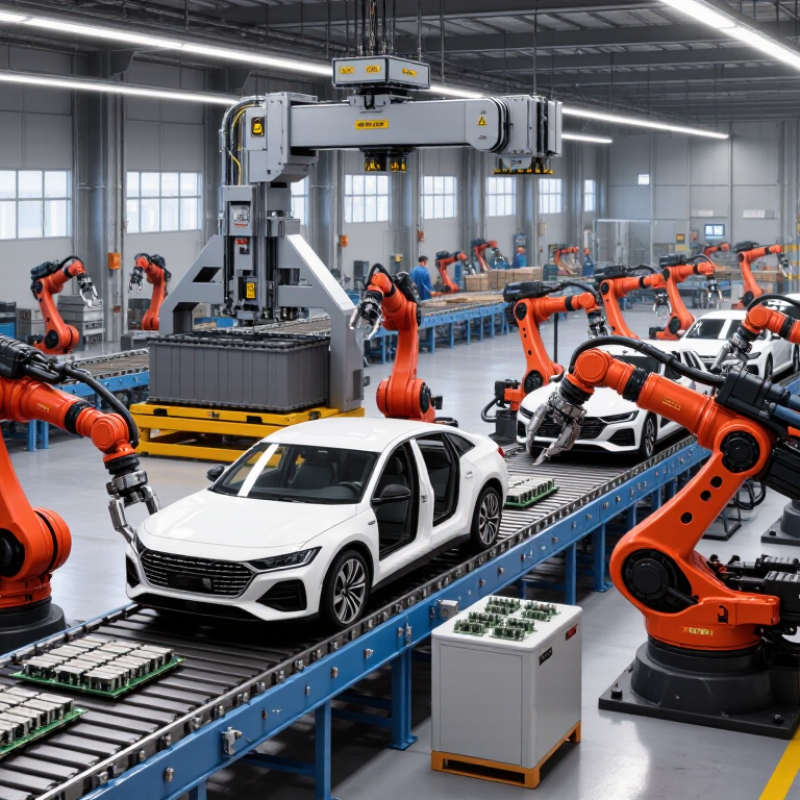
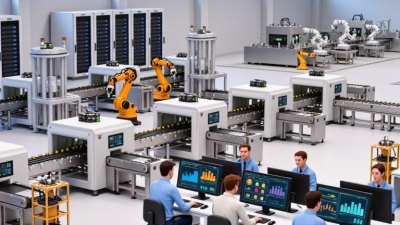
In modern manufacturing, industrial robots handle tasks that require steady motion, repeatable positioning, or work in uncomfortable conditions. At a press, an arm can lift a metal blank, present it for welding, and place it on a fixture. This reduces repeated manual lifting and helps keep cycle times consistent. The benefit is practical.
Robots also tend machine tools, apply sealant, sort components, and stack cartons onto pallets. With cameras and force sensors, some systems can locate parts or detect variation before the next operation. But sensors need suitable lighting, calibration, and clean lenses; they are not magic. In a real cell, grippers, conveyors, guards, software, and operator routines must work together. A fast arm alone cannot fix a poorly designed process.
Manufacturers select robots based on actual loads, cycle targets, floor space, and product mix. Changeovers matter. A line making several product versions may need flexible tooling and clear recovery steps when a part shifts. Even with careful planning, downtime and awkward exceptions remain. Automation can improve consistency, but trained people still inspect output, maintain equipment, and decide when the process itself needs redesign.
Who Are the Top Industrial Robot Manufacturers in China? - What Industrial Robots Do in Modern Manufacturing
This manufacturer-neutral overview compares common industrial robot types and their roles in modern manufacturing. It describes capabilities rather than ranking or naming companies.
| Robot Type | Typical Configuration | Indicative Payload | Common Manufacturing Tasks | What It Does Well | Deployment Considerations |
|---|---|---|---|---|---|
| Articulated robot | Usually 6 rotary axes; mounted on a floor, wall, ceiling, or mobile base. | Varies widely, from a few kilograms to more than 1,000 kg for heavy-duty models. | Machine tending, arc and spot welding, painting, assembly, material handling, and palletizing. | Moves through a large three-dimensional work envelope and can approach parts from many angles. | Reach, payload, speed, and accuracy must be matched to the task. Safety guarding or a validated collaborative setup may be needed. |
| SCARA robot | Typically 4 axes, with fast horizontal movement and a vertical motion axis. | Commonly a few kilograms to around 20 kg, depending on the model. | Small-part assembly, screwdriving, dispensing, packaging, and electronic component handling. | Performs rapid, repeatable pick-and-place and assembly tasks on a work surface. | Best suited to tasks with a largely horizontal approach; reach and vertical travel are more limited than on many articulated robots. |
| Delta robot | Parallel-link design, usually mounted above the work area; commonly 3 or 4 axes. | Generally light payloads, often below 10 kg. | High-speed picking, sorting, food handling, and packaging of small products. | Combines low moving mass with rapid cycles for lightweight items in a defined work zone. | Requires an overhead structure and is generally less suited to heavy loads or operations requiring broad reach around obstacles. |
| Cartesian or gantry robot | Two or more linear axes moving along straight, orthogonal paths. | Highly application-dependent, from small components to substantial loads on engineered gantry systems. | Loading and unloading, dispensing, cutting, palletizing, and moving parts between production stations. | Provides straightforward motion, scalable work areas, and predictable access along its linear axes. | Requires space for rails or a frame; system size and payload capacity depend on the structure and axis design. |
| Collaborative robot (cobot) | Often a 6-axis articulated arm with force and safety functions designed for appropriate shared-workspace applications. | Common models range from a few kilograms to roughly 30 kg; capacity varies by model. | Light assembly, inspection, machine tending, screwdriving, and small-batch material handling. | Can be relatively easy to redeploy between tasks and may work near people when the complete application is risk-assessed. | Collaborative operation is not automatically safe; tools, workpieces, speed, layout, and risk assessment all matter. |
| Welding robot system | Usually an articulated robot integrated with a welding torch, power source, sensors, and fixtures. | Selected according to the torch, tooling, workpiece, and required reach. | Arc welding of metal parts and, in suitable systems, spot welding in vehicle and machinery production. | Repeats programmed weld paths and can support consistent production quality and continuous operation. | Requires suitable fixtures, process setup, fume control, and protection from welding hazards; the robot arm is only one part of the cell. |
Payload figures are indicative examples for commonly available product classes, not fixed limits. Actual reach, speed, repeatability, payload, and safety performance depend on the specific robot and complete production system.
Related Posts
-
How to Choose the Right Industrial Robots for Your Business?
-

Discover the Best Automatic Systems in China for Global Buyers?
-
Top China Best Automation Equipment for Global Buyers?
-
China Top 10 Industrial Robot Manufacturers 2026
-

Top Software Automation Tools for Global Buyers?
-
How to Choose Industrial Automation Software in 2026?