

China Top 10 Automation Services Companies for Global Buyers
China’s automation services market has become a practical choice for global manufacturers seeking scalable production support. Local providers now combine industrial robots, PLC programming, machine vision, MES integration, and predictive maintenance.
This guide introduces China’s top 10 automation services companies for international buyers. It focuses on proven capabilities, export experience, engineering depth, response speed, and after-sales support. These factors matter on a real factory floor, where a delayed technician can stop an entire production line.
The details matter.
A reliable provider should explain its system architecture clearly. It should also show commissioning records, safety procedures, and measurable performance results. Buyers should request references from similar industries, not only impressive factory photos.
Roboticist and automation expert Rodney Brooks said, “Automation is good, so long as you know exactly where to put it.” His point remains useful. Automation should solve a defined production problem, rather than add unnecessary complexity.
The companies covered here serve different needs. Some specialize in turnkey production lines. Others focus on robotic welding, warehouse automation, packaging, or software integration. Several may appear strong on paper but require closer technical verification.
That is an important limitation.
Global buyers should compare total ownership costs, training, spare parts, cybersecurity practices, and local support arrangements. Price alone can hide integration risks. A lower initial quote may create higher maintenance costs later.
This overview offers a practical starting point, not a final purchasing decision. Careful audits, factory visits, and technical discussions remain essential before signing any contract.
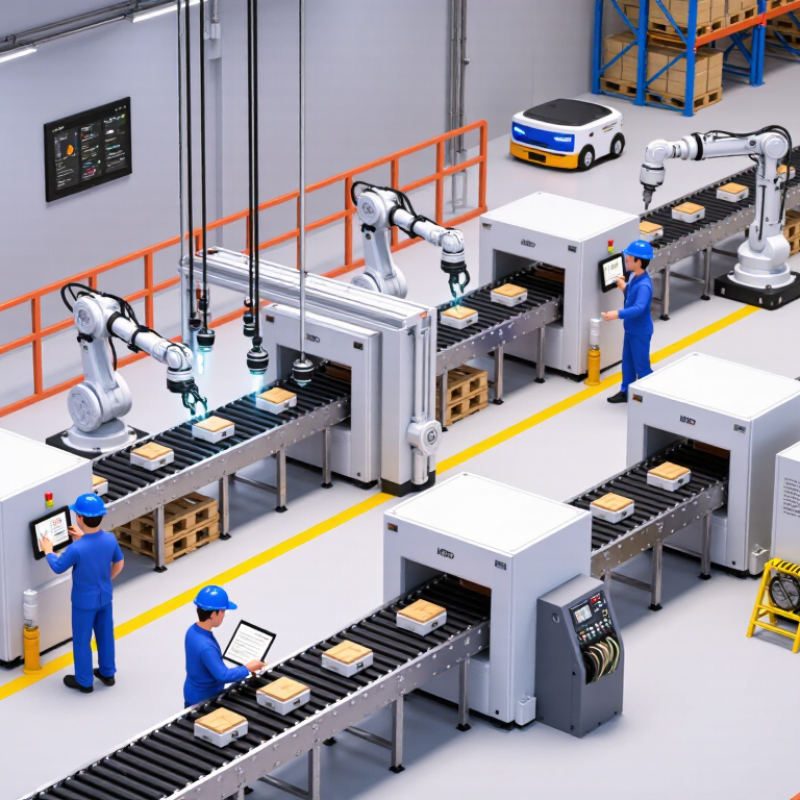
Scope and Ranking Criteria: Services, Export Reach, and Delivery Metrics
China Top 10 Automation Services Companies for Global Buyers
Scope and Ranking Criteria: Services, Export Reach, and Delivery Metrics
This ranking evaluates automation service providers by practical value for international buyers. The scope covers system design, control integration, machine vision, commissioning, maintenance, and operator training. It excludes product sales alone. Evidence should come from project records, technical portfolios, client references, and audited business information. Experience matters. A polished website cannot replace factory-floor performance.
Export reach measures completed projects across regions, language support, documentation quality, and familiarity with local safety requirements. Delivery metrics include quotation response time, engineering lead time, installation schedules, remote support, and after-sales response. A weighted scoring model can compare providers more fairly. Yet, no ranking is perfect. A fast delivery may reflect a smaller project, not stronger capability. Public data can also be incomplete or outdated.
Tips: Ask for two comparable case studies. Confirm the actual engineering team, not only the sales contact. Request sample drawings, testing procedures, and acceptance criteria before signing. Check whether spare parts, software updates, and training are included. Define measurable milestones, such as design approval, factory testing, site commissioning, and response within 24 hours. Small details often expose large risks. A useful review should also record delays, change orders, and unresolved technical issues.
| Rank | Anonymous Provider | Primary Service Scope | Typical Customer Industries | Export Reach | International Delivery Model | Typical Project Lead Time | Remote Support Coverage | After-Sales Response SLA | Quality and Compliance Evidence | Weighted Score |
|---|---|---|---|---|---|---|---|---|---|---|
| 1 | Provider 01 | Industrial robots, machine vision, PLC integration, turnkey production lines, and digital commissioning | Automotive, electronics, lithium batteries, logistics, and general manufacturing | More than 60 export markets across Asia, Europe, North America, and the Middle East | Engineering design in China with regional installation partners and online commissioning | 12–24 weeks | 24/7 multilingual remote assistance | 4 hours for critical production issues | ISO 9001-oriented quality systems; CE-ready equipment packages; documented FAT and SAT procedures | 92/100 |
| 2 | Provider 02 | Robotic welding, palletizing, material handling, safety integration, and production-line retrofits | Metal fabrication, automotive components, appliances, construction materials, and warehousing | More than 50 export markets, with strong coverage in Southeast Asia and Europe | Factory acceptance testing in China followed by supervised overseas installation | 10–22 weeks | Business-hours support with emergency escalation | 6 hours for critical issues | ISO 9001-based process control; risk assessments; electrical and functional test records | 89/100 |
| 3 | Provider 03 | Packaging automation, case packing, labeling, conveyor systems, and warehouse control integration | Food and beverage, pharmaceuticals, consumer goods, e-commerce, and logistics | More than 45 export markets across Asia, Africa, Europe, and Latin America | Modular equipment shipment with local mechanical and electrical service support | 8–18 weeks | Remote diagnostics during operating hours; extended support by contract | 8 hours for critical issues | Traceable component documentation; CE-oriented design; documented site acceptance testing | 87/100 |
| 4 | Provider 04 | Vision inspection, precision assembly, testing systems, traceability software, and cleanroom automation | Electronics, semiconductors, medical devices, precision components, and photovoltaics | More than 35 export markets, particularly in East Asia, Europe, and North America | Application engineering, sample validation, and remote software maintenance | 14–28 weeks | Multilingual online support with scheduled preventive-maintenance reviews | 8 hours for critical issues | ISO 9001-oriented quality control; process validation records; calibration documentation | 85/100 |
| 5 | Provider 05 | Automated storage and retrieval, sorting systems, conveyor automation, and warehouse software integration | Third-party logistics, retail, apparel, manufacturing, and distribution centers | More than 40 export markets, with project references in Asia, Europe, and the Gulf region | Digital simulation, factory testing, overseas installation, and operator training | 16–32 weeks | Remote monitoring and scheduled system-health reporting | 12 hours for critical issues | System safety documentation; FAT/SAT records; software version and change-control procedures | 83/100 |
| 6 | Provider 06 | Servo systems, motion control, custom machinery, CNC integration, and production-line upgrades | Machinery, metalworking, electronics, packaging, and industrial equipment | More than 30 export markets, mainly in Asia, Eastern Europe, and Latin America | Standardized machine modules with optional local commissioning services | 8–20 weeks | Remote troubleshooting during local business hours | 12 hours for critical issues | Factory inspection records; electrical safety checks; documented spare-parts lists | 80/100 |
| 7 | Provider 07 | Filling, capping, labeling, inspection, and complete packaging-line automation | Food, beverages, cosmetics, household products, and pharmaceuticals | More than 35 export markets across Asia, Africa, the Middle East, and South America | Turnkey line supply with installation guidance and production ramp-up support | 12–26 weeks | Remote support with spare-parts coordination | 12 hours for critical issues | Hygienic design documentation; material certificates; FAT and commissioning checklists | 78/100 |
| 8 | Provider 08 | Collaborative robots, light assembly, screwdriving, dispensing, inspection, and flexible-cell integration | Electronics, small appliances, automotive components, education, and contract manufacturing | More than 25 export markets, with a focus on Asia and selected European markets | Rapid cell deployment with distributor-led training and online programming support | 6–16 weeks | Business-hours remote assistance and application training | 16 hours for critical issues | Robot safety assessment; application manuals; standardized operator training materials | 76/100 |
| 9 | Provider 09 | Industrial IoT, manufacturing execution interfaces, energy monitoring, predictive maintenance, and data dashboards | Discrete manufacturing, utilities, automotive, electronics, and process industries | More than 20 export markets through system integrators and technology partners | Cloud or on-premise deployment with remote configuration and cybersecurity reviews | 6–14 weeks | Online monitoring during local business hours; optional 24/7 service plans | 16 hours for critical issues | Access-control documentation; backup procedures; software testing and deployment records | 74/100 |
| 10 | Provider 10 | Custom robotic workstations, welding cells, deburring, loading and unloading, and process automation | Metalworking, machinery, automotive parts, construction equipment, and industrial fabrication | More than 20 export markets, mainly in Asia, the Middle East, Africa, and Latin America | Application-specific engineering with optional overseas supervision | 10–24 weeks | Remote support during standard service hours | 24 hours for critical issues | Machine risk assessment; welding-process records; commissioning and maintenance manuals | 72/100 |
Related Posts
-

Top 10 Innovations in Production Automation Driving China's Industry Forward?
-
Discover the Best Automatic Systems in China for Global Buyers?
-

Top Trends in Material Handling Automation in China Explained?
-

China Top 10 Production Automation Solutions for Global Buyers?
-
2026 How to Choose Industrial Process Automation Systems?
-

What Are the 10 Best Tips for Industrial Process Automation?