Why Choose Door Entry Systems for Global Security Needs?
Global security now depends on more than locked doors and visible guards. Organizations need controlled access, clear records, and reliable responses during busy daily operations. Door Entry Systems support these needs across offices, hospitals, schools, apartment buildings, and industrial sites.
MarketsandMarkets estimates that the global access control market will grow from USD 9.9 billion in 2023 to USD 14.9 billion by 2028. Its report links this growth to cloud management, mobile credentials, and stronger security requirements. Grand View Research also identifies connected and biometric technologies as important market drivers. These figures show strong demand. They do not guarantee successful implementation.
Bruce Schneier, a respected security technologist and author, said, “Security is a process, not a product.” This principle matters when selecting Door Entry Systems. A reader, intercom, or mobile credential is only one part of protection. Installation quality, visitor procedures, software updates, staff training, and privacy controls also matter. Small details matter.
A practical system should match the building’s risks. A clinic may need discreet identity checks and emergency access. A warehouse may require durable readers and activity logs. A residential property may prioritize simple visitor communication. Experience shows that complicated interfaces can weaken adoption, even when the technology is advanced. No system is perfect. Regular reviews remain necessary.
The strongest choice combines proven hardware, dependable management software, and measurable support. Buyers should examine system uptime, integration options, data protection, accessibility, and long-term maintenance. This evidence-based approach helps organizations improve security without treating technology as a complete answer.
What Are Door Entry Systems and How Do They Work?
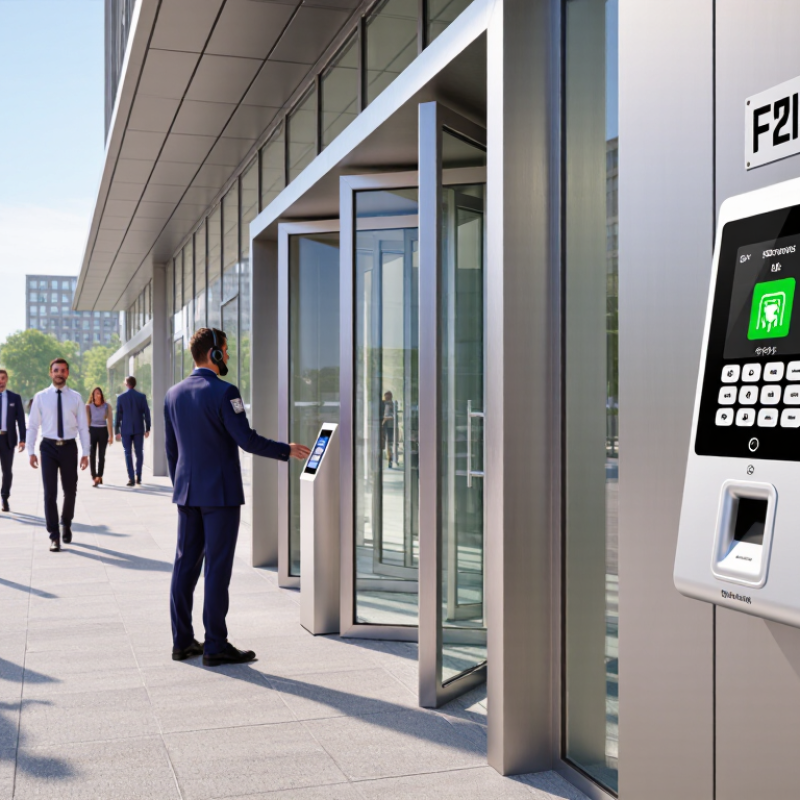
Door entry systems control who can enter a building, room, or restricted area. They combine an entry reader, locking hardware, controller, and management software. A user presents a credential, such as a card, PIN, mobile token, or biometric factor. The reader captures the data. The controller checks it against permitted access rules. If the request matches, it releases the lock for a set period. If not, the door remains secured. Simple in practice.
Many systems connect doors to sensors, exit devices, alarms, and video equipment. A door-position sensor confirms whether the door actually closed. An exit button allows authorized movement from inside. Administrators can assign access by person, time, location, and role. Event records show successful entries, denied attempts, and forced-door alerts. These records help security teams investigate incidents and identify unusual patterns. Networked systems may synchronize rules across offices, but connection failures require careful planning. Local fallback settings can preserve essential access during an outage.
Good design begins with the building’s real risks, not fashionable features. Reader placement, lighting, weather protection, emergency release, and accessibility all matter. Strong credentials still fail when users share them or hold doors open. No system is perfect. That limitation deserves attention. Regular testing, software maintenance, and prompt credential removal improve reliability. Privacy also needs deliberate controls, especially when biometric data or detailed movement logs are involved. A practical design balances protection, convenience, human behavior, and lawful data handling.
Core Components and Access Control Methods
Why Choose Door Entry Systems for Global Security Needs?
A reliable door entry system has several working layers. A credential reader checks a card, PIN, mobile token, or biometric feature. The controller compares that credential with permission rules. An electronic lock then allows or denies entry. Door sensors confirm whether the door actually closed. This detail matters. A secure reader cannot compensate for a weak frame or poor installation.
Modern systems also need software, audit logs, backup power, and protected network connections. Role-based access limits entry by person, location, and schedule. Multi-factor authentication adds another checkpoint for sensitive areas. Visitor management records temporary access without sharing permanent credentials. NIST’s Digital Identity Guidelines recommend stronger authentication when systems protect higher-risk resources. In practice, global deployments must also consider language, connectivity, privacy, and local operating habits.
Verizon’s 2024 Data Breach Investigations Report analyzed 30,458 incidents and found a human element in 68% of breaches. Door entry design should therefore reduce simple mistakes, not only block determined attackers. Automatic timeout settings, clear status lights, and real-time alerts can help. Yet alerts may become background noise. That weakness deserves honest review. Regular access audits, emergency drills, and controller testing provide evidence that controls work beyond the installation day. Some sites still rely on shared PINs. That is convenient, but difficult to defend.
Security Benefits for Homes, Businesses, and Public Facilities
Why Choose Door Entry Systems for Global Security Needs?
Security Benefits for Homes, Businesses, and Public Facilities
Door entry systems help control who enters a property and when. For homes, they can replace uncertain keys with timed credentials or monitored visitor access. A resident may receive an alert while standing in the kitchen, then speak with a visitor before unlocking the door. Entry records can also clarify unusual activity. No system is flawless. That assumption is risky.
In businesses, access permissions can follow job roles, working hours, and secure areas. Administrators can remove access quickly after a staff change. Audit trails support professional investigations without relying only on memory. They also encourage accountable security practices. Yet convenience can weaken protection. A lost credential, shared code, or poorly positioned camera may create avoidable exposure. Routine reviews matter.
Public facilities face wider challenges, including heavy traffic, accessibility needs, and emergency movement. Schools, clinics, and government buildings may use different access levels for employees, visitors, and service teams. During busy hours, reception staff can verify arrivals without leaving the desk. Clear procedures reduce confusion. Security teams should test doors, backup power, alarms, and communication channels regularly. Reliable design also requires attention to local safety and accessibility requirements. People may resist stricter entry controls when instructions feel unclear. Listening to staff and visitors can reveal practical weaknesses that technical plans miss.
Why Choose Door Entry Systems for Global Security Needs?
Door entry systems help control who can enter homes, businesses, and public facilities. The chart below presents the scale of major U.S. property-crime categories in 2022, highlighting the need for stronger access control and entry monitoring.
Source: Federal Bureau of Investigation, Crime Data Explorer, 2022 estimated U.S. property-crime offenses. Door entry systems can support security by restricting unauthorized access, creating audit trails, enabling identity verification, and improving visitor management across residential, commercial, and public environments.
Homes
Keyless access, temporary visitor codes, and entry alerts can help residents manage access more effectively.
Businesses
Role-based permissions and access logs can support employee safety, asset protection, and compliance.
Public Facilities
Centralized monitoring and controlled visitor entry can improve security across schools, hospitals, and civic buildings.
Global Standards, Regional Needs, and Deployment Challenges
Global door entry systems must meet shared security principles while fitting local realities. ISO/IEC 27001 supports risk-based information security, but it does not prescribe one access method. That distinction matters. A research facility may require biometric verification, while a small clinic may need simple cards and emergency override controls. MarketsandMarkets estimated the physical security market at about USD 127 billion in 2024, showing the scale of worldwide demand.
Regional rules can change the design quickly. European projects may require strict privacy controls for biometric data. Some jurisdictions demand local data storage or certified electrical equipment. In areas with unstable connectivity, cloud-only entry can fail at the worst moment. A door should still open safely during a network outage. Test this physically, not only on paper.
Deployment problems are often ordinary. Thick concrete walls weaken wireless signals. Dust blocks outdoor readers. A delivery entrance may need faster authentication than a restricted laboratory door. NIST guidance on digital identity stresses authentication assurance, but assurance also depends on training and maintenance. Verizon’s 2024 Data Breach Investigations Report found the human element involved in 68% of breaches, a useful warning for access planning. Technology is not enough. Staff may share credentials, ignore alarms, or prop doors open. That uncomfortable gap deserves regular audits, local testing, and honest revision.
Key Factors for Choosing and Managing a Door Entry System
Why Choose Door Entry Systems for Global Security Needs?
Choosing a door entry system starts with the people who use it. Security teams should map employee access, visitor movement, emergency exits, and service areas. A reception desk may need quick visitor verification. A server room needs tighter controls and clear audit trails. The 2024 Data Breach Investigations Report found that the human element remained involved in most reported breaches. That makes credential management as important as hardware.
System selection also requires practical testing. Check whether credentials can be removed immediately after resignation. Review offline operation during network outages. Confirm that logs show who entered, when, and through which door. The MarketsandMarkets Access Control Market report projects strong global growth through 2028, but expansion does not guarantee good management. A complex platform can create mistakes. Sometimes, simpler controls work better.
Global deployment adds more questions. Can the system support local languages, time zones, privacy requirements, and different building conditions? Managers should schedule firmware updates, inspect locks, test backup power, and review permissions regularly. Staff need short, realistic training with a sample lost-card scenario. It is tempting to trust automation too much. That is a weakness worth revisiting. Reliable security combines tested technology, accountable administrators, and documented procedures.