
China’s Residential Lighting industry is moving beyond simple bulb replacement. Connected fixtures, high-efficiency LEDs, and human-centric controls are changing how homes use light. The International Energy Agency reports that LEDs now dominate new lighting sales worldwide. They also reduce electricity demand compared with older technologies. That shift raises expectations for Chinese manufacturers.
Market estimates differ. Grand View Research values the global smart lighting market at billions of dollars, while MarketsandMarkets projects strong growth through 2030. These reports use different definitions and research methods. Their figures should not be treated as identical. Still, the direction is clear. Residential Lighting is becoming more connected, efficient, and design-focused.
China offers a dense supplier base, including Opple, NVC Lighting, PAK, FSL, and Midea Lighting. Their strengths vary across product quality, smart-home compatibility, pricing, export experience, and after-sales support. Dr. Peter R. Boyce, a respected lighting researcher, wrote, “Lighting is not just about seeing; it is about experiencing.” That idea matters in a living room with warm wall lights, a kitchen needing accurate task illumination, or a bedroom using dimming controls at night.
This guide compares leading China Residential Lighting suppliers through practical criteria. These include certifications, LED performance, product consistency, customization, warranty terms, and factory capability. Supplier rankings are never completely objective. A low-cost manufacturer may suit a property developer but disappoint a design-led homeowner. That limitation deserves attention. The best choice depends on the room, project scale, budget, and local compliance requirements.
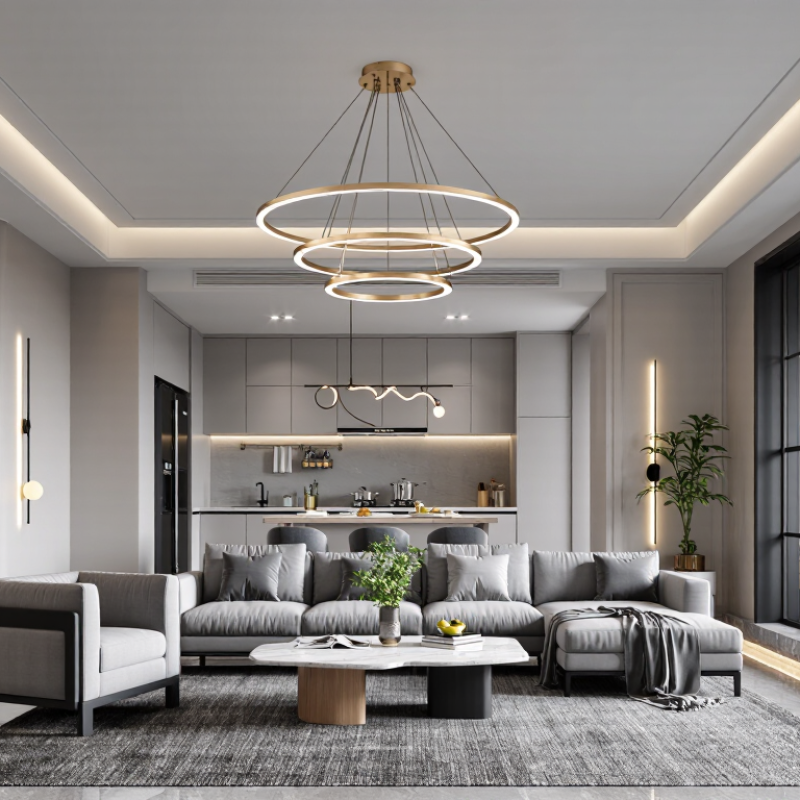
A leading China residential lighting supplier offers more than attractive fixtures and competitive prices. It understands how light behaves in real homes, from narrow corridors to kitchens with reflective tile. Experienced suppliers discuss beam angles, glare control, color rendering, and suitable color temperatures before recommending products. They do not simply repeat a catalog description.
Technical discipline also defines a dependable supplier. The factory should provide photometric files, electrical test results, material specifications, and clear production records. Samples must match mass production in brightness, finish, and color. Factory audits, aging tests, thermal checks, and flicker evaluations provide useful evidence. Details reveal maturity. A reliable team also explains applicable international requirements without making vague certification claims.
Communication matters after the order is placed. A capable supplier confirms drawings, packaging details, delivery schedules, and installation questions in writing. It should respond quickly when a driver fails or a finish looks different under warm indoor light. Price alone is misleading. Low-cost components may create uneven brightness, buzzing, or early discoloration. Still, no supplier is flawless. Even experienced manufacturers can misjudge local design preferences or underestimate a renovation schedule. The best partners acknowledge these risks, adjust their process, and invite practical feedback from installers and homeowners. Their reliability appears in repeated batches, honest limitations, and useful support when the project becomes less predictable.
China’s residential lighting supplier market is organized by capability, location, and sales channel. Large manufacturers usually offer complete systems, including ceiling fixtures, downlights, controls, and customized packaging. Mid-sized factories often focus on one category, such as decorative pendants or energy-efficient recessed lights. Smaller workshops compete through flexible minimum orders and rapid sample changes.
Industrial clusters shape this structure. Guangdong concentrates many export-oriented lighting factories, while Zhejiang and Jiangsu support metalworking, electrical components, and contract manufacturing. According to the China Association of Lighting Industry, China remains a major global lighting production and export base, with LED products forming the industry’s central technology. The International Energy Agency also identifies LEDs as the dominant modern lighting technology because of their lower energy use and longer service life.
A practical supplier review should examine more than catalog prices. Factory audits can reveal differences in driver testing, optical consistency, heat management, and packaging strength. The 2024 Energy-Saving Products Market Report from China’s market research sector indicates continuing consumer interest in efficient and smart lighting, but adoption is uneven between major cities and smaller regions. That matters. A connected lamp may sell well online, yet basic ceiling lights still move strongly through distributors and home-improvement contractors.
Trade platforms serve small buyers, while direct factory contracts support larger projects. Certification files, sample aging tests, and warranty procedures deserve careful checking. Supplier ranking is not simple. Low price can hide weaker quality control. Even detailed reports may overlook after-sales performance, which remains a difficult gap in this market.
China’s strongest residential lighting suppliers differ by product type, not by catalog size. For recessed downlights and linear profiles, prioritize suppliers with tested beam angles, low UGR ratings, stable color rendering, and aluminum heat management. The U.S. Department of Energy reports that LEDs use at least 75% less energy than incandescent lamps and can last up to 25 times longer. That makes thermal design a purchasing issue, not a decorative detail.
Decorative pendant and wall-light suppliers stand out through glass quality, surface finishing, socket safety, and consistent color batches. Request physical samples. Photos can hide uneven plating. For smart ceiling lights and connected bulbs, evaluate app stability, firmware support, dimming performance, and interoperability with major home platforms. MarketsandMarkets forecasts the global smart-lighting market to grow from about US$15.9 billion in 2024 to US$46.6 billion by 2029. China-based suppliers serving this segment should provide clear data-security policies and dependable after-sales support.
Outdoor residential suppliers deserve separate scrutiny. Check ingress protection, UV resistance, corrosion testing, and driver lifespan. The International Energy Agency has reported that lighting represents roughly 15% of global electricity consumption, so efficiency claims require verification. Ask for LM-80, TM-21, photometric files, and electrical safety reports. A supplier may offer excellent prices but weak documentation. That is easy to overlook. My own selection rule is simple: compare samples, test the installation, and judge the supplier’s response when something fails. The best option is sometimes not the cheapest.
Product types are compared by the typical maintained illuminance target of the residential spaces they commonly serve. Downlights and ceiling lights are widely used for general lighting, while pendant lights, wall lights, and LED strips are generally selected for focused or decorative applications. The benchmark values reflect common residential lighting design targets in China and do not represent sales data from any individual company or brand.
Comparing China’s residential lighting suppliers requires more than checking catalogs and unit prices. In project sourcing, I examine sample consistency, heat management, driver performance, and documentation. A reliable supplier can provide test reports, material specifications, and clear warranty terms. Quality appears in small details: even diffuser edges, stable color temperature, clean soldering, and secure terminals. Ask for samples from different production batches. One sample can flatter a weak process.
Technology varies widely. Better-equipped factories may offer dimming compatibility, smart controls, tunable white systems, and efficient LED modules. Yet a feature list proves little. I test flicker, startup delay, wireless range, and performance after extended operation. Thermal design matters in recessed fixtures; a hot housing can shorten LED life. Some suppliers quote impressive lumen figures measured under ideal conditions. Request delivered lumens, power factor, and lifetime assumptions. Independent verification is worth the extra time.
Pricing usually follows a visible curve. Basic fixtures cost less, while custom optics, metal finishes, and connected controls raise the total. The cheapest quotation may exclude tooling, packaging, inspection, or replacement parts. Mid-range suppliers often balance finish quality and production flexibility, but that judgment needs evidence. I have seen attractive samples fail during carton drop tests. I also underestimated the cost of small design changes. Compare complete landed cost, minimum order quantity, lead time, and after-sales response. A dependable partner communicates defects quickly, not only delivery dates.
| Supplier Profile | Typical Product Focus | Quality Indicators | Technology Capability | Customization Capacity | Indicative Factory Price Range* | Typical MOQ | Lead Time | Best Fit | Overall Assessment |
|---|---|---|---|---|---|---|---|---|---|
| Profile 1 Premium Integrated Manufacturer | Architectural downlights, magnetic track systems, linear lighting, pendant fixtures, and smart residential lighting. | ★★★★★ Consistent color temperature, strong thermal management, stable driver performance, and documented production inspection. | High-efficiency LED modules, dimming systems, DALI or 0–10 V options, Bluetooth or Wi-Fi control, and advanced optical lenses. | High Custom housing, beam angle, finish, CCT, packaging, and control integration. | US$28–150 per fixture | 50–100 units | 25–45 days | Luxury residences, hospitality-style homes, and design-led projects. | Highest technical and quality potential, with a higher initial purchase price. |
| Profile 2 Mid-to-High-End OEM Supplier | Recessed downlights, surface lights, wall lights, cabinet lights, and decorative residential fixtures. | ★★★★☆ Reliable aluminum housings, acceptable lumen maintenance, and regular incoming and final quality checks. | Efficient LED packages, replaceable drivers, triac dimming, selectable color temperature, and basic smart-compatible options. | Medium–High Product dimensions, finishes, labels, packaging, and electrical specifications. | US$12–75 per fixture | 100–300 units | 20–40 days | Residential developers, retailers, and professional lighting distributors. | Strong balance of quality, product breadth, and commercial pricing. |
| Profile 3 Volume-Focused LED Factory | Standard downlights, panel lights, ceiling lights, bulkhead lights, and basic outdoor residential fixtures. | ★★★☆☆ Competitive standard products, but performance can vary by model, driver selection, and inspection requirements. | Standard LED boards, fixed CCT, basic dimming, and conventional constant-current drivers. | Medium Logo, color, carton design, wattage, and selected housing modifications. | US$4–28 per fixture | 300–1,000 units | 15–30 days | Large-volume housing projects, private-label retailers, and budget programs. | Most attractive for cost-sensitive orders with standardized specifications. |
| Profile 4 Decorative Lighting Specialist | Chandeliers, pendant lights, wall sconces, table lamps, floor lamps, and decorative ceiling fixtures. | ★★★★☆ Strong visual finishing, glass or metal workmanship, and inspection focused on appearance and assembly quality. | Integrated LED designs, replaceable LED lamps, dimmable drivers, and selected app or remote-control features. | High Custom dimensions, metal finishes, glass shapes, cable lengths, color temperature, and decorative details. | US$25–220 per fixture | 30–100 units | 30–60 days | Interior designers, custom residences, boutique hotels, and premium retail. | Best for visual differentiation and customized decorative collections. |
| Profile 5 Smart Home Lighting Supplier | Smart bulbs, connected downlights, smart ceiling lights, strip lighting, sensors, and gateway-based systems. | ★★★★☆ Product quality depends on firmware stability, wireless reliability, thermal design, and long-term app support. | Wi-Fi, Bluetooth Mesh, Zigbee, Matter-compatible products, voice-assistant integration, scheduling, and scene control. | Medium–High App branding, firmware settings, packaging, electrical plug types, and selected cloud or local-control configurations. | US$8–85 per unit | 200–500 units | 30–60 days | Connected-home projects, smart-home retailers, and technology-oriented developers. | Best technology value, but software maintenance and compatibility must be verified. |
| Profile 6 Project and Engineering Supplier | Complete residential lighting packages, lighting controls, linear systems, emergency lighting, and project-specific fixtures. | ★★★★☆ Emphasis on photometric documentation, project samples, installation support, and specification compliance. | Professional optical calculations, dimming control, sensor integration, emergency functions, and system-level coordination. | Very High Project drawings, light distribution, mounting methods, finishes, control protocols, and fixture configurations. | US$18–180 per fixture | 50–200 units | 35–70 days | Multi-unit housing, villas, show homes, and technically specified projects. | Best for coordinated project delivery and detailed technical requirements. |
| *Indicative factory price ranges are general market benchmarks for China-made residential lighting products. Actual prices vary according to materials, LED package, driver, certifications, control functions, order volume, packaging, testing, and shipping terms. Quality and compliance should be confirmed through samples, photometric reports, electrical safety documentation, and pre-shipment inspection. | |||||||||
What Are the Top China Residential Lighting Suppliers?
Choosing a China residential lighting supplier requires more than comparing prices. A polished website can still hide weak production control. Buyers should review factory experience, product documentation, and quality procedures before placing a large order. Ask for recent test reports, material details, photometric data, and clear explanations of LED performance. A reliable supplier should also provide samples that match mass production. Small differences in color temperature can change the feel of an entire room.
Tips: Request a video factory tour or arrange an independent audit. Check the sample under real conditions, including heat, dimming, and installation space. Confirm minimum order quantities, production lead times, packaging methods, and replacement procedures in writing. Ask how the supplier handles defects, not only how it prevents them. References from similar residential projects can reveal communication problems early.
Buyers should compare warranty terms carefully. A long warranty means little if claims require unclear evidence or expensive returns. Confirm whether the supplier supports customization, spare parts, installation guides, and stable component sourcing. Regional electrical requirements must also be discussed before production, because a suitable lamp in one market may need changes elsewhere. Do not rely only on the lowest quotation. It may exclude testing, protective packaging, or after-sales support. Supplier selection is rarely perfect, and even careful teams can miss a detail. That is why staged orders and documented inspections remain sensible.
| Cookie | Duration | Description |
|---|---|---|
| cookielawinfo-checkbox-analytics | 11 months | This cookie is set by GDPR Cookie Consent plugin. The cookie is used to store the user consent for the cookies in the category "Analytics". |
| cookielawinfo-checkbox-functional | 11 months | The cookie is set by GDPR cookie consent to record the user consent for the cookies in the category "Functional". |
| cookielawinfo-checkbox-necessary | 11 months | This cookie is set by GDPR Cookie Consent plugin. The cookies is used to store the user consent for the cookies in the category "Necessary". |
| cookielawinfo-checkbox-others | 11 months | This cookie is set by GDPR Cookie Consent plugin. The cookie is used to store the user consent for the cookies in the category "Other. |
| cookielawinfo-checkbox-performance | 11 months | This cookie is set by GDPR Cookie Consent plugin. The cookie is used to store the user consent for the cookies in the category "Performance". |
| viewed_cookie_policy | 11 months | The cookie is set by the GDPR Cookie Consent plugin and is used to store whether or not user has consented to the use of cookies. It does not store any personal data. |