Top Trends in Industrial Process Automation for the Future?
As industries evolve, the importance of industrial process automation becomes increasingly evident. A recent report from MarketsandMarkets predicts that the global industrial automation market will reach $295.94 billion by 2028, growing at a CAGR of 9.5%. This growth highlights the demand for advanced technologies in manufacturing and production processes. However, as we embrace this trend, challenges emerge.
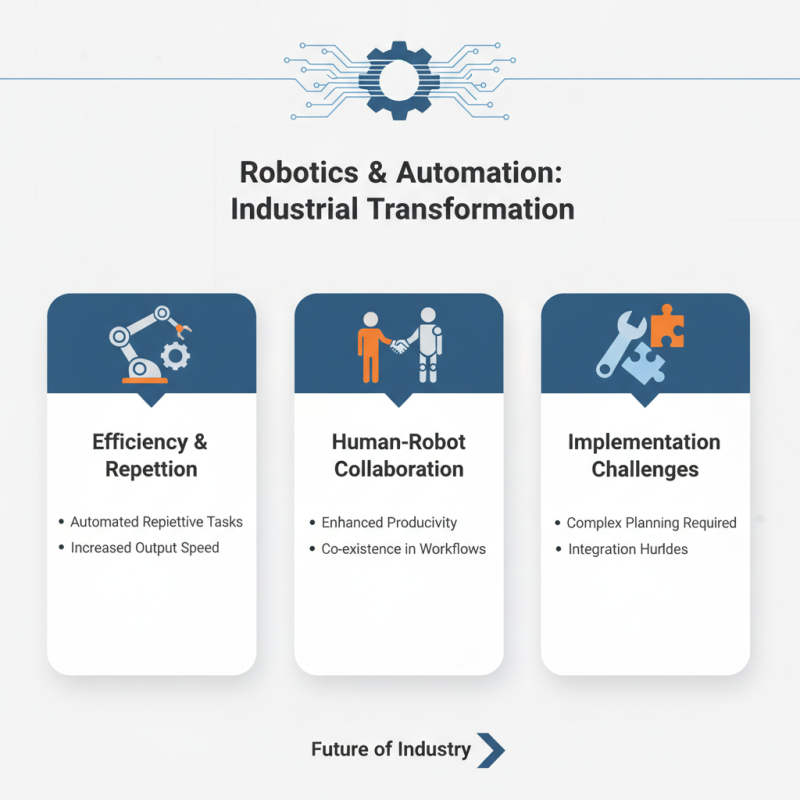
The integration of artificial intelligence (AI) and machine learning into industrial process automation is transforming operations. According to a study by McKinsey, companies utilizing advanced automation can boost productivity by up to 30%. Yet, many organizations struggle with implementation. They face issues related to data privacy and the skill gap in the workforce. Adopting these innovations without addressing such challenges can lead to setbacks.
Furthermore, sustainability is an essential aspect of future automation trends. Reports show that 61% of executives view enhancing sustainability through automation as critical. Companies must find a balance between technological advancement and environmental responsibility. Consequently, the journey toward optimized industrial process automation is complex and requires ongoing reflection and adaptation.
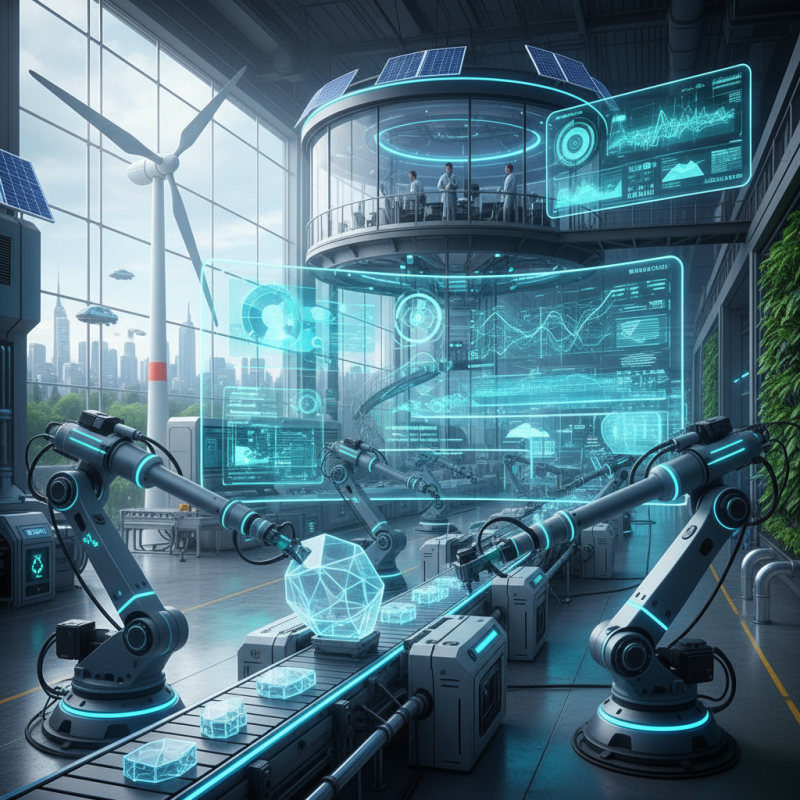
Emergence of AI and Machine Learning in Industrial Automation
The industrial landscape is evolving rapidly. AI and machine learning are driving this change. These technologies bring new capabilities to automation. For instance, predictive maintenance is becoming standard practice. Sensors collect data, allowing AI systems to analyze potential failures. This minimizes downtime and enhances productivity.
However, challenges exist. Not every organization can easily adopt these technologies. There may be skills gaps within the workforce. Training employees becomes crucial. Managers must consider the human aspect of implementation. Integration with existing systems can be complex. Not all processes lend themselves well to automation. The need for a tailored approach is clear.
Moreover, ethical considerations arise as AI plays a bigger role. Decisions by machines can impact workers' lives. Transparency in algorithms is necessary to build trust. Questions about data privacy also linger. Companies must tread carefully, balancing innovation with responsibility. Exploring AI and machine learning in automation requires thoughtful consideration of these factors.
Top Trends in Industrial Process Automation for the Future
Adoption of IoT and Smart Sensors in Manufacturing Processes
The integration of IoT and smart sensors is transforming manufacturing. According to a recent report from MarketsandMarkets, the global IoT in manufacturing market is expected to grow from $29 billion in 2023 to $72 billion by 2028. This growth signals a shift towards data-driven decision-making in production processes.
Smart sensors are key enablers of this trend. These devices collect real-time data, improving efficiency and reducing downtime. For example, predictive maintenance powered by IoT can decrease equipment failure by 30%. However, implementing these technologies is not without challenges. Many businesses struggle with data integration and managing cybersecurity risks. Up to 60% of manufacturers cite these as significant hurdles.
Tip: Start integrating IoT gradually. Test with non-critical equipment first.
Moreover, the cost of implementing smart technologies can be daunting. Companies may hesitate to invest without clear ROI. However, Gartner predicts that organizations using analytics-driven strategies will achieve a 20% improvement in productivity by 2025. Ensuring a strong strategy can result in better outcomes.
Tip: Involve all stakeholders. Their insights can illuminate potential pitfalls.
In navigating this evolving landscape, reflection is crucial. Companies need to assess their readiness for these advancements. Preparedness can make the difference in successfully harnessing IoT's potential.
Focus on Sustainability and Energy Efficiency in Automation Solutions
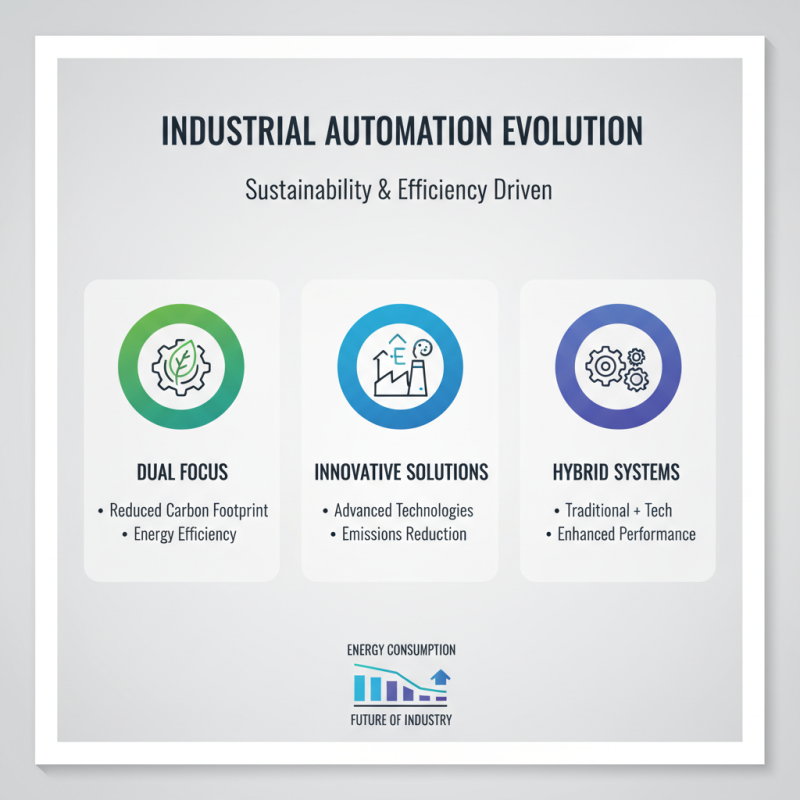
Industrial process automation is evolving rapidly. Sustainability and energy efficiency are crucial focuses. Companies seek innovative automation solutions to reduce their carbon footprint. Many industries are adopting hybrid systems. These blend traditional methods with advanced technologies. This shift aims to enhance efficiency while minimizing energy consumption.
Energy-efficient automation solutions often involve real-time monitoring. Sensors collect data on energy use. This data can reveal opportunities for improvement. For instance, small adjustments may yield significant savings. Yet, not all systems may be compatible with such upgrades. Some existing infrastructures may hinder progress. Companies may need to reassess their current setups.
Sustainability also influences the materials used in automation. Eco-friendly components are becoming standard. However, sourcing such materials can be a challenge. Price and availability often create obstacles. Moreover, balancing costs and sustainability goals is complex. The journey toward efficient automation is not straightforward, but it's necessary. Embracing these trends can lead to a greener future for industries.
Advancements in Cybersecurity for Automated Industrial Systems
In recent years, cybersecurity in automated industrial systems has become critical. Reports indicate that cyberattacks on industrial controls have risen by over 50% in the last two years. This dramatic increase highlights the vulnerabilities inherent in interconnected systems.
Many organizations rely on outdated security measures. For instance, around 60% of industrial operators admit to not regularly updating their software. This lapse can leave systems open to breaches. Experts suggest the integration of AI-driven tools for real-time threat detection. These tools can analyze vast amounts of data and identify anomalies faster than traditional methods.
Moreover, there is a growing gap in skilled cybersecurity professionals. The demand continues to outstrip supply. A recent survey found that 70% of companies struggle to fill cybersecurity roles. This gap undermines efforts to improve security in industrial automation. Investing in training and education for workers could bridge this divide. Ultimately, industry leaders must re-evaluate their cybersecurity strategies. Ignoring these issues could lead to devastating consequences.
Top Trends in Industrial Process Automation for the Future - Advancements in Cybersecurity for Automated Industrial Systems
| Trend |
Description |
Impact on Automation |
Cybersecurity Measures |
| AI Integration |
Utilizing artificial intelligence for predictive maintenance and real-time decision making. |
Increased efficiency and reduced downtime. |
Implementing AI-driven anomaly detection systems. |
| IoT Expansion |
Growth of Internet of Things devices for better monitoring and control. |
Enhanced real-time insights into operations. |
Regular firmware updates and secure data transmission protocols. |
| Edge Computing |
Processing data closer to the source to reduce latency. |
Faster decision-making capabilities. |
Data encryption and secure access controls. |
| Robotic Process Automation (RPA) |
Using software robots to automate routine tasks. |
Increased accuracy and reduced operational costs. |
User access management and activity monitoring. |
| Cloud Computing |
Utilizing the cloud for flexible resources and data storage. |
Scalability and remote accessibility. |
Multi-factor authentication and data backup solutions. |