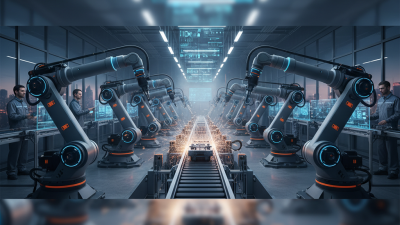
Top 10 Control Systems Automation Trends You Can't Afford to Miss
In today's rapidly evolving industrial landscape, control systems automation has emerged as a critical driver of efficiency and innovation. As businesses strive to remain competitive, understanding the latest trends in this field becomes paramount. The ability to harness advanced technologies for automating processes not only enhances productivity but also streamlines operations, enabling companies to respond swiftly to market demands.
The top 10 control systems automation trends that have surfaced reflect significant advancements in areas such as artificial intelligence, cybersecurity, and the Internet of Things (IoT). These trends are reshaping how organizations manage and optimize their systems, leading to improved decision-making and resource allocation. By keeping an eye on these developments, businesses can leverage automation to reduce costs, minimize downtime, and foster a culture of continuous improvement.
As we delve into the key trends that you simply cannot afford to overlook, it becomes evident that control systems automation is not just a technological evolution; it is a fundamental shift that is redefining how industries operate. Embracing these trends will be essential for organizations aiming to thrive in an increasingly automated future.

Emergence of Artificial Intelligence in Control Systems Automation
The integration of artificial intelligence (AI) into control systems automation is revolutionizing industries by enhancing efficiency, reliability, and adaptability. According to a report by MarketsandMarkets, the global AI in the manufacturing market is expected to grow from $1.41 billion in 2020 to $16.7 billion by 2026, at a CAGR of 44.2%. This rapid growth is indicative of the increasing reliance on AI for process optimization, predictive maintenance, and real-time decision-making in control systems.
AI technologies, such as machine learning and deep learning, empower control systems to analyze vast amounts of data generated by sensors and devices. This capability allows organizations to identify patterns and anomalies in their operations, leading to improved resource allocation and reduced downtime. For instance, studies conducted by McKinsey reveal that AI applications in manufacturing can boost productivity by up to 20%, positioning AI as a critical component of modern control systems.
Moreover, the emergence of AI enables the development of smarter control algorithms that can adapt to changing operational conditions. This adaptability not only enhances the performance of automation systems but also minimizes human intervention, allowing for a seamless workflow. As industries continue to embrace digital transformation, the role of AI in control systems will be paramount, driving the next wave of automation advancements.
Integration of IoT for Enhanced Monitoring and Control
The integration of the Internet of Things (IoT) into control systems automation is transforming industries by enhancing monitoring and control capabilities. According to a recent report from MarketsandMarkets, the IoT in the manufacturing sector is projected to reach $300 billion by 2025, reflecting an annual growth rate of 26.9%. This surge is primarily driven by the necessity for organizations to leverage real-time data for improved operational efficiency. By embedding sensors and connectivity into machinery, companies can gather critical insights that allow for predictive maintenance, reducing downtime and optimizing performance.
Furthermore, the implementation of IoT technologies enables seamless communication between devices, facilitating better decision-making processes. A study published by McKinsey noted that companies that adopt IoT solutions can achieve productivity improvements of up to 30%. Enhanced monitoring capabilities, such as real-time tracking of system performance and environmental conditions, empower organizations to respond swiftly to anomalies. As a result, the integration of IoT not only enhances control systems but also paves the way for innovations in automation, driving competitiveness in an increasingly digital landscape.
Advancements in Cybersecurity for Industrial Automation
In the realm of industrial automation, cybersecurity has emerged as a critical component in safeguarding control systems. As industries increasingly integrate smart technologies and IoT devices, the attack surface for potential cyber threats has expanded significantly. Companies are now recognizing that protecting their automation systems is not just about technology but also about implementing robust strategies to mitigate risks. This includes the adoption of advanced cybersecurity protocols and continuous monitoring to identify vulnerabilities before they can be exploited.
Recent advancements in cybersecurity for industrial automation focus on several key areas, including the implementation of AI-driven threat detection and response mechanisms. These technologies enable organizations to analyze patterns in data traffic, recognizing anomalies that may indicate potential cyberattacks. Additionally, the integration of blockchain technology is gaining traction as a method to enhance data integrity and secure communications within automation networks. By embracing these innovations, organizations can not only safeguard their operational technologies but also ensure compliance with evolving regulatory standards that dictate cybersecurity measures in industrial settings.
Adoption of Edge Computing in Real-Time Data Processing
The adoption of edge computing is revolutionizing real-time data processing within control systems automation. By bringing data processing closer to the source, edge computing significantly reduces latency, enabling quicker decision-making and enhancing the responsiveness of automated systems. This shift allows for real-time analytics and processing at the edge of the network, which is particularly crucial for industries such as manufacturing and logistics where split-second adjustments can lead to improved efficiency and reduced downtime.
Moreover, edge computing supports the increasing volume of data generated by IoT devices, which are pervasive in modern automation systems. With the ability to analyze data locally, organizations can optimize their operational processes without the need to transfer vast amounts of data to centralized cloud systems, which can be slow and resource-intensive. This ability not only enhances operational resilience but also ensures that sensitive data remains secure by minimizing its exposure during transmission. As more businesses recognize the benefits, the integration of edge computing in control systems automation is becoming an essential strategy for staying competitive in an increasingly digital landscape.
Sustainability Trends Driving Eco-Friendly Automation Solutions
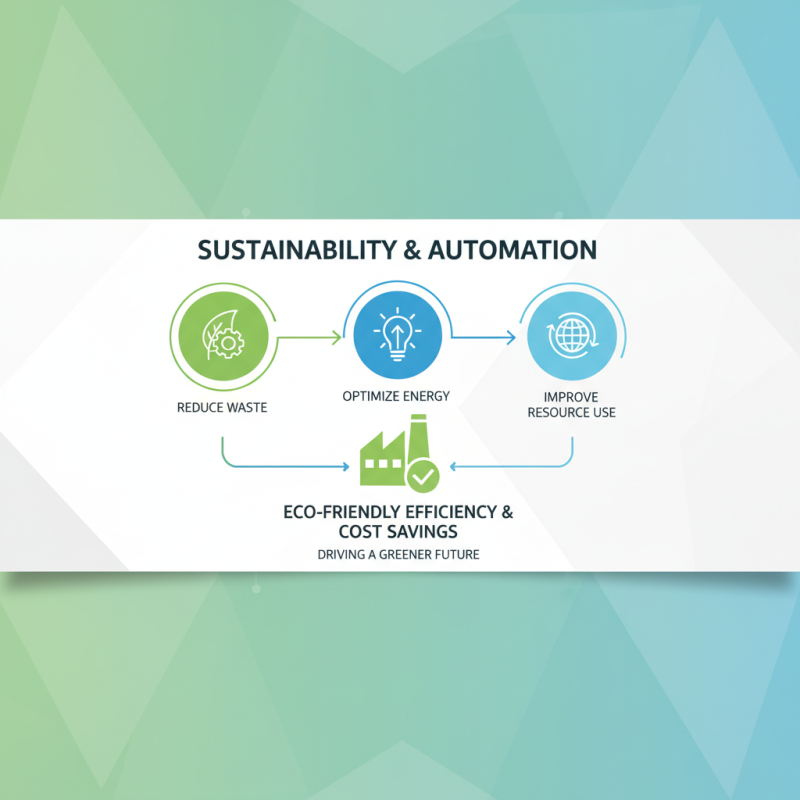
As industries continue to evolve, sustainability has emerged as a critical driving force behind automation solutions. Companies are increasingly recognizing the importance of eco-friendly practices, not just for compliance but as a pathway to operational efficiency and cost savings. Automation technologies now play a pivotal role in enhancing sustainability, allowing businesses to minimize waste, reduce energy consumption, and improve resource management. By integrating these automated solutions, organizations can significantly decrease their carbon footprint while simultaneously boosting productivity.
Tips: When implementing sustainable automation strategies, start by assessing your existing processes to identify areas where energy efficiency can be improved. Consider lightweight materials and lean manufacturing techniques to lower waste. Furthermore, utilizing smart sensors can provide real-time data on energy usage, enabling more informed decisions regarding resource allocation.
Another key trend in sustainable automation is the rise of renewable energy sources integrated into control systems. Companies are starting to adopt solar panels and wind turbines within their operations, often paired with smart grid technology that enhances reliability. Embracing these renewables not only supports environmental goals but can also provide long-term financial benefits through lower energy costs.
Tips: Explore partnerships with renewable energy providers to ensure a steady and sustainable energy supply. Additionally, assessing your automation tools regularly for upgrades can improve system reliability and energy efficiency, ensuring that your operations are aligned with the latest sustainable practices.