
What Are the Top 10 Types of Automation Systems?

Automation systems are often pictured as robotic arms, but the field is much broader. They also include programmable logic controllers, building controls, warehouse tools, and software that routes routine tasks. Each system aims to make work more consistent, visible, or efficient. The details matter. A sensor on a packaging line and a workflow rule in finance solve very different problems.

A useful caution is often attributed to technology leader Bill Gates: “Automation applied to an inefficient operation will magnify the inefficiency.” The warning fits this topic well. A faster process is not automatically a better one. Teams should examine task frequency, error rates, safety needs, integration demands, and maintenance skills before choosing a system. Small oversights can become expensive. That distinction matters.

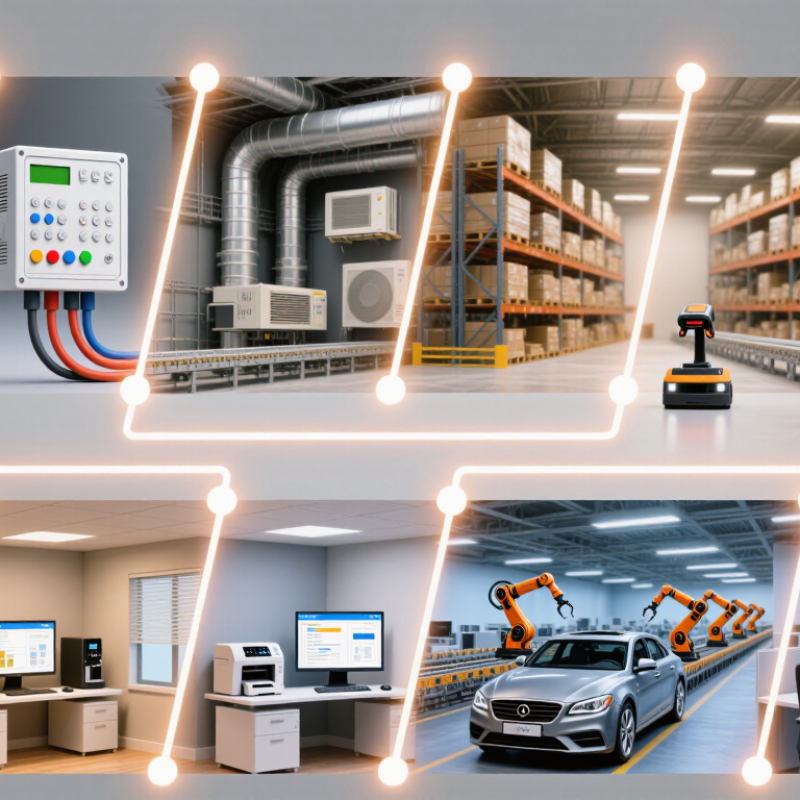
This guide explores ten common types of automation systems, from industrial and process automation to office, network, and home automation. It compares where each type is used, what it can improve, and what trade-offs deserve attention. For example, a factory may need precise motion control, while a small office may benefit more from document routing. The categories can overlap, and no list captures every setup. This map is useful, but not perfect. Readers can use it to identify options, ask better questions, and match technology to real operating needs.
What Are the Top 10 Types of Automation Systems?

Production Architectures: Fixed, Programmable, and Flexible Automation

Automation systems are commonly described through three production architectures: fixed, programmable, and flexible. Fixed automation suits steady, high-volume work. On a bottling line, for example, guides, sensors, and filling heads repeat the same sequence with little variation. The equipment can deliver consistent output, but changing bottle sizes may require new tooling and downtime. The trade-off is real. A small adjustment can become a costly project.

Programmable automation handles batches that change over time. A machining cell can run one part program, then switch to another after a setup change. This approach fits varied orders, though changeovers still take planning and skilled staff.

Flexible automation aims to reduce that pause. Connected machines can adjust to different parts with less manual intervention, provided sensors, software, and material handling work together reliably. Flexibility is not magic. A poorly planned system may simply move bottlenecks from one station to another.

When comparing these architectures, examine product variety, batch size, changeover time, and how often operators must intervene. A practical assessment should include real cycle-time observations, not only supplier estimates. A single shift of production data can reveal where automation helps—and where the process itself needs attention.

Machine Systems: PLC, CNC, and Robotics; IFR: 4.28M Robots in Use in 2023

The International Federation of Robotics reported about 4.28 million industrial robots operating in factories worldwide in 2023. That figure shows how deeply robotics has entered manufacturing. It does not mean every factory is fully automated. Many systems still depend on people to load parts, inspect finishes, and respond when a process drifts.

Robots are only one part of the picture. A programmable logic controller coordinates sensors, motors, and safety interlocks on a production line. A computer numerical control machine follows precise instructions to cut or shape material. Robotics adds programmable movement, such as a gripper transferring a metal housing between stations. The pieces work best when their timing and data are aligned. Small delays matter.

The 4.28 million figure describes robots in operation, not all automation equipment or newly installed units. That distinction is easy to miss. It also says little about how reliably each system performs. A robot can repeat a motion accurately, yet a poorly designed fixture may still create defects. In practice, operators notice those gaps quickly: a sensor covered in dust, a tool change taking too long, or a warning light that appears only during a busy shift. Automation is measurable, but its real value depends on the process around it.

What Are the Top 10 Types of Automation Systems?

A practical overview of widely used automation system categories. The categories can overlap and are not presented as a ranking.

Automation System Type How It Works Typical Applications Common System Elements Primary Role
PLC-Based Discrete Control Executes programmed logic in response to sensor inputs and operating conditions. Packaging lines, assembly stations, conveyors, and machine sequencing. Programmable logic controller, input/output modules, sensors, actuators, and operator interface. Reliable, repeatable control of machines and discrete production steps.
CNC Machine Control Follows numerical instructions to coordinate cutting or shaping tools and workpiece movement. Milling, turning, drilling, cutting, and other precision manufacturing operations. Numerical controller, servo drives, motors, axes, feedback devices, and machine tools. Accurate and repeatable machining of parts.
Industrial Robotic Systems Uses a programmable robot arm or other industrial robot to move tools or materials through defined paths. Welding, painting, machine tending, assembly, and material handling. Robot, controller, end effector, safety equipment, and work-cell sensors. Automated movement and manipulation in production tasks.
Distributed Control Systems (DCS) Coordinates continuous or batch processes through control functions distributed across a facility. Chemical processing, refining, power generation, and other process industries. Distributed controllers, process sensors, control valves, operator stations, and network infrastructure. Integrated monitoring and control of complex processes.
SCADA Systems Collects field data and provides supervisory monitoring and control across geographically dispersed assets. Water and wastewater networks, pipelines, electrical grids, and remote infrastructure. Supervisory software, remote terminal units or controllers, communications links, and field instruments. Remote visibility, alarms, and supervisory control.
Motion Control Systems Coordinates motor speed, position, torque, or synchronization for controlled movement. High-speed packaging, printing, indexing tables, and precision positioning equipment. Motion controller, servo or stepper drives, motors, encoders, and mechanical axes. Precise and coordinated movement of machine components.
Machine Vision Systems Analyzes images from cameras or other optical sensors to make inspection or guidance decisions. Product inspection, code reading, measurement, sorting, and robot guidance. Camera, optics, lighting, image-processing hardware or software, and control interface. Automated visual inspection and image-based decisions.
Automated Material Handling and Storage Moves, buffers, retrieves, or stores materials using automated equipment and control logic. Warehouses, distribution centers, factories, and production-line supply. Conveyors, automated storage and retrieval equipment, mobile vehicles, sensors, and supervisory controls. Consistent movement and storage of goods or materials.
Building Automation Systems Monitors and adjusts building services according to schedules, sensor readings, and operating rules. Commercial, institutional, and industrial buildings. Controllers, temperature and occupancy sensors, actuators, and building-management interfaces. Control of heating, ventilation, air conditioning, lighting, and related services.
Collaborative Robot Systems Combines a robot with application-specific safeguards and procedures for tasks near or shared with people. Assembly, inspection, packaging, and machine tending in suitable work areas. Robot, end effector, application safeguards, risk assessment, and work-cell controls. Flexible task automation designed for human-robot collaboration where risk controls permit.

Industrial robot context: The International Federation of Robotics reported approximately 4.28 million industrial robots operating in factories worldwide in 2023. This figure refers to the global operational stock of industrial robots, not all types of automation systems.

Plant-Wide Control: Distributed Control Systems (DCS) and SCADA

Distributed control systems and SCADA both help operators manage plant-wide operations, but they solve different problems. A DCS typically coordinates processes within one facility, such as keeping a reactor’s temperature steady while pumps and valves respond. Its controllers handle local actions, while operator stations show process conditions and alarms. SCADA usually supervises equipment spread across wider areas, such as remote pumping stations linked by communication networks.

The boundary is not always neat. Some facilities combine both approaches, and the right design depends on process speed, distance, and communication reliability. A delayed signal from a remote site can complicate decisions. So can an alarm screen crowded with minor warnings. Fancy displays are not enough.

Tips: Map critical signals before selecting a system. Check how operators will respond when communication drops. Keep alarm messages specific and actionable. Test backup procedures during realistic operating conditions.

For a DCS, review how controllers behave if a sensor fails or a network segment is lost. For SCADA, check whether remote data arrives with clear timestamps and quality indicators. These details help staff distinguish a real process change from stale information. Documenting control logic also supports maintenance when experienced technicians are unavailable. It is easy to assume every handoff is obvious; often, it is not. Regular reviews can expose gaps before a shift depends on them.

10 Common Types of Automation Systems

Typical placement in the ISA-95 automation hierarchy

DCS and SCADA commonly support plant-wide monitoring and supervisory control. The chart shows a simplified, typical layer for each system: ISA-95 Level 1 covers sensing and basic control, Level 2 covers monitoring and supervisory control, and Level 3 covers manufacturing operations management. Actual architectures vary, and systems may span multiple levels.

Building and Office Automation: BMS and RPA; Gartner: $3.3B RPA Spend (2023)

A building management system (BMS) connects equipment such as heating, ventilation, lighting, and access controls. In an office, it might dim lights near a sunny window or flag an air-conditioning unit running after hours. These systems can improve comfort and reduce wasted energy, but only when sensors and schedules are maintained. Small details matter. A misplaced temperature sensor can make a whole room feel wrong.

Office automation works differently. Robotic process automation (RPA) uses software bots to perform repeatable screen-based tasks, such as copying invoice details into a finance system. Gartner estimated worldwide RPA software spending at about $3.3 billion in 2023, reflecting strong business interest in automating routine work. The figure does not mean every process is a good fit. Bots follow rules, not judgment, and changing a form can break a workflow. In practice, the handoffs between systems are often messier than diagrams suggest. Teams should test exceptions, track errors, and keep a human review step where mistakes carry real costs.

FAQS

When is fixed automation a good choice?

It suits steady, high-volume production with little product variation. A bottling line can repeat filling and guiding steps consistently. Changing bottle sizes may require new tooling and downtime. Small changes can become expensive.

What distinguishes programmable automation from flexible automation?

Programmable systems switch between batches after setup changes. Flexible systems aim to adjust with less manual intervention. They still depend on sensors, software, and material handling working together. Flexibility is not magic.

What should factories assess before choosing an automation system?

Compare product variety, batch size, changeover time, and operator involvement. Observe real cycle times across a shift instead of relying only on estimates. One shift can reveal bottlenecks. It may also expose problems automation cannot fix.

What do PLCs, CNC machines, and robots do?

A PLC coordinates sensors, motors, and safety interlocks. A CNC machine follows precise instructions to cut or shape material. A robot can move a gripped metal housing between stations. Timing matters.

How many industrial robots were operating worldwide in 2023?

An industry report counted about 4.28 million industrial robots in operation. This figure does not include every type of automation equipment. It also does not describe how reliably each robot performs.

Do automated factories still depend on people?

Yes. People may load parts, inspect finishes, and respond when a process drifts. They also notice practical issues, like dusty sensors or slow tool changes. Those details matter.

How can a building management system help an office?

It connects equipment such as heating, ventilation, lighting, and access controls. It might dim lights near a sunny window or flag air conditioning running after hours. Poor sensor placement can still make a room uncomfortable.

What is robotic process automation, and what should teams check?

Software bots can handle repeatable screen-based tasks, such as copying invoice details. Worldwide spending on this software was estimated at about $3.3 billion in 2023. A changed form can break a workflow. Test exceptions, track errors, and keep human review where mistakes matter. Real handoffs can be messier than diagrams suggest.