
China has become a significant source of precision nickel-iron alloys for aerospace, electronics, optics, and measurement equipment. Among these materials, Invar Material is valued for its exceptionally low thermal expansion. It helps components maintain dimensional stability when temperatures change.
This guide examines ten notable Chinese manufacturers and suppliers serving the Invar market. The selection considers production experience, alloy specifications, quality systems, testing capability, and international service. It also reviews practical details, including sheet thickness, bar diameters, coil availability, machining support, and documentation. These factors matter when an Invar frame must remain stable within a few micrometers.
Technical credibility requires more than a company profile. Buyers should check chemical analysis reports, mechanical test results, heat-treatment records, and applicable certifications. They should also confirm whether the supplier controls melting, rolling, annealing, and final inspection internally. A polished website is not enough.
Quality varies.
The ranking should therefore be viewed as a research starting point, not an absolute verdict. Market positions can change with equipment upgrades, project experience, export performance, and customer feedback. Some manufacturers may specialize in thin strip, while others perform better with forged bars or custom components. This difference is easy to overlook. Real purchasing decisions should include sample testing, tolerance review, lead-time confirmation, and direct communication with technical staff. The following overview aims to make that comparison clearer, while recognizing that public information may remain incomplete or uneven.
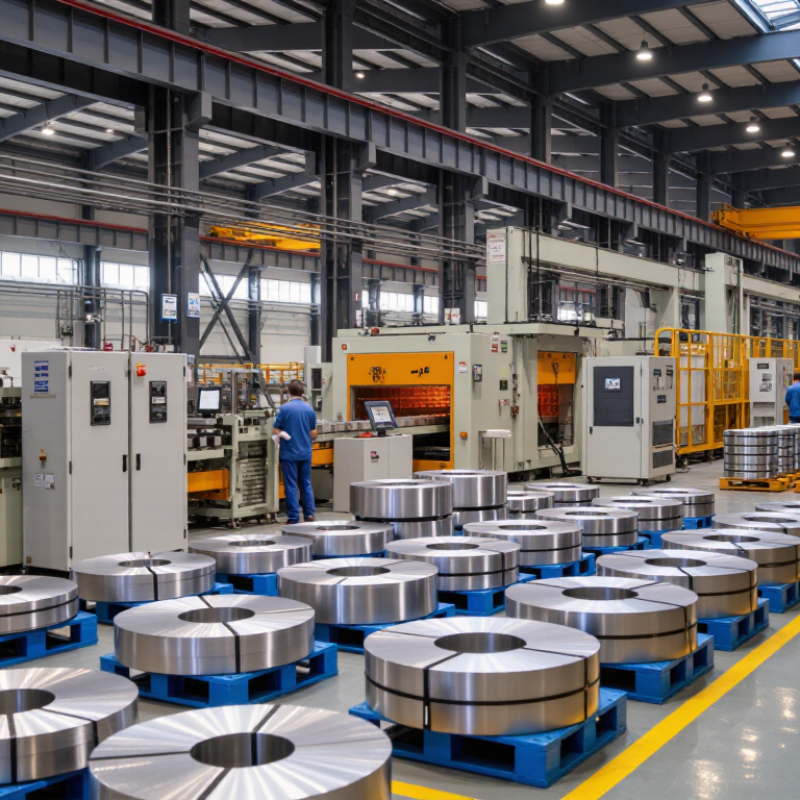
Invar is a nickel-iron alloy known for extremely low thermal expansion near room temperature. Its name reflects its dimensional stability. A typical grade contains about 36% nickel, although composition varies by specification and application. When temperatures change, properly processed Invar moves far less than ordinary steel. This property supports accurate measurement and alignment. However, Invar is not dimensionally frozen. Its expansion increases outside its working temperature range. Welding, forming, and machining can also release residual stress. Careful processing matters. Experienced fabricators often use stress relief and controlled finishing to improve stability.
Invar is used for precision instrument frames, optical mounts, metrology equipment, aerospace structures, and electronic packages. It also appears in low-expansion molds for composite parts. In a measurement fixture, small dimensional changes can create visible errors over long distances. In an electronic package, Invar can reduce stress between metal and glass or ceramic components. Its thermal conductivity is relatively low, so heat may spread slowly through thick sections. Designers must consider this detail. The alloy can be difficult to machine because it work-hardens and may distort after cutting. It is impressive, but not magical. Material certificates, thermal testing, and production trials should confirm real performance before large-scale use.
China’s Invar manufacturing industry is built around a layered supply chain, not only ten large factories. Upstream mills provide low-expansion iron-nickel alloys, while specialist producers control vacuum melting, forging, rolling, machining, and thermal treatment. Invar usually contains about 36% nickel, so raw-material prices strongly influence production costs. The 2024 USGS Mineral Commodity Summaries reported global nickel mine output at approximately 3.6 million metric tons in 2023. China produced about 120,000 metric tons, showing its manufacturing strength does not depend entirely on domestic ore.
The leading ten manufacturers are better understood as different capability groups. Some focus on aerospace-grade sheet and bar. Others supply welded frames, precision tubes, optical benches, or semiconductor equipment parts. Their real differences appear in furnace control, chemical traceability, dimensional stability, and inspection depth. Chinese producers commonly use vacuum induction melting and controlled annealing to reduce internal stress. Many also follow ISO 9001 systems, while higher-end suppliers provide ultrasonic testing, coefficient-of-expansion reports, and batch-level certificates.
The structure is efficient, but not flawless. Smaller workshops may offer fast customization, yet their data consistency can vary between batches. That weakness deserves attention. Industry surveys from specialist metal-market reports indicate rising demand for low-expansion alloys in electronics, optics, and satellite equipment, but public statistics rarely separate Invar from broader nickel-alloy categories. Buyers should therefore compare test records, not factory size alone. A polished sample proves little.eriwa
A company-neutral overview of the key material specifications, production stages, and supply-chain capabilities used to evaluate Invar manufacturing in China.
| No. | Industry Dimension | Verified Data or Typical Specification | Relevance to China’s Invar Manufacturing Structure | Reference Basis |
|---|---|---|---|---|
| 1 | Primary Alloy Family | Nickel–iron, low-expansion alloy; UNS K93600 / Invar 36 | Most manufacturers serving precision-engineering markets organize production around low-expansion nickel–iron alloy grades rather than general stainless-steel production. | ASTM F1684; UNS designation |
| 2 | Nickel Content | 35.0–37.0 wt% Ni | Strict nickel control is central to achieving the low coefficient of thermal expansion associated with Invar 36. | ASTM F1684 chemical requirements |
| 3 | Carbon Limit | Maximum 0.020 wt% C | Low carbon supports weldability, forming consistency, and stable performance in precision components. | ASTM F1684 chemical requirements |
| 4 | Manganese Limit | Maximum 0.50 wt% Mn | Element limits require controlled melting, refining, and heat-lot traceability, which are important differentiators among qualified producers. | ASTM F1684 chemical requirements |
| 5 | Silicon Limit | Maximum 0.25 wt% Si | Silicon control helps maintain alloy consistency and supports downstream rolling, machining, and forming operations. | ASTM F1684 chemical requirements |
| 6 | Thermal Expansion at 20–100°C | Typically about 0.6–1.3 × 10⁻⁶/K, depending on processing and test method | This low expansion range is the principal reason Invar is used for dimensional-control parts, tooling, optical assemblies, and precision structures. | Invar 36 technical data; values vary by condition |
| 7 | Density | Approximately 8.05 g/cm3 | The relatively high density affects material yield, shipping weight, machining economics, and the design of thin-gauge products. | Typical Invar 36 datasheets |
| 8 | Melting Range | Approximately 1,430–1,450°C | Production generally requires controlled melting and solidification equipment before hot working, cold rolling, or precision finishing. | Typical Invar 36 Materials data |
| 9 | Curie Temperature | Approximately 230°C | Magnetic behavior changes near the Curie temperature, so thermal operating limits and application-specific testing are relevant during qualification. | Typical Invar 36 technical data |
| 10 | Main Manufacturing Output Forms | Sheet, plate, strip, bar, rod, wire, tube, and custom-fabricated parts | China’s supply chain typically combines primary alloy production with rolling, drawing, cutting, CNC machining, welding, heat treatment, and inspection services. | Common ASTM and commercial product forms |
Selecting China’s top ten Invar manufacturers requires more than comparing prices. A practical review should verify alloy chemistry, thermal expansion, machining experience, and production traceability. Invar 36 typically contains about 36% nickel and offers a thermal expansion coefficient near 1.2 µm/m·K between 20°C and 100°C. ASTM F1684 provides a useful reference for low-expansion iron-nickel alloys. Suppliers should provide heat numbers, chemical analysis, dimensional records, and recent test certificates.
Supply-chain stability also matters. The USGS Mineral Commodity Summaries 2024 reported approximately 3.6 million metric tons of global mined nickel production in 2023. This figure highlights why buyers should examine nickel sourcing, inventory planning, and price-adjustment clauses. A capable factory should explain melting routes, rolling or forging capacity, annealing controls, and inspection equipment. ISO 9001 certification is helpful, but it cannot replace independent quality evidence. Ask for sample reports.
Experience is visible in small details. Check surface condition, flatness, weld behavior, and response after repeated heating cycles. Suppliers serving optical benches, aerospace tooling, cryogenic equipment, or precision instruments may understand these risks better. A weighted scorecard can assess chemistry, CTE consistency, delivery performance, certifications, and technical support. No ranking is flawless. A factory with the lowest quote may still create expensive rework. On-site audits and third-party testing remain sensible before long-term contracts.
China Top 10 Invar Material Manufacturers?
Profiles of China’s Top 10 Invar Material Manufacturers
China’s Invar manufacturing sector includes specialists with different equipment, markets, and quality systems. The ten profiles below offer a practical way to compare capabilities, rather than a fixed ranking. One manufacturer focuses on vacuum melting, where controlled chemistry helps reduce expansion changes. Another produces precision strip for sensor frames, relay parts, and measurement assemblies. Its operators inspect thickness across the coil, not only at the end.
A third supplier makes Invar rod and bar for machined components. A fourth concentrates on thin foil, where surface defects become obvious under magnification. One profile represents welded tubing production, including dimensional checks after forming. Another serves aerospace-related fabrication and emphasizes batch traceability, though customers should verify every certification independently. A machining specialist provides low-distortion parts, but its cutting strategy may need adjustment for complex designs.
The remaining profiles include an electronics-oriented producer, a research-linked facility, and an export-focused manufacturer. The electronics supplier tests flatness and burr control on small stamped parts. The research-linked producer can develop custom compositions, yet development schedules may be longer than expected. The export-focused supplier supports inspection documents, packing control, and independent testing. Still, “top” depends on the application. Lead time, thermal expansion data, weldability, and lot consistency matter more than factory size. Invar is not automatically easy to process. Machining can reveal stress and distortion later. Careful buyers should request recent test reports, sample dimensions, and clear acceptance standards before placing volume orders.
Comparison of representative low-expansion Fe-Ni alloy grades commonly supplied by precision-material manufacturers in China.
Invar grades are identified by their approximate nickel content. In general, nickel concentration influences thermal expansion, magnetic behavior, and suitability for precision components. Values shown are nominal alloy designations rather than company-specific production data.
China’s top ten Invar material manufacturers should be compared by product range, quality control, production capacity, and technical service. Reliable producers usually supply Invar 36 sheet, plate, bar, wire, tube, and precision-machined parts. Product availability matters when projects require both thin foil and heavy plate. Chemical composition should remain within recognized international specifications, especially nickel content and carbon limits.
Quality evidence is more valuable than impressive claims. Look for heat-number traceability, dimensional inspection records, and mechanical test reports. Stable thermal expansion performance is essential for aerospace tooling, optical benches, electronic packages, and laboratory equipment. Manufacturing capacity also affects delivery reliability. A supplier with multiple furnaces, controlled annealing, and modern rolling lines can handle repeat orders more consistently. Still, large capacity does not always mean better precision.
Service separates a capable manufacturer from a difficult vendor. Technical teams should explain forming limits, welding risks, surface treatment, and machining allowances. Sample approval, inspection support, export packing, and responsive communication reduce costly misunderstandings. Ask for realistic lead times. Not optimistic ones. Some suppliers may offer excellent material but weak after-sales follow-up. Others provide fast quotations yet lack stable batch quality. That gap deserves attention. A practical comparison should review at least three recent production batches, not one attractive sample. Independent testing can also reveal differences in thermal expansion, hardness, surface defects, and flatness. This approach makes the ranking more credible, while leaving room for honest uncertainty.
| Cookie | Duration | Description |
|---|---|---|
| cookielawinfo-checkbox-analytics | 11 months | This cookie is set by GDPR Cookie Consent plugin. The cookie is used to store the user consent for the cookies in the category "Analytics". |
| cookielawinfo-checkbox-functional | 11 months | The cookie is set by GDPR cookie consent to record the user consent for the cookies in the category "Functional". |
| cookielawinfo-checkbox-necessary | 11 months | This cookie is set by GDPR Cookie Consent plugin. The cookies is used to store the user consent for the cookies in the category "Necessary". |
| cookielawinfo-checkbox-others | 11 months | This cookie is set by GDPR Cookie Consent plugin. The cookie is used to store the user consent for the cookies in the category "Other. |
| cookielawinfo-checkbox-performance | 11 months | This cookie is set by GDPR Cookie Consent plugin. The cookie is used to store the user consent for the cookies in the category "Performance". |
| viewed_cookie_policy | 11 months | The cookie is set by the GDPR Cookie Consent plugin and is used to store whether or not user has consented to the use of cookies. It does not store any personal data. |