Top Tips for Material Handling Automation Solutions?
In today's fast-paced industrial landscape, material handling automation has become crucial for efficiency. Businesses are increasingly looking to enhance productivity and reduce operating costs. Effective automation solutions streamline processes, minimize human error, and improve workplace safety.
Choosing the right material handling automation system can be challenging. Factors like technology, scalability, and integration with existing systems must be considered. Companies often struggle with implementation and staff training. Balancing innovation and practicality is essential for success.
Staying informed about the latest trends in material handling automation can give an edge. Researching case studies helps identify what works and what doesn’t. This exploration can lead to better decision-making and more effective strategies. Embracing the journey of automation requires commitment and patience, but the rewards can be significant. As we delve into the top tips, let’s consider what’s feasible and what needs further thought.

Understanding Material Handling Automation Basics
Material handling automation is vital for modern warehouses and distribution centers. It streamlines the movement and storage of materials. Understanding the basics is essential for maximizing efficiency. Automated systems use technology to manage inventory and optimize workflows. These systems integrate various processes, reducing manual labor and errors.
The core components include automated guided vehicles (AGVs), conveyors, and robotic arms. Each element plays a role in enhancing operational efficiency. For instance, AGVs transport goods within facilities. They operate independently, increasing speed and reliability. Conveyors facilitate the smooth movement of items across different areas. They minimize the physical strain on workers. However, the implementation process can present challenges. No system is perfect, and identifying potential issues early is crucial.
Training staff is another critical aspect. Users must understand how to interact with automation technology. Inadequate training can lead to misuse, resulting in costly errors. Regular maintenance is also vital for performance. Well-maintained systems operate smoothly, but any neglect can lead to breakdowns. Reflecting on these aspects ensures a more successful implementation of material handling solutions.
Benefits of Implementing Automation in Material Handling
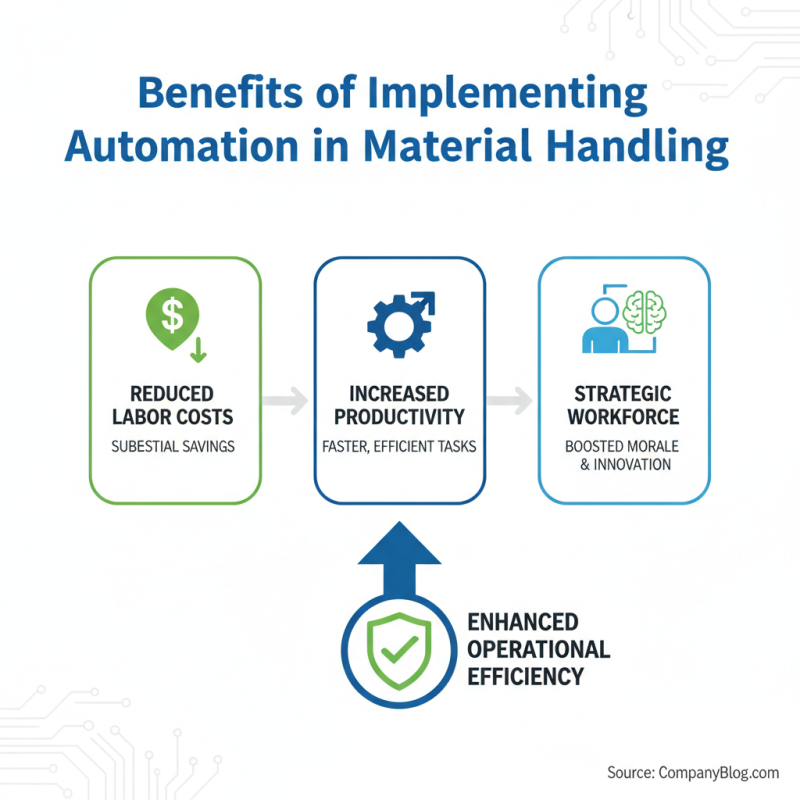
Implementing automation in material handling offers numerous benefits that can enhance operational efficiency. It significantly reduces labor costs, leading to substantial savings. By automating repetitive tasks, companies can redirect their workforce to more strategic roles. This not only boosts morale but also increases productivity.
Furthermore, automation leads to improved accuracy in inventory management. Automated systems minimize human errors, ensuring precision in order fulfillment. This accuracy enhances customer satisfaction, as orders are delivered promptly and correctly. However, the initial costs of integrating such solutions can be daunting for some businesses. Organizations must weigh the upfront investments against long-term gains.
Another vital aspect is the safety of employees. Automation can handle dangerous tasks, reducing workplace injuries. Yet, this transition may require retraining employees, which can be a challenging process. Many companies find that while automation is beneficial, it also demands continuous evaluation to ensure it meets their evolving needs. With proper planning, businesses can reap the full rewards of automation in material handling.
Key Technologies for Effective Material Handling Automation
In today's fast-paced industrial environment,
efficient material handling is crucial. Several key technologies enable effective automation.
Robotic systems are increasingly common.
These machines can lift, move, and sort items quickly. They reduce the risk of injury for workers.
But, their implementation can be complex. Proper training is essential to maximize benefits.
Automated guided vehicles (AGVs) enhance warehouse operations.
They navigate through facilities autonomously. AGVs improve accuracy in inventory management.
This minimizes human error but requires regular maintenance. Regular checks are essential to ensure they operate smoothly.
Moreover, integrating AGVs with current systems can pose challenges. Flexibility in planning is vital.
Another essential technology is conveyor systems. They efficiently transport goods within a facility.
Various designs can accommodate different types of products. However, it’s important to consider the layout of your space.
Poor design can lead to bottlenecks, affecting productivity.
Businesses must continuously evaluate their system's effectiveness.
It’s an evolving process that often needs adjustments.
Best Practices for Successful Automation Integration
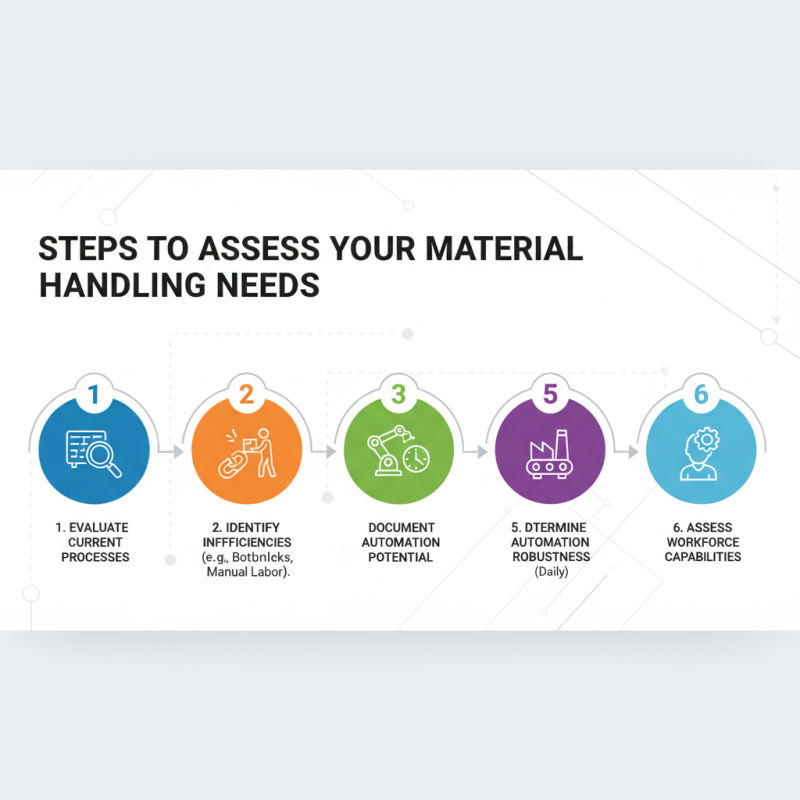
Integrating automation into material handling requires more than just technology. It demands careful planning and a clear strategy. Companies should start by assessing their current processes. Identify bottlenecks and areas for improvement. This step ensures that automation addresses real problems, not just perceived ones.
Training staff is essential. Employees must understand new systems to maximize their efficiency. It's common for teams to resist change, fearing job displacement or complexity. Providing comprehensive training can alleviate these fears and improve overall morale. Testing and iteration are equally important. Not every automated solution will work perfectly on the first try. Regular feedback loops should be established to refine and enhance processes.
Moreover, integration needs robust data management. Accurate data collection enables better decision-making. It also helps in predicting maintenance needs, which can save costs. However, relying too heavily on automation can lead to oversight. Human intuition still plays a crucial role in responding to unexpected challenges. Balancing technology with human insight creates a more resilient operation.
Top Tips for Material Handling Automation Solutions
This bar chart illustrates the benefits of material handling automation solutions, showcasing increased efficiency, cost reduction, improved safety, enhanced accuracy, and scalability, represented in percentages. These factors are crucial for successful automation integration in the material handling industry.