What is Smart Ai Glasses and How Do They Work?
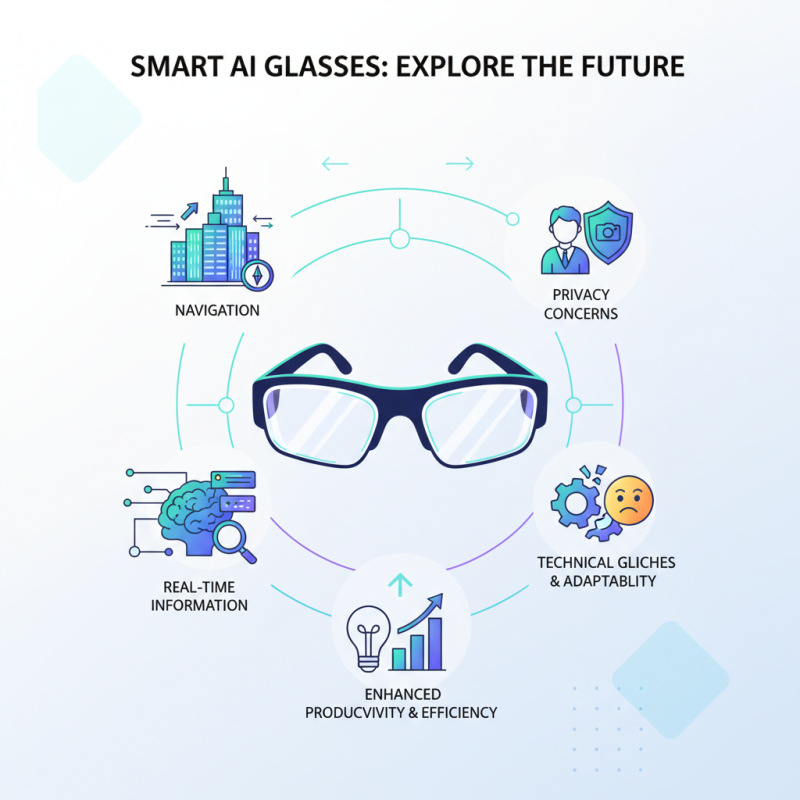
Smart Ai Glasses represent a remarkable fusion of technology and everyday life. These devices seamlessly integrate augmented reality with practical functionalities. Users can access real-time information without looking down at their smartphones. Imagine navigating a city with directions projected directly into your field of vision. That's the promise of Smart AI Glasses.
Yet, the development and utilization of these glasses come with challenges. Privacy concerns emerge as these devices can record surroundings. Technical glitches could disrupt user experiences, leading to frustration. Furthermore, many users may struggle to adapt to such advanced interfaces.
Despite these issues, the potential benefits are significant. Smart AI Glasses can enhance productivity and increase efficiency in both professional and personal settings. As technology evolves, these glasses may very well become everyday tools. The journey of Smart AI Glasses is just beginning, inviting us to explore their capabilities and limitations.
What Are Smart Ai Glasses?
Smart AI glasses are an innovative fusion of technology and daily life. These wearable devices integrate augmented reality (AR) and artificial intelligence (AI) to enhance how we interact with the world around us. Equipped with cameras and sensors, they can recognize faces, translate languages, and provide real-time information. Imagine receiving navigation directions directly in your line of sight, eliminating the need for traditional maps or smartphones.
The functionality of smart AI glasses extends beyond just vision enhancement. They can streamline our tasks through voice commands. This hands-free operation is invaluable in various settings, from work to leisure. The device learns user preferences over time, improving its responses and interactions. However, data privacy remains a concern. Users should reflect on how much information they share with these devices. Balancing convenience with security is essential.
Despite their capabilities, smart AI glasses are still evolving. Some users report that the battery life doesn't meet expectations. This reflects a common issue in modern wearable tech. Additionally, the weight and comfort of the glasses can be problematic. Users might find them cumbersome during extended use. Continuous development is necessary to address these imperfections and enhance user experience.
Key Features and Specifications of Smart Ai Glasses
Smart AI glasses are revolutionizing the way we interact with our environment. These devices integrate advanced features like augmented reality (AR) and voice recognition. Users can easily access information hands-free. The glasses often come with built-in cameras for capturing moments or scanning objects. This feature adds a layer of convenience, making tasks seamless.
In terms of specifications, battery life is crucial. Most smart glasses offer several hours of use on a single charge. Lightweight materials enhance comfort, making them ideal for prolonged use. Connectivity options include Bluetooth and Wi-Fi, ensuring constant updates and functionality. Despite these advancements, some users report occasional lag in performance. This inconsistency prompts reflection on how these devices can improve.
Audio quality is another key aspect. Some models feature bone conduction technology, allowing users to hear sounds without blocking their ears. This hands-free approach is impressive, yet some find the sound too quiet in noisy environments. Overall, the development of smart AI glasses is promising but not without its challenges.
How Smart Ai Glasses Use AI Technology
Smart AI glasses are an innovative blend of augmented reality and artificial intelligence. They integrate advanced sensors and a compact display. These glasses can overlay digital information onto the physical world. Imagine walking through a city with directions displayed right in your line of sight. This technology has applications in navigation, education, and even remote assistance.
AI technology powers features such as voice recognition and image analysis. Users can interact with the device using simple voice commands. For example, asking for information about nearby landmarks instantly brings up details. The glasses can also recognize faces and provide relevant insights. This capability fosters enhanced communication, especially for individuals with hearing impairments. Despite their promise, there are challenges. Battery life can limit usability. Moreover, privacy concerns arise when wearable technology records interactions.
Visual recognition is not perfect. Sometimes, it misidentifies objects or people. Such errors highlight the need for ongoing development in AI algorithms. As technologies evolve, so do their complexities. Ensuring reliable functionality while addressing ethical considerations will be crucial as smart glasses evolve.
The Functionality of Smart Ai Glasses in Everyday Life
Smart AI glasses are changing how we interact with the world. They blend technology seamlessly into daily life. Imagine being able to receive notifications without looking at your phone. Smart AI glasses provide hands-free access to vital information in real time. This technology uses voice commands and visual prompts to assist users.
In practical terms, these glasses can enhance navigation. Users can get directions displayed directly in their field of vision. This makes commuting easier and safer. They also offer augmented reality experiences. For instance, you can see product details while shopping. This efficiency can save time and improve decision-making.
However, it's essential to reflect on the implications. Privacy concerns arise as AI glasses collect data. Users must be aware of the trade-offs between convenience and personal space. Moreover, the technology can be distracting. While designed for efficiency, it may pull focus from the real world. Balancing these factors is key in embracing this tech in daily life.
What is Smart Ai Glasses and How Do They Work? - The Functionality of Smart Ai Glasses in Everyday Life
| Feature | Description | Benefit in Everyday Life |
| Augmented Reality | Overlays digital information onto the real world. | Enhances navigation and situational awareness. |
| Voice Commands | Allows users to control functionalities using voice. | Enables hands-free operation for convenience. |
| Camera Functionality | Integrated cameras for photo and video capture. | Facilitates instant sharing of experiences. |
| Fitness Tracking | Monitors health metrics like heart rate and steps. | Promotes a healthier lifestyle through data. |
| Notifications | Displays notifications from connected devices. | Keeps users updated without distractions. |
| Navigation | Provides turn-by-turn directions visually. | Simplifies travel and exploration. |
Future Trends and Innovations in Smart Ai Glasses
Smart AI glasses are evolving rapidly, driven by advancements in technology. These devices aim to enhance our daily lives through augmented reality and intelligent features. Imagine walking down the street, and your glasses can provide real-time navigation, display notifications, or even help with facial recognition. This is more than just a concept; it represents a tangible future.
Future trends in smart AI glasses focus on improved functionalities. As manufacturers strive for better battery life, these glasses will become more practical for everyday use. Integration with AI will enable them to understand context better and respond to user needs. However, the path is not without challenges. Privacy concerns are paramount, as the ability to capture images and data raises ethical questions.
There’s also the challenge of user experience. While many people find smart glasses intriguing, others could feel overwhelmed by the technology. Navigating a balance between innovation and usability is crucial. As this technology becomes mainstream, feedback loops from early adopters will help shape future designs and functionalities, ensuring they meet the expectations of diverse users.
Trends in Smart AI Glasses Adoption (2020-2023)