
Choosing between Seamless Pipe and welded pipe is not a simple strength contest. The manufacturing route, material grade, dimensions, inspection requirements, and service conditions all affect suitability. Seamless pipe has no longitudinal weld seam, which can be valuable where pressure, temperature, or cyclic loading demand careful risk control. But that feature alone does not guarantee better performance. Not automatically better.
The scale of steel production offers useful context, not a direct answer. World Steel Association reported 1,882.6 million tonnes of global crude steel production in 2024. Pipe buyers still need to assess the specific product, rather than infer quality from industry-wide output. ASTM A106 and API 5L provide recognized product requirements for relevant pipe applications, while ASME B31.3 addresses process-piping design and construction. These standards help frame the comparison; they do not make every product interchangeable. A pipe’s grade, wall thickness, manufacturing records, and inspection results matter.
This article examines where seamless construction can offer practical advantages, where welded pipe may be a sound and economical choice, and which trade-offs deserve scrutiny. Welded pipe can meet demanding specifications when its material and weld quality are properly controlled. Conversely, seamless pipe may bring higher cost or availability constraints. The right decision depends on the line: its operating pressure, fluid, temperature, diameter, and consequence of failure. Check the specification closely. A confident choice should rest on verified data and application needs, not on the word “seamless” alone.
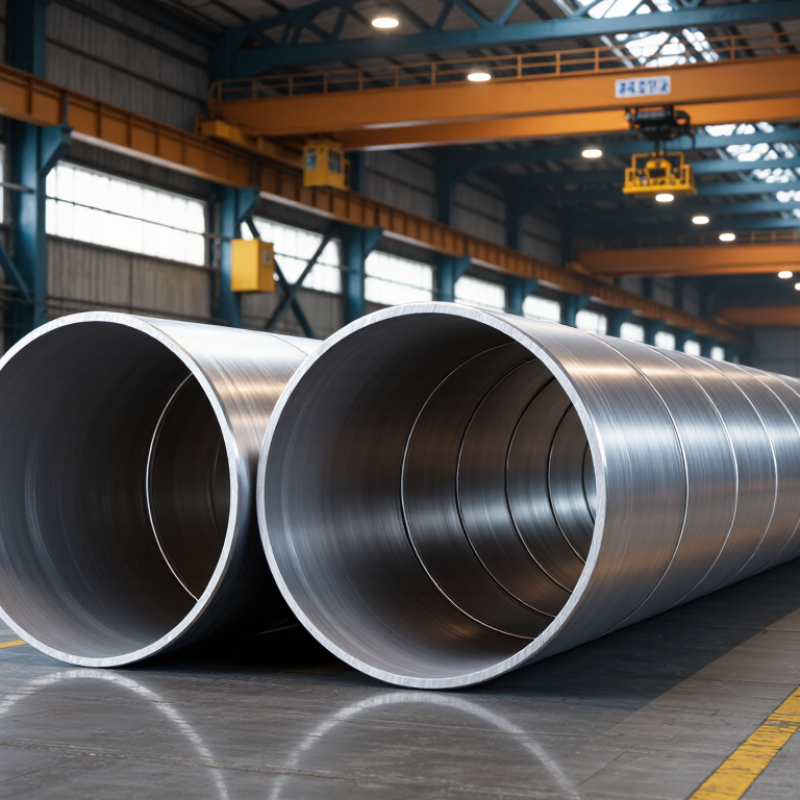
Seamless pipe begins as a solid steel billet. The heated billet is pierced, then rolled or drawn into a hollow tube. No longitudinal weld joins its walls. Welded pipe starts as flat strip or plate, formed into a cylinder and joined along a seam, commonly by electric resistance or arc welding.
That seam is the defining difference, not a simple quality ranking. Welded pipe can have consistent wall thickness and close dimensions, depending on manufacturing controls. The weld zone is inspected and tested under applicable product requirements. Seamless pipe avoids a weld seam, but it can still contain manufacturing imperfections and may show greater variation in wall thickness. Nothing is perfect.
Choice depends on the service. For high-pressure or cyclic-duty lines, engineers compare grade, diameter, wall thickness, temperature, corrosion exposure, and inspection records—not just the production route. Seamless products are often selected where avoiding a longitudinal seam matters, while welded options can suit many structural and fluid applications. Cost and availability also matter. Reviewing the pipe specification and operating conditions is more reliable than assuming seamless always performs better. Check the mill test certificate and dimensional tolerances before deciding.
Seamless and welded pipes begin differently, and that difference influences their structure. Seamless pipe starts as a solid steel billet, heated and pierced to create a hollow shell. Rollers then stretch and shape it. There is no longitudinal weld seam. The process can suit demanding pressure or temperature conditions, but it does not make every seamless pipe automatically stronger.
Welded pipe usually begins as flat steel strip or plate. The material is formed into a cylinder, then its edges are joined by welding. That seam is a distinct feature, not necessarily a weakness. Modern production controls heat and weld quality, while inspection can detect flaws. The finished pipe’s performance depends on its grade, wall thickness, weld procedure, and testing. Small details count.
Manufacturing also affects dimensions, surface condition, and consistency. A welded pipe may offer close dimensional control and efficient production for many ordinary systems. Seamless pipe can be useful when a continuous wall is preferred, though its wall thickness may vary along the length. That trade-off is easy to overlook. I would compare the actual specification, inspection records, and service conditions before choosing, rather than relying on the manufacturing label alone. A clean cut end tells little about how the pipe was made or tested.
Minimum specified mechanical properties for ASTM A53 Grade B pipe
ASTM A53 Grade B specifies the same minimum tensile strength (60 ksi) and yield strength (35 ksi) for Type S seamless and Type E electric-resistance-welded pipe. The manufacturing route alone does not mean one type has higher specified minimum strength; suitability also depends on service conditions, inspection, and other requirements.
Seamless pipe has no longitudinal weld seam, removing one potential location for defects or stress concentration. That can matter in cyclic service, where pressure pulses repeatedly load the pipe wall. But seamless does not automatically mean stronger. Wall thickness, steel grade, diameter, temperature, and manufacturing quality all shape pressure capacity.
API Specification 5L, 46th edition, sets a minimum yield strength of 52 ksi (359 MPa) for Grade X52. That value identifies the grade, not a strength advantage for seamless pipe over welded pipe. Both manufacturing routes can meet specified grade requirements. ASME B31.3-2022 also accounts for weld quality in piping design, so the seam, inspection method, and applicable quality factor matter. Details matter.
For a high-pressure line, engineers should compare the actual wall dimensions, material certificates, and inspection records, not just the product label. Radiographic or ultrasonic examination can reveal weld flaws, though inspection does not erase every uncertainty. Seamless pipe may offer a simpler risk profile where a longitudinal seam is undesirable. Welded pipe, however, can be a reliable choice when its process and examination meet the service requirements. I would avoid treating “seamless” as a guarantee; that shorthand misses too much.
Seamless pipe is useful where a continuous pressure boundary and predictable wall thickness matter. With no longitudinal weld seam, there is one less manufacturing feature to qualify and inspect. That helps in high-temperature service, compact pipe runs, and systems exposed to pressure cycling. It does not make inspection unnecessary.
ASTM A106/A106M sets Grade B minimum tensile strength at 415 MPa and minimum yield strength at 240 MPa. These are specified material properties, not proof that seamless pipe is always stronger than welded pipe. The practical choice still depends on grade, wall thickness, manufacturing quality, and service conditions. For example, a process engineer may prefer seamless sections for a small-bore steam line with frequent temperature changes, while a well-qualified welded pipe may suit a long, steady pipeline. Check the actual specification and test records. Details matter. Seamless pipe can also cost more or be harder to source in certain sizes, and that trade-off deserves a sober look.
Seamless pipe has no longitudinal weld seam, which can be beneficial in demanding services. The right choice still depends on the material, dimensions, applicable design code, manufacturing quality, and operating conditions.
| Comparison Factor | Seamless Pipe | Welded Pipe | Where Seamless May Be Advantageous |
|---|---|---|---|
| Manufacturing Route | Made from a solid billet that is pierced and formed into a hollow tube, then sized and finished. | Made by forming plate, strip, or coil into a tube and joining the edges with a weld. | Useful when eliminating a longitudinal seam is a project requirement or reduces a particular inspection concern. |
| Longitudinal Weld | Does not have a longitudinal weld seam. | Has a longitudinal weld for common straight-seam products; other welded configurations also exist. | Can be preferred when the design or service specification specifically calls for seam-free construction. Welded pipe can also be suitable when manufactured and inspected to the required specification. |
| Pressure and Design Suitability | May be selected for high-pressure or severe-service applications, subject to design verification. | Can also be designed for substantial pressure service when its material, weld quality, inspection, and applicable code requirements are satisfied. | Offers a practical option where project standards favor seamless construction. Pressure capacity must be calculated from the actual dimensions, material properties, temperature, and design code—not from manufacturing route alone. |
| Stress and Service Conditions | Has no weld seam that could create a local feature requiring specific evaluation. | The weld and heat-affected zone may require attention in the design, fabrication records, or inspection plan, depending on the service and specification. | May simplify selection for cyclic, high-temperature, or otherwise demanding service when the governing specification identifies seamless pipe as suitable or preferred. |
| Corrosion Performance | Corrosion resistance depends primarily on alloy, condition, surface, and operating environment; seamless construction alone does not make the pipe corrosion-proof. | Corrosion resistance likewise depends on material and environment. Weld-area condition and any specified post-weld treatment may also matter. | Can remove the longitudinal weld as a location to assess, but alloy selection, corrosion allowance, and service-specific testing remain essential. |
| Dimensions and Availability | Available in a wide range of sizes, though availability and dimensional tolerances depend on the product standard and manufacturing route. | Often available in many sizes and wall thicknesses; large diameters are commonly supplied as welded pipe. | May suit projects within the available seamless size range. For large diameters or specific wall dimensions, welded pipe may offer more options. |
| Inspection Needs | Still requires the inspection and testing specified for the product and application; seamless does not mean defect-free. | Weld examination and testing may be required, with the extent determined by the product standard, design code, and service. | May reduce weld-specific examination requirements where the applicable specification allows, but does not eliminate material, dimensional, or other quality checks. |
| Cost Considerations | Can cost more in some sizes and specifications because of the manufacturing route and available supply. | Can be more economical, particularly for larger diameters, but cost varies with material, wall thickness, inspection, and market conditions. | Best justified when its service or specification advantages outweigh purchase cost. Compare qualified products on a like-for-like basis. |
| Typical Selection Context | May be considered for pressure piping, mechanical components, and applications whose specifications call for seamless products. | Commonly used in structural, water, energy, and process applications, including many pressure services when compliant with the applicable requirements. | Choose seamless when a project specification, design assessment, or service condition supports it—not simply because it is universally stronger. |
Selection note: Confirm the governing product standard and design code, material grade, outside diameter, wall thickness, temperature, pressure, corrosion conditions, testing requirements, and traceability before specifying either pipe type.
Choosing between seamless and welded pipes starts with service conditions, not a blanket claim that one is always stronger. A high-pressure hydraulic line may favor seamless pipe because it has no longitudinal weld seam. However, performance also depends on material grade, wall thickness, heat treatment, and manufacturing quality. Seamless is not automatically safer.
Welded pipe is formed from plate or strip and joined along a seam. Modern welding and inspection can produce consistent pipes for water systems, structural frames, and many process lines. Welded options often offer tighter dimensional control and lower cost, especially in larger diameters. Check seam quality and inspection records against the project specification. Details matter.
Temperature changes, corrosive media, vibration, and maintenance access should guide the decision. Compare pressure ratings and material compatibility using relevant engineering data, then consider delivery time and total installed cost. Check the data. A thicker wall is not always the answer. In some applications, welded pipe meets the requirements; in others, seamless pipe may provide a useful margin. The trade-off can be less clear on paper, so assess the actual operating conditions and verify test documents against your requirements.
| Cookie | Duration | Description |
|---|---|---|
| cookielawinfo-checkbox-analytics | 11 months | This cookie is set by GDPR Cookie Consent plugin. The cookie is used to store the user consent for the cookies in the category "Analytics". |
| cookielawinfo-checkbox-functional | 11 months | The cookie is set by GDPR cookie consent to record the user consent for the cookies in the category "Functional". |
| cookielawinfo-checkbox-necessary | 11 months | This cookie is set by GDPR Cookie Consent plugin. The cookies is used to store the user consent for the cookies in the category "Necessary". |
| cookielawinfo-checkbox-others | 11 months | This cookie is set by GDPR Cookie Consent plugin. The cookie is used to store the user consent for the cookies in the category "Other. |
| cookielawinfo-checkbox-performance | 11 months | This cookie is set by GDPR Cookie Consent plugin. The cookie is used to store the user consent for the cookies in the category "Performance". |
| viewed_cookie_policy | 11 months | The cookie is set by the GDPR Cookie Consent plugin and is used to store whether or not user has consented to the use of cookies. It does not store any personal data. |