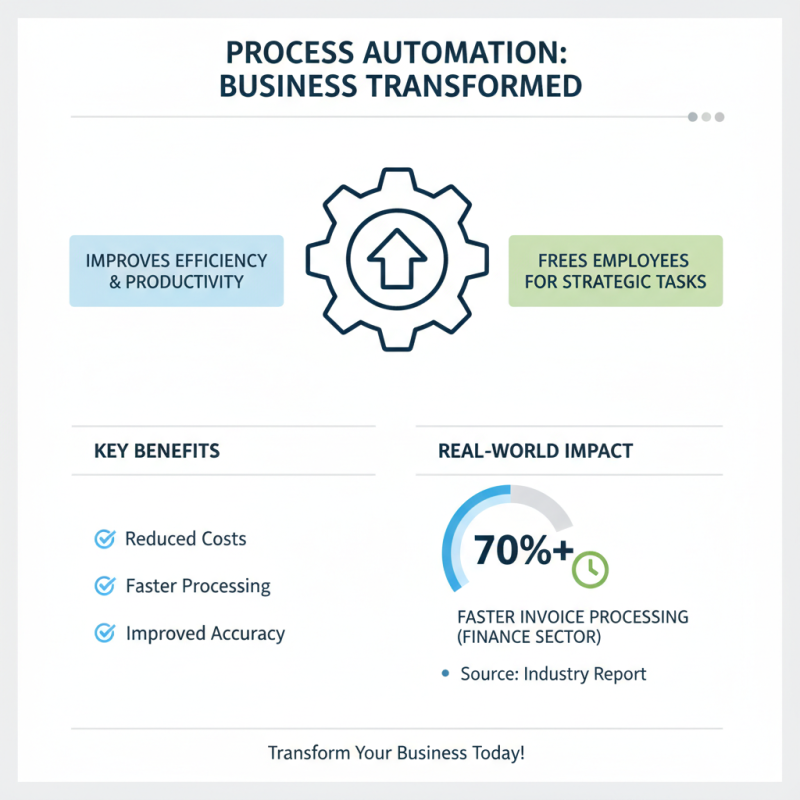
What is Process Automation Technology and How Does It Improve Efficiency?
Process automation technology has transformed the way businesses operate. According to a report by McKinsey, organizations that implement automation can increase productivity by up to 40%. This shift allows companies to allocate resources more efficiently. It replaces manual tasks with software solutions, ultimately minimizing human error.
Moreover, a study from Deloitte indicates that around 70% of companies view automation as a key area for investment. These businesses are experiencing faster operations and improved accuracy in task execution. However, implementing process automation technology is not without its challenges. Resistance from staff and lack of proper training can hinder successful adoption.
A critical look at automation reveals that while it boosts efficiency, it may also lead to job displacement. Balancing automation and workforce needs is essential. Companies should consider both the benefits and the potential drawbacks of process automation technology as they navigate this evolving landscape.

What is Process Automation Technology?
Process automation technology refers to software and tools that streamline repetitive tasks. By automating processes, companies can enhance productivity. According to a recent industry report, automation can boost efficiency by up to 30%. This statistic highlights the growing importance of this technology in modern business operations.
Implementing process automation is not without challenges. Many organizations face resistance to change from employees. There may be fear about job displacement or uncertainty about new technologies. It's crucial to address these concerns through proper training and communication. Engaging staff in the automation process can lead to greater acceptance and better results.
Tips: Start small. Choose a single process to automate first. This allows you to assess the technology's impact without overwhelming your team. Measure the results and learn from any mistakes. Iteration is key to a successful automation strategy. As you refine processes, remember that continuous improvement is essential. Regular evaluations help ensure that automation technology delivers lasting benefits.
Key Components of Process Automation Systems
Process automation technology relies on various key components to enhance operational efficiency. At the core of these systems is a robust software platform. This platform automates routine tasks, reducing the time spent on manual processes. It minimizes human error, which can be costly. Simple tasks like data entry can be automated, freeing up staff for more complex duties.
Another important element is the integration capabilities of automation systems. These technologies often connect with existing software and hardware. They ensure seamless data flow across departments. However, this integration can sometimes lead to unexpected challenges. Compatibility issues may arise, leading to delays.
Additionally, a user-friendly interface is crucial. It allows employees to adapt quickly to automation tools. If the interface is complex, it can hinder productivity rather than enhance it. Training staff effectively is vital, as it addresses concerns and builds confidence. Overall, while process automation technology has great potential, organizations must remain vigilant and open to adjustments.
Efficiency Improvement Through Process Automation Technology
This bar chart illustrates the efficiency improvements before and after the implementation of process automation technology, demonstrating a significant increase in operational performance.
Industry Statistics on Efficiency Gains from Automation
Process automation technology is transforming industries by enhancing efficiency. According to a recent report, companies implementing automation can achieve efficiency gains of up to 30%. This shift often leads to cost reductions and faster process times. For instance, businesses have reported saving 50% on repetitive tasks through automation.
In sectors like manufacturing, automation can increase productivity by 25%. This improvement is notable in inventory management. Real-time tracking systems minimize human error and optimize resource allocation. However, some organizations struggle with integration challenges. They may not fully understand how to adopt automation effectively, hindering potential gains.
Tips: Start small with automation projects. Focus on repetitive tasks. Measure progress and adjust your strategy accordingly. Monitor employee feedback. This approach can help refine your implementation process. Remember, there can be a learning curve. Reflect on areas that need improvement before scaling up. Automation holds promise, but not all attempts will yield immediate success.
Case Studies: Successful Implementations of Process Automation
Process automation technology transforms business operations, improving efficiency and productivity. Many organizations have reported remarkable results after implementing automation solutions. For example, in the finance sector, a well-known report indicated that automating invoice processes reduced processing time by over 70%. This allowed employees to focus on more strategic tasks.
In healthcare, automation has streamlined patient record management. A case study showed a 60% decrease in data entry errors after implementing automated systems. Such improvements not only enhance accuracy but also free up staff for patient care. These statistics exemplify how automation can significantly impact various industries.
**Tip:** Identify low-impact tasks ripe for automation. Start small to gauge effectiveness.
It’s important to remember that not all processes might benefit from automation. Some organizations faced challenges, such as employee resistance to change or inadequate training. Continuous evaluation is essential. This ensures automation aligns well with team dynamics.
**Tip:** Engage employees in the automation process. Their insights can highlight potential pitfalls.
Future Trends in Process Automation Technology and Efficiency Improvements
Process automation technology is evolving rapidly. Companies are increasingly adopting this technology to enhance efficiency. As we look towards the future, several trends emerge. Artificial intelligence (AI) and machine learning (ML) are becoming more integral. They can analyze large data sets quickly. This capability helps organizations make informed decisions faster.
Robotic process automation (RPA) is also gaining traction. Many businesses find it valuable for repetitive tasks. However, the integration of RPA involves challenges. Employees may feel threatened by automation. This discomfort can lead to resistance. Addressing these concerns is critical for success. Training and clear communication can aid transition.
The future of process automation holds promise but is not without obstacles. Organizations must balance efficiency with employee morale. Automated systems require ongoing monitoring. This is especially true for tasks involving creative skills. Embracing both technology and human input may be the key to sustainable success.