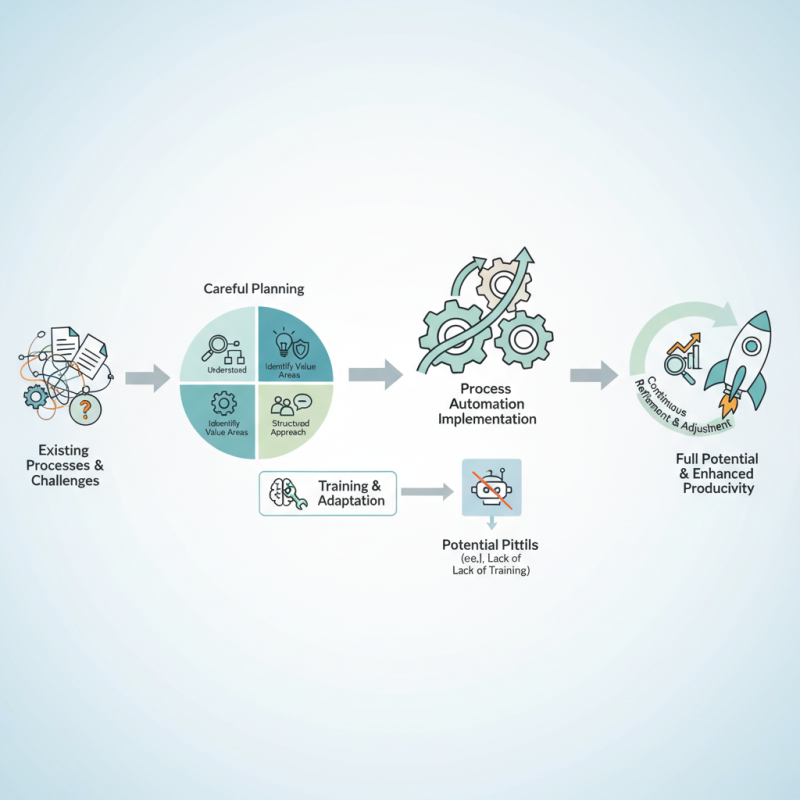
In today's fast-paced business landscape, organizations are increasingly turning to process automation technology. This innovative approach streamlines operations and enhances productivity. However, implementing it effectively requires careful planning. Many businesses face challenges in adoption. They often underestimate the complexities involved.
Consider a company that introduced process automation technology without proper training. Employees felt overwhelmed and confused. Productivity plummeted instead of improving. This example illustrates the importance of a structured approach. A thorough understanding of existing processes is crucial. It's essential to identify areas where automation can truly add value.
Even with the best intentions, errors can arise. Some processes may not translate well to automation. Companies must be willing to reassess their workflows. Adapting to this change takes time and patience. It’s vital to gather feedback and refine the technology continuously. Only through reflection and adjustment can organizations harness the full potential of process automation technology.
Process automation technology is transforming industries by streamlining operations. Companies are increasingly adopting this technology to enhance efficiency. A recent report suggests that businesses utilizing process automation can achieve up to 30% cost reductions. Improved accuracy is another significant benefit, as automation reduces the chances of human error. This leads to better service delivery and customer satisfaction.
Despite the advantages, challenges remain. Implementing automation technologies can be complex. Many organizations face difficulties in integration with existing systems. A survey indicated that nearly 40% of companies struggled with alignment between automated processes and business objectives. This gap can hinder the return on investment. Continuous evaluation is crucial to adapt and refine automated processes.
Moreover, workforce adaptation is essential. Employees may resist changes brought about by automation. Regular training and open communication can alleviate fears and help staff embrace new technologies. Understanding the balance between automation and human involvement is key. It ensures processes remain effective while maintaining a skilled workforce.
| Dimension | Description | Benefits | Implementation Tips |
|---|---|---|---|
| Workflow Optimization | Streamlining repetitive tasks to reduce time and effort. | Increased efficiency, reduced operational costs. | Analyze current workflows; identify bottlenecks and optimize processes. |
| Data Accuracy | Automating data entry and processing to minimize human errors. | Improved data integrity and reliability. | Utilize data validation rules during automation setup. |
| Customer Experience | Enhancing customer interactions through timely responses and personalized service. | Higher customer satisfaction and retention rates. | Implement CRM systems with automation capabilities for faster service. |
| Compliance Management | Ensuring processes adhere to regulations through automated tracking and reporting. | Reduced risk of non-compliance and associated penalties. | Integrate compliance checks into automation workflows. |
| Scalability | Easily adjusting automated processes to accommodate business growth. | Flexibility to scale operations without excessive added costs. | Choose automation tools that support modular expansion. |
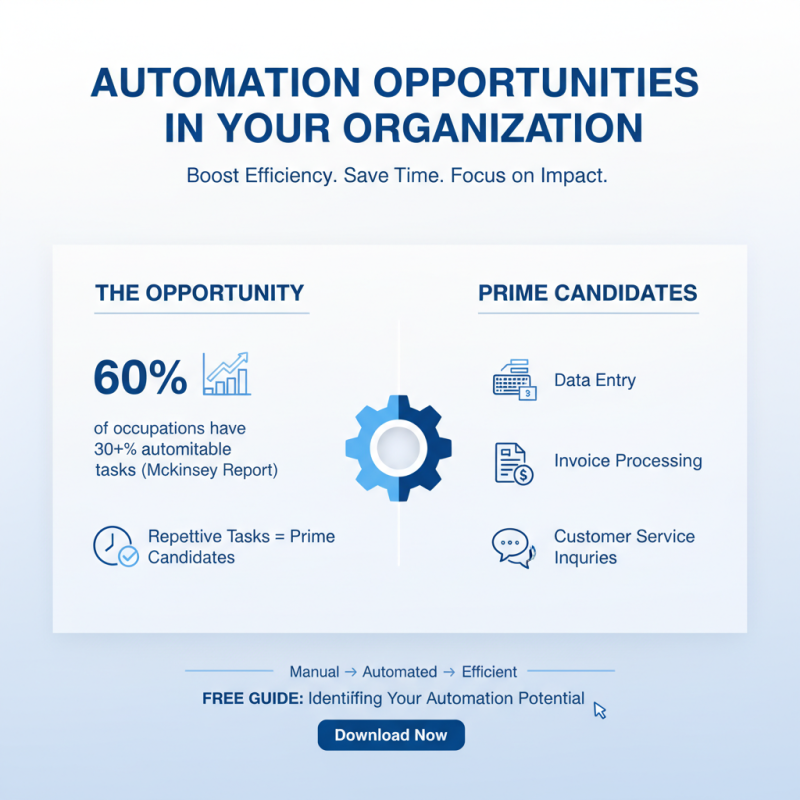
Identifying processes suitable for automation is crucial for any organization aiming to improve efficiency. According to a recent report by McKinsey, 60% of occupations have at least 30% of tasks that could potentially be automated. This statistic reflects a significant opportunity. Look closely at repetitive tasks. Data entry, invoice processing, and customer service inquiries are often prime candidates. These functions usually consume valuable employee time with minimal impact on outcomes.
However, not all processes are suitable for automation. Organizations should evaluate their workflows critically. Only 25% of processes may achieve meaningful efficiency gains through automation, as noted by Deloitte. Some complex tasks require human judgment, which technology cannot replicate. Therefore, careful consideration is vital. Engaging cross-functional teams helps in understanding which tasks can be automated effectively. Conversations about potential automation often reveal unexpected challenges and gaps in workflows that need addressing.
Finally, constant evaluation is necessary. Implementing automation technology does not equate to a "set it and forget it" mentality. Processes change, and so do needs. Regularly revisiting automated tasks ensures that the organization adapts to new challenges and maintains efficiency. Failure to reflect on automation outcomes can lead to stagnation. Embrace the journey of refining automated processes for sustained success.
Selecting the right automation tools and software is crucial for effective process automation. Start by defining your specific needs. Identify the tasks that need automation. Consider factors like integration capabilities, scalability, and user-friendliness. This precision will guide you in making a sound choice.
Tip: Create a checklist of essential features. This will simplify your decision-making process.
Next, research available tools. Many options exist, each with unique features. Read reviews and case studies to understand their performance. Don’t hesitate to reach out to other users. Their insights can reveal potential pitfalls you might encounter.
Tip: Consider starting with a trial version. This helps you gain firsthand experience before fully committing.
Finally, think about support and training. Effective automation requires ongoing learning. Choose tools that offer comprehensive customer support and user training. This will minimize frustration and ensure smoother implementation. Remember, there may be a learning curve. Embrace it, as it can lead to better automation strategies in the long run.
Implementing automation technology can be a game-changer for many businesses. However, success requires careful planning and the right strategies. Here are some best practices to consider.
Start by identifying specific processes that could benefit from automation. Focus on repetitive tasks that consume time and resources. For example, data entry often takes up valuable hours. Streamlining this can showcase immediate results.
Tip: Involve your team early. Their insights can highlight pain points. Employees know the workflow best, and their buy-in is crucial.
Next, ensure you have the right tools in place. Evaluate different options and select technology that fits your needs. Don't rush this decision—taking time to compare can save future headaches.
Tip: Test on a smaller scale before full implementation. A pilot program can reveal unexpected challenges and necessary adjustments.
After deploying automation, monitor its performance closely. Be prepared to embrace feedback. Automation is not a "set it and forget it" solution. Continuous improvements are essential for long-term benefits.
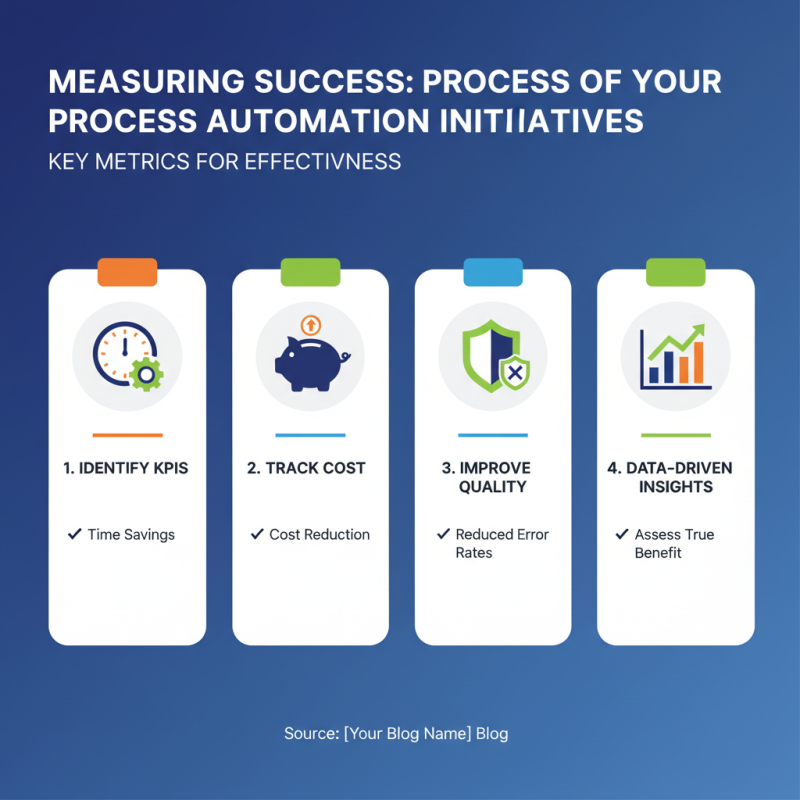
Measuring the success of process automation initiatives is crucial. You need clear metrics to determine their effectiveness. Start by identifying key performance indicators (KPIs) relevant to your processes. These could include time savings, cost reductions, and error rates. Clear data helps in assessing if automation is truly beneficial.
Tips: Regular audits can help. Review metrics monthly to identify trends. Adjust your strategies based on these insights. Don’t shy away from failures; they offer learning opportunities. Each misstep can guide you toward better automation strategies.
Consider employee feedback. Are they satisfied with the new processes? Their insights can reveal hidden issues. Sometimes, what seems efficient on paper may not feel efficient in practice. Listen to their concerns and adjust your approach.
Collect qualitative and quantitative data. A balanced view will help you refine your automation. Regular check-ins can lead to improvements. Not every initiative will be a roaring success. Evaluate and pivot if needed. Embrace the iterative nature of process automation.
| Cookie | Duration | Description |
|---|---|---|
| cookielawinfo-checkbox-analytics | 11 months | This cookie is set by GDPR Cookie Consent plugin. The cookie is used to store the user consent for the cookies in the category "Analytics". |
| cookielawinfo-checkbox-functional | 11 months | The cookie is set by GDPR cookie consent to record the user consent for the cookies in the category "Functional". |
| cookielawinfo-checkbox-necessary | 11 months | This cookie is set by GDPR Cookie Consent plugin. The cookies is used to store the user consent for the cookies in the category "Necessary". |
| cookielawinfo-checkbox-others | 11 months | This cookie is set by GDPR Cookie Consent plugin. The cookie is used to store the user consent for the cookies in the category "Other. |
| cookielawinfo-checkbox-performance | 11 months | This cookie is set by GDPR Cookie Consent plugin. The cookie is used to store the user consent for the cookies in the category "Performance". |
| viewed_cookie_policy | 11 months | The cookie is set by the GDPR Cookie Consent plugin and is used to store whether or not user has consented to the use of cookies. It does not store any personal data. |