
Choosing the right Hex Socket Bolt is not simply a matter of matching diameter and thread size. The fastener must suit the joint, load, environment, and installation method. A bolt used inside a vibrating machine faces different demands from one installed in a dry indoor bracket.
Dr. John H. Bickford, a respected authority on bolted-joint engineering, stated, “The bolt is the heart of the joint.” This principle remains practical. The bolt creates clamping force, but the entire joint must retain that force during service. A high-strength Hex Socket Bolt can still fail when the thread engagement is too short, the washer is unsuitable, or tightening is inconsistent.
Look closely at the details.
Start with the material and strength grade. Stainless steel may resist corrosion, while alloy steel often provides greater tensile strength. Check the thread pitch, shank length, head height, and socket clearance before ordering. In a narrow machine housing, a socket head may fit where a hex-head bolt cannot. However, restricted access can also make accurate torque control difficult.
Real workshop experience teaches an uncomfortable lesson: specifications alone do not guarantee performance. Surface damage, contaminated threads, or an underestimated joint load can change the result. I have seen a correctly sized bolt loosen because the mating surfaces were poorly prepared. That possibility deserves attention.
This guide explains how to compare Hex Socket Bolt options, verify quality, and avoid common selection mistakes. It also encourages a final review of the actual assembly, not just the drawing. Small details matter.
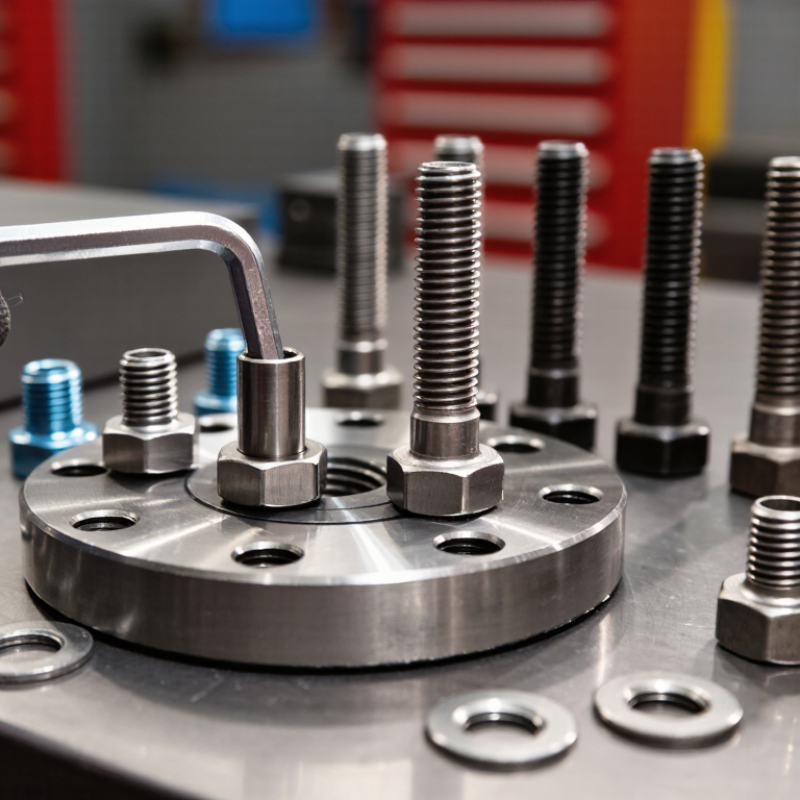
Identify the hex socket bolt type before comparing size or price. A socket head cap screw has a tall cylindrical head and suits compact, high-strength assemblies. A button head offers a lower profile and smoother appearance, but usually provides less drive engagement. A countersunk socket screw sits flush with the surface. It requires a correctly prepared countersink, not a simple drilled hole.
Check the intended application carefully. Measure the thread diameter, pitch, and length under the head. Match the material to the environment: alloy steel supports demanding loads, while stainless steel helps resist moisture and staining. For outdoor equipment, inspect the surrounding metals too. Dissimilar metals can create corrosion problems. A thread gauge and caliper reduce guesswork. They are simple tools, but often ignored.
Consider clearance, vibration, access, and tightening method. A deep hex socket needs enough tool engagement to prevent rounding. Use the specified torque, especially when clamping thin parts or soft alloys. A locking feature may help in vibrating assemblies, but it should not replace proper thread engagement. A common mistake is choosing a bolt by head style alone. I have seen neat-looking fasteners fail because the thread length was wrong. Recheck the drawing, test-fit one piece, and inspect the seating surface before ordering in quantity.
How to Choose the Right Hex Socket Bolt?
Choosing a hex socket bolt starts with size, thread specification, and length. Measure the hole diameter, not the old bolt head. A bolt marked M8 has an 8 mm nominal thread diameter, but its pitch still matters. M8 × 1.25 is coarse, while M8 × 1.0 is fine. They are not interchangeable. ISO 261 defines preferred metric thread dimensions, while ISO 965-1 controls tolerance principles. Check both before ordering.
Length is measured from beneath the head to the bolt tip. Include washers, brackets, and the expected thread engagement. For many steel joints, engineers commonly target engagement near one bolt diameter, but softer materials may require more. NASA-RP-1228, the Fastener Design Manual, stresses that engagement and preload strongly affect joint reliability. Do not guess. A bolt that bottoms out can feel tight without clamping the parts. That mistake is easy to miss.
Strength class must match the joint. Under ISO 898-1, a property class 10.9 bolt has a nominal tensile strength of 1,000 MPa and a nominal yield strength of 900 MPa. These figures do not make it suitable for every assembly. Material compatibility, corrosion exposure, temperature, and tightening method also matter. My practical check is simple: confirm diameter, pitch, grip length, and class together. I have seen correct-looking bolts fail because the length was chosen by head size alone. Recheck the joint drawing. Small details decide performance.
Match the nominal diameter and thread pitch first, then select the required bolt length based on the total joint thickness and required thread engagement.
Reference basis: ISO 4762 standard dimensions for hexagon socket head cap screws; all chart values are in millimetres.
Material choice should follow the environment, load, and service temperature. Carbon steel suits dry indoor assemblies and controlled costs. Stainless steel performs better around moisture, chemicals, and coastal air. However, stainless steel is not automatically stronger. A 304 fastener may resist common moisture, while 316 offers better chloride resistance. Mixing dissimilar metals can create galvanic corrosion, especially near saltwater.
The NACE IMPACT study estimated global corrosion costs at about US$2.5 trillion annually, equal to 3.4% of global gross domestic product. That figure makes material selection more than a purchasing detail.
Grade determines how much clamping force the bolt can safely provide. Common metric classes include 8.8, 10.9, and 12.9 under ISO 898-1. Higher strength can reduce bolt size, but it also increases embrittlement risk after certain coatings. Zinc-plated high-strength bolts need controlled processing and inspection.
A coating that passes a salt-spray test may still perform poorly in real service. This is an area where specifications often look stronger than field evidence. Check torque, preload, temperature, and chemical exposure together. Do not select by tensile strength alone.
Tips: Confirm the required property class before ordering. Match the nut grade to the bolt. For outdoor or marine use, specify corrosion testing and coating thickness. Use anti-seize only when the joint designer approves it, because lubrication changes torque and preload. Inspect threads for pitting, discoloration, and galling during maintenance.
How to Choose the Right Hex Socket Bolt?
Choosing the correct head style begins with the installation space. A socket cap head suits narrow areas and provides strong seating around the fastener. A button head offers a lower profile, but its rounded shape usually tolerates less driving torque. Use a countersunk head when the bolt must sit flush with the surface. Check the countersink angle carefully. A poor match can leave sharp edges or reduce contact.
The socket drive size must match the available tool and required torque. Do not confuse the internal hex recess with the square drive size of a ratchet socket. Measure the recess across its flats, then select a key or bit that fits without rocking. For repeated assembly, choose a deeper recess and a larger head when space allows. This reduces rounding and improves tool engagement. I have seen clean-looking bolts fail because the tool was slightly undersized.
Tips: Test one bolt before ordering a full quantity. Place the head against the actual material and check nearby walls, washers, and access angles. Keep the tool straight while tightening. A snug fit is not always enough; dirt, paint, or burrs can change engagement. Torque requirements also vary with material, thread condition, and lubrication, so verify the engineering specification rather than relying on feel.
Choosing the right hex socket bolt starts with the load, not the socket size. Separate tensile, shear, impact, and fatigue loads before selecting a diameter. Include joint separation and vibration in the calculation. ISO 898-1:2013 lists minimum tensile strengths of 800 MPa for property class 8.8 and 1,000 MPa for class 10.9. These values are not allowable loads. Reduce them using safety factors, temperature limits, and thread-area calculations. VDI 2230 provides a recognized method for checking preload, stiffness, and fatigue behavior.
Fit requires equal attention. Match the bolt diameter, thread pitch, length, and mating material. ISO 4762 covers hexagon socket head screws, while ISO 965 defines metric thread tolerances. Check whether the bolt engages fully without bottoming in a blind hole. Confirm clearance-hole dimensions against ISO 273. The socket must seat deeply and squarely. A shallow or worn tool can damage the recess before the joint reaches preload. Small details matter.
Installation conditions can change the result dramatically. VDI 2230 uses the torque relationship T = KFd, where K represents friction. If K changes from 0.10 to 0.20, calculated preload nearly doubles at the same torque. Lubricant, coating, surface finish, and tool calibration all affect K. NASA Fastener Design Manual, NASA-RP-1228, also treats torque as an indirect preload method. I have seen sound calculations fail after an unrecorded lubricant change. Recheck torque settings, use calibrated tools, and inspect thread engagement. Perfect assumptions are rare.
| Cookie | Duration | Description |
|---|---|---|
| cookielawinfo-checkbox-analytics | 11 months | This cookie is set by GDPR Cookie Consent plugin. The cookie is used to store the user consent for the cookies in the category "Analytics". |
| cookielawinfo-checkbox-functional | 11 months | The cookie is set by GDPR cookie consent to record the user consent for the cookies in the category "Functional". |
| cookielawinfo-checkbox-necessary | 11 months | This cookie is set by GDPR Cookie Consent plugin. The cookies is used to store the user consent for the cookies in the category "Necessary". |
| cookielawinfo-checkbox-others | 11 months | This cookie is set by GDPR Cookie Consent plugin. The cookie is used to store the user consent for the cookies in the category "Other. |
| cookielawinfo-checkbox-performance | 11 months | This cookie is set by GDPR Cookie Consent plugin. The cookie is used to store the user consent for the cookies in the category "Performance". |
| viewed_cookie_policy | 11 months | The cookie is set by the GDPR Cookie Consent plugin and is used to store whether or not user has consented to the use of cookies. It does not store any personal data. |