10 Essential Tips for Automation Manufacturing Success
In today's fast-paced world, automation manufacturing is becoming crucial for success. Companies must adapt to stay competitive. The shift toward automation can improve efficiency and reduce costs. However, the journey is not without challenges. Many organizations struggle with integrating new technologies, leading to frustration and setbacks.
To achieve success in automation manufacturing, it's essential to understand key strategies. Effective planning, skilled personnel, and continuous improvement are vital. Each step matters, from selecting the right tools to training your workforce. Improving processes can reveal hidden inefficiencies. Failing to address these can hinder growth.
Every company’s path is different. Learning from mistakes is part of the process. Embracing change is necessary for success in automation manufacturing. With the right approach, organizations can thrive in the age of automation. Balancing innovation with practical application leads to sustainable growth.
Understanding Automation in Manufacturing Processes
In today’s manufacturing landscape, automation plays a crucial role. Understanding how it integrates into processes can enhance efficiency and productivity. Automation is not just about machines; it involves a shift in mindset and operations. It is essential to train employees in new technologies. Many companies overlook this, which can lead to resistance and fear surrounding automation.
One key tip for success is to start small. Implement automation in a single area first. This allows for testing and adjustments before a wider rollout. Measure results carefully. Involving team members early can foster acceptance. Their insights often reveal unforeseen challenges. Regular assessments of these automated systems are vital. They must align with evolving business goals.
Another aspect is communication. Transparency about the changes can alleviate concerns. Workers need to understand the benefits they bring to their roles. Monitor the human element. Automation may decrease certain tasks but can create new opportunities. Balancing these changes requires ongoing discussions. Do not assume everyone will adapt seamlessly. Emphasizing the continuous feedback loop can ensure smoother transitions and promote a culture of improvement.
Automation Manufacturing Success Metrics
This bar chart displays key performance metrics relevant to automation in manufacturing processes. It highlights the importance of production efficiency, error rates, downtime, labor costs, and quality control as crucial factors for achieving success in automation manufacturing.
Identifying Key Technologies for Successful Automation
In automation manufacturing, selecting the right technologies is crucial for success. One key technology is robotics. Robots can take on repetitive tasks. This not only enhances precision but also boosts productivity. However, businesses often overlook how important it is to choose the right type of robot for specific tasks. A single misstep can lead to inefficiencies and increased costs.
Another critical area is data analytics. Companies can gather vast amounts of data from their processes. But without effective interpretation, this data is useless. Implementing real-time analytics helps in making informed decisions. Yet, many manufacturers struggle with data overload. They need to focus on actionable insights, not just numbers. Failing to do so can result in missed opportunities for optimization.
Finally, integrating different technologies must be seamless. Often, companies face challenges when linking old systems with new tech. Ensuring compatibility requires thoughtful planning. If ignored, it may lead to disruptions in workflow. A well-planned integration boosts efficiency significantly but requires constant review and adjustments. In the race towards automation, staying flexible and adaptive is essential.
Implementing Effective Quality Control Measures
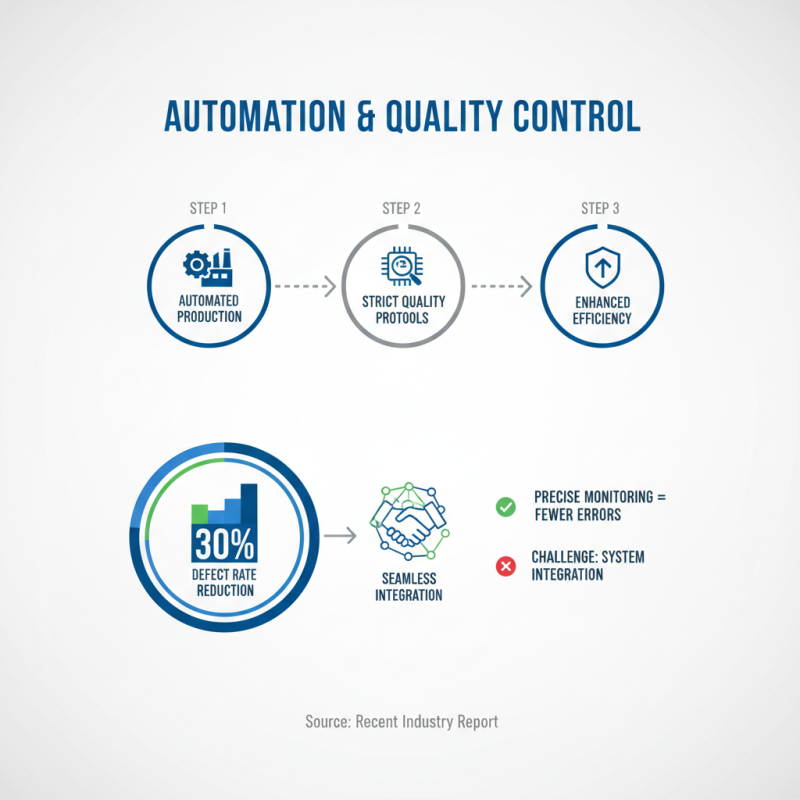
In the realm of automation manufacturing, quality control measures are pivotal. A recent report indicates that companies implementing strict quality protocols can reduce defect rates by up to 30%. This emphasizes the importance of precise monitoring and evaluation. Automation technologies, when combined with effective quality checks, can enhance efficiency. However, many organizations still struggle to integrate these systems seamlessly.
Regular inspections and real-time data analysis are essential. For instance, using sensors to monitor production lines can pinpoint issues before they escalate. Implementing automated visual inspection systems has shown a 15% decrease in production errors. Yet, many manufacturers report gaps in data utilization. They collect information but fail to analyze it effectively.
Incorporating employee feedback into quality control processes can also create significant improvements. Workers on the floor often see issues before they are documented. Fostering an open communication culture can lead to quicker resolutions and innovations. While technology plays a significant role, human oversight remains crucial. Balancing machine efficiency and employee input is vital for long-term success in automated manufacturing.
Training Workforce for an Automated Environment
Automation manufacturing is transforming the industry. The shift to smart factories demands a skilled workforce. A recent report by the World Economic Forum suggests that 40% of workers will need reskilling by 2025. Companies must recognize this challenge and act accordingly. Training programs should be specific and hands-on.
Use simulations and virtual reality for effective learning. These methods can increase engagement and skill retention. A study found that immersive training can improve retention rates by up to 75%. Additionally, fostering a culture of continuous learning is essential. Employees should feel empowered to upskill. Create a learning environment that encourages curiosity.
Yet, it's important not to overlook employee feedback. Workers often have insights on the training process. Ignoring their input can lead to incomplete learning experiences. Automation is complex, and so are the skills needed. Tailor training to address gaps in knowledge and confidence. Automation success is as much about people as it is about technology.
Continuously Evaluating and Optimizing Automation Systems
In automation manufacturing, continuously evaluating and optimizing systems is crucial. Regular assessments help identify weaknesses that may hinder performance. Monitoring system outputs can reveal patterns, allowing teams to address inefficiencies promptly. Every detail counts. Small errors in programming can lead to larger issues down the line. A single glitch might cause production delays that affect the whole operation.
Feeding back insights into the system can spur improvements. Workers should be encouraged to report any anomalies they observe during operations. Their firsthand experience is invaluable. However, sometimes teams overlook minor issues. Not addressing these can result in missed opportunities for optimization. Revisiting old processes could unearth potential upgrades that had been ignored for too long.
Data analysis is essential for refining automation systems. Historical data provides a benchmark for current performance. Companies might think a system is running smoothly, but hidden inefficiencies can linger. Regular training sessions can prepare staff for new technologies and methods. Embracing change is vital for sustainability. Each step forward requires reflection and a willingness to adapt.