
Choosing Tps Sensors for global sourcing is not simply a price comparison. It is a reliability decision made across suppliers, climates, vehicle platforms, and service networks. A sensor may look identical in a catalog, yet its signal stability can differ after months of vibration, heat, oil exposure, or connector corrosion. Small details matter, including housing material, output voltage range, terminal plating, calibration method, and batch traceability.
Automotive electronics sourcing consultant Elena Marquez states, “A low unit price means little when one unstable signal creates repeated field failures.” Her observation reflects a practical sourcing reality. Buyers need evidence, not attractive specifications alone. Review ISO 9001 systems, incoming inspection records, endurance-test results, and corrective-action history. Ask suppliers to provide samples from normal production, not specially selected units. Then compare them under realistic conditions.
The process is rarely perfect. A supplier may pass laboratory tests but perform poorly in humid markets. Another may offer excellent quality but lack flexible production capacity. That tension requires careful judgment. Tps Sensors should be evaluated through technical fit, supplier experience, documentation quality, and total ownership cost. Consider warranty exposure, replacement logistics, engineering support, and regional compliance requirements. Field feedback also deserves attention. Mechanics often notice connector looseness or delayed response before a formal failure report appears.
A strong global sourcing strategy remains cautious. It validates assumptions, records weaknesses, and keeps qualified alternatives available. That approach takes longer. It usually costs less later.
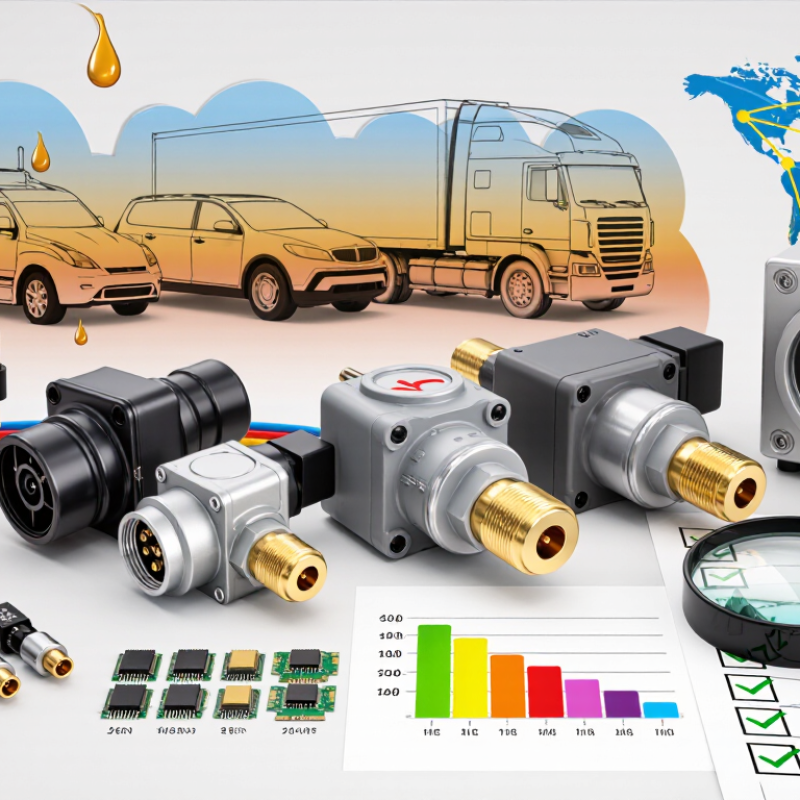
Choosing a TPS sensor starts with its operating principle, not its catalog price.
A contact potentiometric sensor moves a wiper across a resistive track, producing a voltage proportional to throttle angle. It is simple and economical, but mechanical wear can create signal noise over time. A Hall-effect TPS uses a magnet and sensing element without physical contact. This reduces friction and supports longer service life. Inductive designs also avoid contact, using changes in magnetic fields to detect position. They can perform well in harsh environments, though their electronics may increase sourcing costs.
According to the 2024 MarketsandMarkets Automotive Sensors report, the automotive sensor market may grow from about USD 28.1 billion in 2024 to USD 43.1 billion by 2029.
That growth increases supplier choices, but not every supplier offers equal traceability. One detail is easy to miss. Ask for angle accuracy, output redundancy, response time, temperature range, and ingress protection data. Compare these results with ISO 16750 environmental testing and IATF 16949 quality controls. In global sourcing, connector compatibility and diagnostic fault behavior matter as much as sensor accuracy. A dual-channel output can improve safety monitoring, but it adds validation work. A lower-cost contact design may still be suitable for stable applications. I would not assume the newest technology is always better. Sample testing under vibration, humidity, thermal cycling, and repeated movement can reveal weaknesses that datasheets hide. Market forecasts guide planning, not final approval.
Vehicle identification must come before supplier comparison. Record the model year, engine code, fuel system, transmission, and throttle design. A cable-operated throttle may need a different TPS than an electronic throttle body. Check connector shape, mounting holes, shaft rotation, and output voltage range. Small differences can cause unstable idle or delayed response.
Scale matters. OICA reported 93.5 million motor vehicles were produced worldwide in 2023. That volume includes many regional engine and calibration variations. One sensor specification rarely fits every market.
ACEA’s Vehicles on European Roads 2024 report counted about 249 million cars on EU roads in 2022, showing why replacement applications require careful fleet mapping. Do not rely on a vehicle name alone.
Test the real application. Measure closed-throttle voltage, full-throttle voltage, resistance change, and signal smoothness under heat and vibration. Confirm compatibility with the engine control unit, not just physical fit. A common sourcing mistake is approving samples at room temperature only. It looks efficient, but field failures often appear after repeated thermal cycles. I would also question catalog data that lacks tolerance values, sealing information, or end-of-line test records. Better documentation may cost more upfront. It usually reduces returns and uncertain troubleshooting.
How to Choose TPS Sensors for Global Sourcing?
When sourcing throttle position sensors globally, compare electrical specifications before reviewing price. Check the supply voltage, output range, resistance curve, and signal direction. A sensor may produce 0.5–4.5 volts, while another uses a different range. That small difference can trigger ECU errors. Confirm whether the system requires a potentiometric or Hall-effect design. Response time matters during rapid throttle movement. So does signal linearity.
Mechanical compatibility deserves equal attention. Measure the shaft profile, rotation angle, mounting holes, and connector position. A connector that looks similar may use a different pinout. Always request wiring diagrams and mating samples. Check operating temperature, vibration resistance, sealing level, and electromagnetic performance. Standards such as ISO 16750 and CISPR 25 can guide environmental and emissions testing, but certificates alone do not prove system compatibility.
Test under real conditions.
In sourcing projects, I compare supplier data with vehicle-side measurements. Cold starts, heat soak, moisture, and repeated cycling can reveal unstable signals. I have seen a technically impressive sample fail because its return spring felt too stiff. Another passed bench testing but caused calibration drift after thermal cycling. No checklist is perfect. Leave space for pilot testing, tolerance review, and software calibration. Regional production may also change connectors or control units, so the sensor should be validated against every intended application, not only one reference assembly.
Typical electrical values for common analog throttle position sensor designs. These are representative, not universal specifications.
Both designs commonly use a nominal 5 V supply and a roughly 0.5–4.5 V signal range. Before sourcing, confirm the required pinout, connector, mounting geometry, signal direction, and ECU-specific transfer curve against the vehicle specification.
How to Choose TPS Sensors for Global Sourcing?
Selecting a global TPS sensor supplier requires more than comparing prices and delivery dates. In supplier reviews, I examine production records, inspection methods, and corrective-action history. A reliable supplier should explain how each sensor moves from incoming materials to final testing. Ask for process flow charts, batch records, and sample inspection reports. Their answers should be specific, not polished but empty.
Quality systems matter every day. Look for ISO 9001 certification, controlled engineering changes, and clear calibration procedures. For automotive applications, IATF 16949 can indicate stronger process discipline, but certification alone proves little. Visit the facility when possible. Watch operators test voltage output, connector fit, and resistance at different temperatures. Small details often reveal large risks. I once found that a supplier had excellent documents, but weak lot traceability. That experience still influences my audits.
Tips: Request recent certificates and verify their scope and validity. Compare audit results with actual factory practices. Test pilot samples under vibration, heat, moisture, and repeated operation. Keep written acceptance criteria. Do not accept vague promises. Global sourcing also needs stable communication, local regulatory awareness, and backup production plans. Some suppliers may resist deeper questions. That is a warning, though not always a failure. Recheck assumptions before signing.
| Evaluation Area | What to Evaluate | Evidence to Request | Practical Acceptance Check | Global Sourcing Consideration |
|---|---|---|---|---|
| Product specification fit | Confirm sensor type, output signal, operating range, connector, mounting geometry, and environmental limits against the application requirements. | Controlled datasheet, dimensional drawing, interface definition, and revision history. | Check every critical parameter against the approved drawing and system-level requirements; resolve deviations in writing before sampling. | Use the same controlled specification and revision across all candidate suppliers. |
| Output and accuracy | Assess output behavior, linearity, repeatability, hysteresis, resolution, and diagnostic or fault behavior where applicable. | Test method, sample test reports, tolerance limits, and calibration details where relevant. | Compare measured results with application-specific limits over the specified operating range; do not assume one universal TPS tolerance. | Confirm that test equipment, units, and reporting formats are consistent between supplier sites. |
| Environmental durability | Review temperature, vibration, shock, moisture, contamination, and chemical exposure capability as required by the intended installation. | Validation plan, test reports, sample configuration, and stated test conditions. | Verify that tests match the product configuration and customer requirements; distinguish qualification testing from routine production testing. | Check whether validation is performed at the proposed production site or by a qualified external laboratory. |
| Automotive quality system | Assess whether the supplier’s quality system is suitable for the intended automotive supply chain and customer requirements. | Current IATF 16949 certificate where applicable, certificate scope, issuing body, and relevant customer-specific requirements. | Verify certificate validity and confirm that the actual manufacturing location and product-related processes are within scope. | A certificate alone does not establish product suitability; review site-level performance and controls. |
| General quality management | For suppliers not certified to an automotive-specific system, review the quality framework and any customer-required gap controls. | Current ISO 9001 certificate where applicable, quality manual or process overview, and audit results. | Check scope, site coverage, corrective-action process, document control, and evidence of product-specific process control. | Confirm the certification is issued by an appropriately accredited certification body and applies to the supplying site. |
| Production process control | Review process flow, failure-mode analysis, control plan, inspection strategy, and controls for special or critical characteristics. | Process flow diagram, PFMEA, control plan, inspection records, and process-change procedure. | Trace each critical product requirement to a process control or verification method; agree on change notification before production. | Ensure these controls are consistent across factories and subcontracted operations. |
| Part approval and launch readiness | Determine how the supplier supports planning, validation, and production-part approval required by the customer. | APQP timing plan where required, capability or validation results, and PPAP submission level agreed with the customer. | Agree on submission scope and approval authority before launch; PPAP requirements are customer-specific, not automatically identical for every program. | Allow time for samples, cross-border shipping, reviews, and corrective actions in the launch schedule. |
| Measurement capability | Check whether inspection and test equipment is suitable, calibrated, and maintained for the measurements being reported. | Calibration records, measurement-system analysis where required, and laboratory accreditation details if an accredited test is specified. | Confirm measurement methods and uncertainty are appropriate to the tolerance and intended decision. | ISO/IEC 17025 accreditation is relevant when laboratory competence is required; verify the accredited scope covers the specific test. |
| Material and regulatory compliance | Identify substance restrictions, declarations, and market-specific obligations applicable to the product and its destination. | Material declarations and supporting documentation for applicable requirements, such as RoHS or REACH obligations. | Confirm applicability with the customer and destination market; check that declarations cover the supplied part and current revision. | Requirements depend on product classification, market, and use; request updates when materials or regulations change. |
| Traceability and corrective action | Evaluate lot or serial traceability, record retention, complaint response, containment, root-cause analysis, and corrective-action verification. | Sample traceability records, escalation procedure, corrective-action reports, and retention policy. | Run a traceability exercise from finished goods to relevant production and inspection records; agree on response timelines contractually. | Check that records can be retrieved promptly across languages, time zones, and supplier locations. |
| Supply continuity and logistics | Review capacity, lead-time assumptions, single-source dependencies, business-continuity planning, packaging, and shipping terms. | Capacity plan, lead-time breakdown, continuity plan, packaging specification, and agreed delivery terms. | Validate capacity against the forecast and confirm escalation plans for disruptions, shortages, and transport delays. | Include customs, duties, transit variability, local holidays, and regional disruption risk in total landed-cost planning. |
| Supplier comparison and decision | Compare candidates using consistent technical, quality, compliance, delivery, and commercial criteria. | Completed audit checklist, approved sample results, risk assessment, and total-cost quotation. | Use documented pass/fail gates for mandatory requirements, then score qualified candidates against program priorities. | Do not select on unit price alone; include validation effort, logistics, quality risk, and continuity in the decision. |
Note: Certification and regulatory requirements depend on the customer, product design, application, and destination market. Verify current requirements before supplier approval.
For global sourcing, compare the landed cost, not just the unit price. Include tooling, inspection, freight, duties, and the cost of rejected batches. For throttle-position sensors, confirm connector keying, mounting dimensions, output curve, and operating temperature against the target application. A cheaper sensor is no saving if its signal falls outside the control unit’s expected range.
Lead times need a buffer. The World Bank’s 2023 Logistics Performance Index reports an average of 44 days for goods to move from an exporter’s warehouse to an importer’s warehouse. That is an average, not a promise. UNCTAD’s Review of Maritime Transport 2024 notes that shipping carries over 80% of global trade by volume, so port congestion can affect even small components. Ask suppliers for dispatch windows, packaging details, and shipment tracking before approving a forecast. Keep a modest reserve near the assembly site where delays would stop production.
Test samples under realistic vibration, heat, and repeated movement. Record the test conditions and keep traceable lot samples; a passing prototype does not prove every production batch is consistent. Ask how the supplier manages component substitutions and capacity during demand spikes. Some answers may sound reassuring but lack evidence. Request dated test records and a clear notification process. Second-source approval can also take longer than expected, especially when connectors or calibration differ. That gap deserves attention.
| Cookie | Duration | Description |
|---|---|---|
| cookielawinfo-checkbox-analytics | 11 months | This cookie is set by GDPR Cookie Consent plugin. The cookie is used to store the user consent for the cookies in the category "Analytics". |
| cookielawinfo-checkbox-functional | 11 months | The cookie is set by GDPR cookie consent to record the user consent for the cookies in the category "Functional". |
| cookielawinfo-checkbox-necessary | 11 months | This cookie is set by GDPR Cookie Consent plugin. The cookies is used to store the user consent for the cookies in the category "Necessary". |
| cookielawinfo-checkbox-others | 11 months | This cookie is set by GDPR Cookie Consent plugin. The cookie is used to store the user consent for the cookies in the category "Other. |
| cookielawinfo-checkbox-performance | 11 months | This cookie is set by GDPR Cookie Consent plugin. The cookie is used to store the user consent for the cookies in the category "Performance". |
| viewed_cookie_policy | 11 months | The cookie is set by the GDPR Cookie Consent plugin and is used to store whether or not user has consented to the use of cookies. It does not store any personal data. |