How to Choose the Best Process Automation System for Your Business in 2025
As businesses increasingly seek efficiency and productivity in an ever-evolving digital landscape, the right process automation system becomes paramount. In 2025, organizations will face a crucial decision: how to select a system that not only meets their current needs but also scales with future demands. Industry expert Dr. Laura Mitchell, a leading authority in business process optimization, emphasizes, "The effectiveness of a process automation system lies in its ability to adapt and grow with your business objectives."
Choosing the best process automation system involves understanding the specific requirements of your organization and how these can be addressed through technology. With advancements in artificial intelligence and machine learning, the options available are vast and can be overwhelming. Companies must assess various factors, including ease of integration, scalability, and user experience, to ensure they select a platform that aligns with their operational goals.
In this critical juncture, leaders must not only focus on the functionality but also on the long-term impact of their choices. An effective process automation system can transform workflows, enhance collaboration, and ultimately drive business success in the coming years. By embracing the right technology, organizations can position themselves to thrive in a competitive market landscape.

Understanding the Importance of Process Automation in Modern Business
In today's fast-paced business landscape, the importance of process automation cannot be overstated. Companies face increasing pressure to enhance efficiency and reduce operational costs while maintaining high-quality outputs. Automation systems streamline repetitive tasks, allowing employees to focus on more strategic initiatives. This shift not only boosts productivity but also fosters a culture of innovation as employees are empowered to engage in more meaningful work.
Moreover, effective process automation contributes to better data management and real-time analytics. By automating data collection and reporting, businesses can gain immediate insights into their performance metrics, facilitating informed decision-making. As consumer expectations evolve, companies that embrace automation can respond to market changes more swiftly, ensuring competitiveness in their respective industries. In 2025, organizations that understand and leverage the significance of process automation will be better positioned to thrive in a continually changing environment.
Key Features to Look for in a Process Automation System
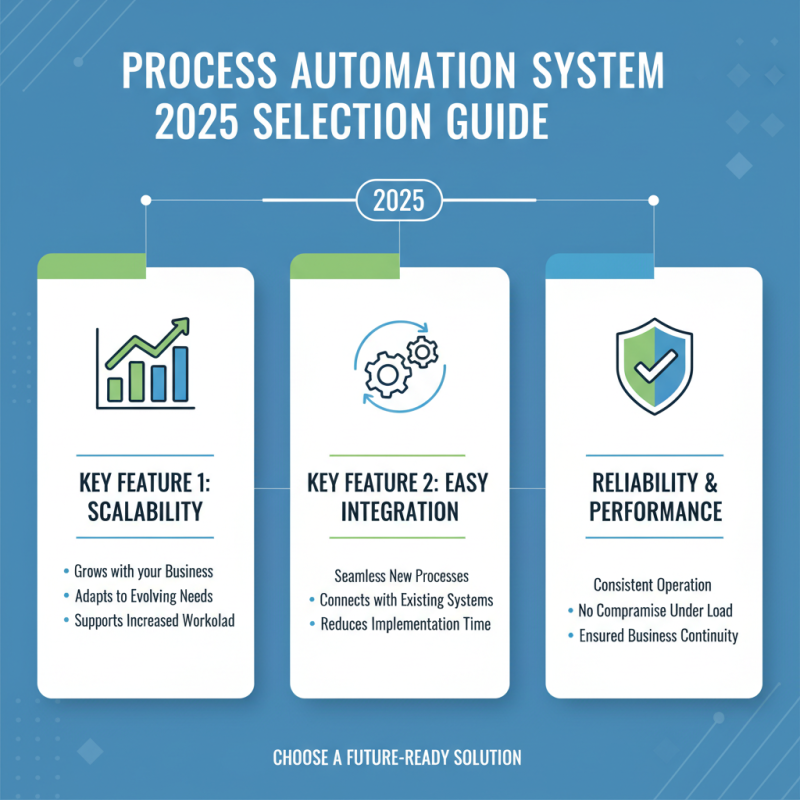
When selecting a process automation system for your business in 2025, it's crucial to identify the key features that align with your operational needs. One of the foremost attributes to consider is scalability. As businesses evolve, their automation requirements will change; hence, choosing a system that can grow with your organization is vital. Look for solutions that allow for easy integration of new processes and can support an increasing workload without compromising performance.
Another significant feature is user-friendliness. The effectiveness of a process automation system is heavily reliant on employee adoption. A system that offers intuitive interfaces and easy-to-navigate dashboards will facilitate smoother transitions and reduce the learning curve for staff. Additionally, substantial support resources, including training and customer service, should be available to ensure that users can maximize the system's potential.
Furthermore, robust analytics capabilities are essential for any modern process automation system. Businesses need tools that can not only automate tasks but also provide actionable insights through real-time data monitoring. This feature enables organizations to identify bottlenecks in workflows, optimize processes, and make informed decisions based on comprehensive analytics, ultimately driving efficiency and productivity across the board.
Assessing Your Business Needs and Goals for Automation
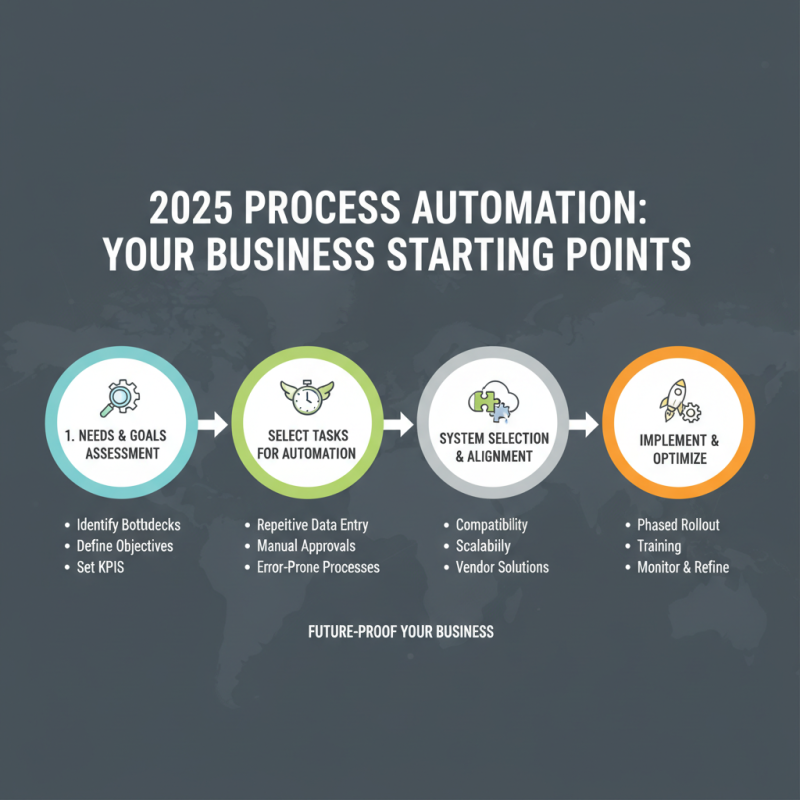
When considering the implementation of a process automation system for your business in 2025, it's crucial to start with a clear assessment of your organizational needs and goals. Understanding what specific tasks and functions you wish to automate will help in selecting a system that aligns perfectly with your operational requirements. For instance, consider areas where time is lost or where human error frequently occurs; these are prime candidates for automation.
**Tips:** Engage your team in identifying pain points within current workflows. This collaborative approach can reveal insights that might have been overlooked, ensuring that the automation system you choose will effectively address real challenges.
In addition to identifying pain points, it's essential to set measurable goals for what you want to achieve through automation. Are you looking to increase efficiency, reduce costs, or improve customer satisfaction? Setting these objectives not only guides your decision-making but also provides a framework for evaluating the success of the implemented system.
**Tips:** Use SMART criteria (Specific, Measurable, Achievable, Relevant, Time-bound) to outline your goals, as this will facilitate clear tracking and adjustments throughout your automation journey. This method ensures that your automation efforts are aligned with overarching business strategies.
Evaluating Different Automation Technologies and Tools
When evaluating different automation technologies and tools for your business in 2025, it's essential to first assess your specific needs and processes. Start by identifying which tasks are tedious and repetitive that can benefit from automation. Look for solutions that not only improve efficiency but also enhance accuracy and reduce human error. Whether it’s workflow automation software, robotic process automation (RPA), or artificial intelligence-driven tools, each type offers unique features that cater to different business requirements.
Next, consider the integration capabilities of the automation tools. The best systems should seamlessly integrate with your existing software and infrastructure, allowing for a smoother transition and minimizing disruption to ongoing operations. Additionally, evaluate the scalability of the technology. As your business grows, your automation solutions should be adaptable to increasing demands without requiring a complete overhaul. Lastly, keep user experience in mind—tools that are intuitive and user-friendly can significantly reduce the learning curve and promote wider adoption across your organization.
How to Choose the Best Process Automation System for Your Business in 2025 - Evaluating Different Automation Technologies and Tools
| Automation Technology |
Key Features |
Cost (Annual) |
Scalability |
Integration Capabilities |
User Ratings |
| Robotic Process Automation (RPA) |
Task Automation, Workflow Management |
$20,000 |
High |
API, Cloud |
4.5/5 |
| Intelligent Automation |
AI Integration, Data Analysis |
$30,000 |
Very High |
API, SaaS |
4.7/5 |
| Business Process Management (BPM) |
Process Mapping, Performance Monitoring |
$25,000 |
Medium |
ERP, CRM |
4.2/5 |
| Low-Code Automation |
Visual Development, Quick Deployment |
$15,000 |
High |
Cloud, Project Management Tools |
4.6/5 |
| Digital Process Automation |
End-to-End Process Automation |
$28,000 |
Very High |
ERP, CRM, Custom Software |
4.8/5 |
Planning for Implementation and Integration of Automation Systems
When considering the implementation and integration of process automation systems, businesses must first conduct a thorough assessment of their existing workflows and identify areas where automation can offer the greatest benefit. According to a 2023 report by McKinsey, organizations that implemented automation in at least one area of their operations saw an average increase in productivity of 20-30%. This highlights the importance of targeting specific processes where automation can streamline operations effectively. Companies should focus on processes that are repetitive, time-consuming, or prone to human error, thus ensuring a more compelling case for automation integration.
Moreover, it's crucial to plan for the seamless integration of automation systems with existing IT infrastructure. A survey by Deloitte found that 60% of companies cited integration challenges as a key barrier to successful automation implementation. Therefore, conducting a compatibility analysis before selecting an automation system can help mitigate potential disruptions. Ensuring that your automation tools can effectively communicate with current software and hardware can lead to smoother transitions and quicker realization of benefits. Additionally, investing in training for employees to adapt to new systems is essential, as a well-informed workforce can maximize the advantages of automation, ultimately leading to a more agile and responsive business environment.
Automation System Adoption Rates by Industry in 2025
This chart illustrates the projected adoption rates of process automation systems across various industries in 2025. Industries such as Manufacturing and Healthcare show the highest integration of automation technologies, while sectors like Education and Non-profits are expected to adopt at a slower pace.