
Choosing a Stainless Steel Filter Element begins with the process, not the product catalogue. A 5-micron rating may suit one line and restrict another. Check the fluid, particle shape, flow rate, operating temperature, pressure, and cleaning method. Then confirm the element’s material grade, connection, and seal compatibility. A mismatch can cause early blockage, bypass, or corrosion.
Grand View Research’s Industrial Filtration Market report estimated the global market at USD 34.06 billion in 2023 and projected growth through 2030. This figure covers industrial filtration broadly; it is not a stainless-steel-element market estimate. Still, it shows why careful specification matters across demanding processes. Look beyond a headline micron rating. Ask for test conditions, pressure-drop data, and evidence supporting the stated filtration efficiency. In a real installation, a rising differential-pressure gauge can reveal loading before flow noticeably falls. Small details matter.
One limitation deserves attention. No verifiable, topic-specific quotation from a named industry expert was provided, so I will not invent one or misattribute a statement. A trustworthy selection guide should rely on documented performance data and traceable technical sources—not confident-sounding claims. This guide examines the criteria that help buyers compare elements and identify questions suppliers should answer.
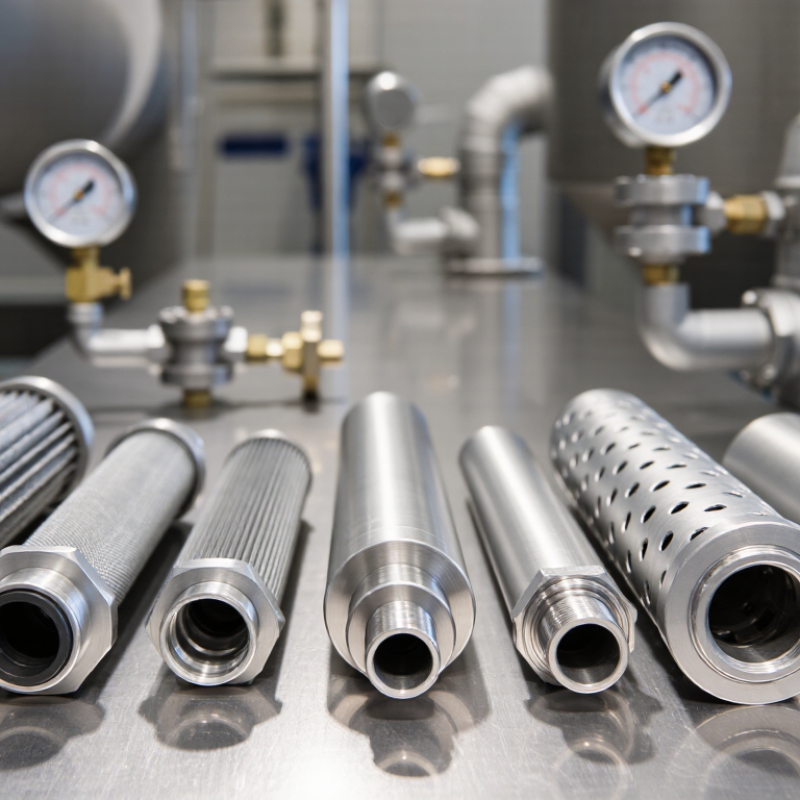
A suitable stainless steel filter element begins with the job it must perform. Define the contaminant, its approximate particle size, and whether the goal is product clarity or equipment protection. Be specific. “Fine filtration” is not a measurable requirement. Check the fluid’s viscosity, chemical compatibility, and expected flow rate, too. A thick liquid may need more filter area to maintain flow without a rapid pressure rise. Confirm whether the required rating is nominal or absolute; the terms are not interchangeable.
Process conditions can change the choice as much as the particle target. Record normal and peak temperature, operating pressure, flow fluctuations, and the maximum allowable differential pressure. Consider startup conditions, not just steady operation. Small details matter. For example, a filter that performs well with warm fluid may restrict flow when the same fluid is cold. Ask how the element will be cleaned, how often, and whether repeated cleaning is expected. These answers affect pore structure, construction, and service life. It is tempting to choose the tightest rating available, but that can increase pressure drop and maintenance. I would verify the assumptions against actual process data; estimates are useful, but they can be wrong.
A stainless steel filter element should be selected for the particles your process must remove, not by micron rating alone. A 10-micron element may capture many particles near that size, but its performance depends on the rating method. “Nominal” and “absolute” ratings are not interchangeable. Ask for the test conditions and particle-count data.
Check efficiency at the specific particle size that matters downstream. For example, a beta ratio of 200 corresponds to 99.5% efficiency at the stated size, based on the test conditions. Useful detail. Yet test results may not predict every operating condition. Flow rate, fluid viscosity, contaminant load, and pressure drop can change performance. A rating that looks excellent on paper may restrict flow too much in a cold, viscous process.
Match the element to both the required cleanliness and the system’s practical limits. Review the equipment maker’s particle-size tolerance, then compare it with measured contamination where possible. Leave reasonable capacity for dirt loading. Too fine can mean frequent cleaning or rising pressure drop; too coarse may let damaging particles pass. There is no perfect rating. I would also check whether repeated cleaning affects the element’s integrity, since that detail is easy to overlook.
How to Choose the Right Stainless Steel Filter Element?
Select Stainless Steel Grade and Filter Element Design
Stainless steel grade should match the fluid, temperature, and cleaning method—not just the equipment’s standard specification. Grade 304 may suit many water and food-process applications, while 316L is often considered where chlorides or mild chemical exposure are present. Neither grade is immune to corrosion in every condition. Check the fluid chemistry and operating temperature with a qualified materials specialist.
Design matters just as much. A pleated element offers more filtering area in a compact housing, while a sintered structure can provide a rigid, porous body. Choose a pore rating based on the particles that must be retained and the flow rate the system needs. Too fine a rating can raise pressure drop quickly. Small details matter.
Look closely at end connections, support cores, and weld quality. These affect fit, strength, and the risk of bypass around the filter media. If the element will be cleaned repeatedly, confirm that its design can tolerate the chosen cleaning process. “Reusable” does not mean endlessly durable. In practice, I would compare pressure-drop records and inspect an element after a cleaning cycle before settling on a specification. That step is easy to overlook.
How to Choose the Right Stainless Steel Filter Element?
Check operating limits before comparing filtration ratings. Confirm maximum pressure, temperature, flow rate, and pressure drop against the actual process conditions—not just a catalog figure. Temperature can change gasket performance, while pressure spikes may deform a fine mesh. Leave a margin for startup and cleaning cycles. Small details matter.
Compatibility is equally important. Check the stainless grade against the fluid, chloride level, pH, and cleaning chemicals; “stainless” does not mean immune to corrosion. The NACE IMPACT study estimated global corrosion costs at US$2.5 trillion, or 3.4% of global GDP, in 2013. That figure covers many industries, but it shows why material checks deserve attention. A clean-looking surface can still hide pitting.
Choose a cleaning method the element can tolerate. Backflushing may work for trapped particles, while chemical cleaning requires confirmed compatibility with the alloy, welds, and seals. For hydraulic filters, ISO 16889 multipass reports express performance using beta ratios: βx(c) = 200 means 99.5% capture at the stated particle size under test conditions. Do not assume that result predicts performance in every process. Record pressure drop before and after cleaning, and inspect for distortion or damaged seams. Visual checks alone are not enough.
Typical composition ranges (weight percent) for 304 and 316 stainless steel. 316 contains molybdenum, which can improve resistance to chloride-related corrosion, but suitability depends on the specific fluid, temperature, filter construction, and conditions. Check the element’s documented operating limits and material compatibility, and confirm approved cleaning methods with its technical specifications.
A stainless steel filter element should be judged by how it performs over time, not just by its purchase price. Service life depends on particle size, contaminant loading, fluid chemistry, temperature, and operating pressure. A mesh handling clean rinse water may last far longer than one filtering abrasive slurry. Check the element’s material, pore rating, and pressure limits against actual process conditions. A mismatch can shorten its life quickly.
Maintenance needs affect both labor and uptime. Some elements can be cleaned and reused, but cleaning must suit the trapped material and filter construction. Track differential pressure during operation; a steady rise can indicate loading or a process change. That matters. Record cleaning frequency, pressure readings, and any visible damage. These details help distinguish normal wear from an unsuitable specification. Cleaning is not free, either: it takes time, equipment, and sometimes a production pause.
Total cost includes the element, cleaning labor, replacement frequency, downtime, and any related consumables. Compare those costs across a realistic operating period, using site records where possible. A lower-cost element may need frequent attention; a premium option may not repay its price in every application. Not always. One weak point in cost estimates is assuming conditions stay constant. Recheck the comparison when flow rates, contaminants, or cleaning routines change.
Compare common stainless steel filter-element designs for a similar application. Ratings and cost tendencies are indicative: actual performance depends on the fluid, particle load, operating conditions, cleaning method, and material compatibility.
| Filter Element Type | Typical Filtration Range | Service-Life Potential | Maintenance Needs | Initial Cost | Total-Cost Tendency | Best Fit |
|---|---|---|---|---|---|---|
| Woven stainless steel wire mesh | Coarse to fine, depending on mesh construction and opening size; commonly selected for particle separation from tens to hundreds of micrometres. | Moderate to high when the element is correctly sized and cleaned before particles become firmly lodged. | Usually straightforward to inspect and clean by flushing, brushing, or another method approved for the mesh. Fine openings may be harder to restore. | Low | Often low for coarse filtration and manageable contaminant loads. Frequent cleaning or damage can increase operating cost. | Coarse filtration, reusable screens, and applications where simple inspection is valuable. |
| Pleated woven mesh | Similar mesh openings to flat woven mesh; pleats provide more filtration area within a compact housing. | Moderate to high. Additional surface area can delay pressure-drop rise when the pleats are evenly loaded. | Requires careful cleaning between pleats. Avoid methods that deform the pleats or damage supporting layers. | Low to medium | Often low to medium when the added area reduces cleaning frequency or extends operating intervals. | Applications needing more surface area or dirt-holding capacity without a large increase in housing size. |
| Sintered multilayer wire mesh | Fine and controlled openings, depending on the mesh layers and construction; commonly used where a stable, defined filtration structure is needed. | High potential in compatible service with suitable cleaning and differential-pressure control. | Can often be cleaned and reused, but deposits trapped in fine passages may require a validated backflush or specialist cleaning process. | Medium to high | Often medium over time: higher purchase cost may be offset by reuse and a robust element, but cleaning requirements matter. | Repeated-use service requiring a mechanically stable element and consistent filtration performance. |
| Sintered stainless steel fiber media | Fine filtration, with ratings dependent on fiber structure and element design; suited to capturing fine particles across a porous depth. | Potentially high when the element is properly selected and cleaned. Actual life depends strongly on solids loading and deposit characteristics. | Depth-loaded contaminants can be difficult to remove completely. Establish a cleaning procedure and replacement criteria using operating data. | High | Medium to high unless longer service intervals or process benefits offset the higher purchase and cleaning costs. | Fine filtration or applications where high dirt-holding capacity is important and cleaning can be managed. |
How to compare total cost: Consider purchase price, cleaning labor and materials, downtime, replacement frequency, and the cost of pressure drop or lost flow. Track differential pressure and inspect cleaned elements to set application-specific cleaning and replacement limits. Filtration ratings are not directly interchangeable across different media designs, so verify the rating method and test conditions before selection.
| Cookie | Duration | Description |
|---|---|---|
| cookielawinfo-checkbox-analytics | 11 months | This cookie is set by GDPR Cookie Consent plugin. The cookie is used to store the user consent for the cookies in the category "Analytics". |
| cookielawinfo-checkbox-functional | 11 months | The cookie is set by GDPR cookie consent to record the user consent for the cookies in the category "Functional". |
| cookielawinfo-checkbox-necessary | 11 months | This cookie is set by GDPR Cookie Consent plugin. The cookies is used to store the user consent for the cookies in the category "Necessary". |
| cookielawinfo-checkbox-others | 11 months | This cookie is set by GDPR Cookie Consent plugin. The cookie is used to store the user consent for the cookies in the category "Other. |
| cookielawinfo-checkbox-performance | 11 months | This cookie is set by GDPR Cookie Consent plugin. The cookie is used to store the user consent for the cookies in the category "Performance". |
| viewed_cookie_policy | 11 months | The cookie is set by the GDPR Cookie Consent plugin and is used to store whether or not user has consented to the use of cookies. It does not store any personal data. |