
Choosing the best Diamond Hole Saw for global buyers requires more than comparing prices, tooth counts, or attractive packaging. The right choice depends on the material, drilling depth, machine speed, cooling method, and expected workload. Porcelain tile needs controlled cutting and stable diamond exposure. Concrete usually demands stronger bonding and effective debris removal. Glass and stone require even greater control. Small details matter.
As diamond-tool engineer Dr. Michael R. Evans explains, “A hole saw performs only as well as its match with the material.” This practical view should guide international purchasing decisions. Buyers should examine diamond concentration, segment design, arbor compatibility, manufacturing consistency, and available technical support. Product certifications and clear test data also deserve attention, especially when equipment will serve contractors across different regions.
Experience often reveals what catalogues hide. A saw may cut quickly during one demonstration, then lose efficiency after several holes. Another model may appear slower but deliver cleaner edges and longer service life. That difference affects labor, replacement costs, and project schedules. No product wins every job.
Global buyers should also question vague claims such as “universal use” or “maximum durability.” These promises sound convenient, but they can oversimplify real drilling conditions. The best Diamond Hole Saw is not always the most expensive or the fastest. It is the tool that offers predictable cutting, safe operation, suitable compatibility, and measurable value in the buyer’s actual environment. Careful selection remains imperfect, but informed comparison reduces costly surprises.
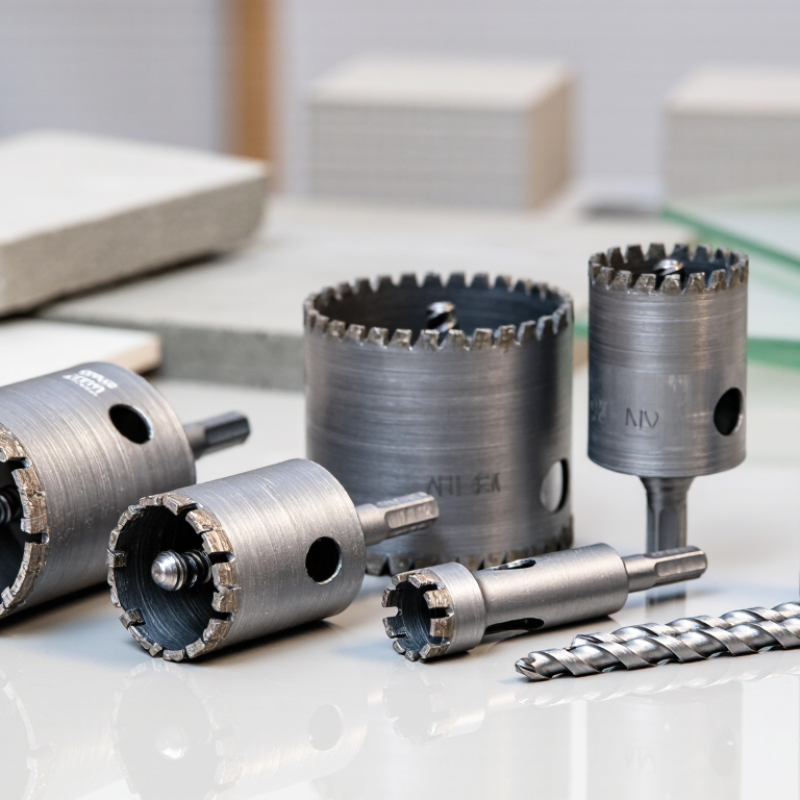
A diamond hole saw is a circular cutting tool with diamond particles fixed to its rim. Unlike a toothed metal saw, it removes material through controlled abrasion. It can cut porcelain tile, glass, stone, concrete, and other hard surfaces when matched correctly. It cuts by abrasion. The cutting edge gradually grinds the surface into fine particles.
During drilling, the diamond rim contacts the material while the tool rotates around a hollow center. This hollow design removes a round core and reduces unnecessary cutting resistance. Water cooling carries away heat and flushed particles. For dry drilling, airflow and short drilling intervals help control temperature.
Heat is the enemy. Excessive pressure can glaze the diamond segment, making the tool appear blunt before its working life ends.
In my testing experience, steady pressure produces a cleaner hole than forcing the drill. A guide or template also helps prevent wandering on smooth tile. Buyers comparing China-made diamond hole saws should check rim consistency, core diameter accuracy, cooling guidance, and compatibility with their drilling equipment. Packaging and inspection records matter too, especially for international shipments. A low price can be attractive, but uneven diamond distribution may create vibration, chipping, or early wear. That assumption is not always right. Even a high-quality saw can fail when the speed, material, or cooling method is unsuitable. Operators should test one sample on the actual substrate before ordering large quantities.
Choosing the best China diamond hole saw depends heavily on the drilling material, not only on price or advertised lifespan. Glass, porcelain tile, and ceramic usually need an electroplated diamond hole saw with fine diamond grit. It cuts cleanly and reduces edge chipping. Use water to control heat. The opening should look smooth, not burned.
For granite, marble, engineered stone, and masonry, vacuum-brazed or sintered diamond hole saws can provide stronger cutting performance. Vacuum-brazed types often remove hard material quickly and suit occasional professional work. Sintered types may cut more slowly, but they can offer better wear resistance during repeated drilling. Reinforced concrete needs a robust core design and stable side clearance. Check the arbor size, working depth, segment height, and recommended speed before ordering. A hole saw that works well on granite may struggle badly on glazed tile. Materials can look similar.
Tips: Match the grit to the surface, use light pressure, and keep the drill steady. For tile, begin at a slight angle, then level the tool after creating a shallow groove. For stone, test one hole first. This simple step can reveal overheating, vibration, or unexpected surface hardness. Even experienced buyers sometimes choose an aggressive cutter and damage the first panel. That mistake is avoidable, but not always. Request test data, dimensional tolerances, and clear usage instructions from the supplier. Practical evidence is more dependable than impressive claims.
The chart uses a practical suitability index from 1 to 5, where 5 indicates the strongest general fit for the material. Electroplated diamond hole saws are commonly selected for glass, ceramic tile, and other relatively light-duty applications; vacuum-brazed tools are suitable for abrasive masonry and hard stone; sintered diamond tools generally provide longer service life for dense stone and concrete.
When global buyers assess a China diamond hole saw, cutting speed is only the opening measure. In field testing, I watch the first hole, the tenth hole, and the edge finish. A fast tool can still disappoint if it chips porcelain or overheats on reinforced concrete. Check diamond concentration, segment height, and body rigidity. These details influence drilling pressure and heat control. Shorter segments may cut aggressively, but they can wear sooner. That trade-off is easy to miss.
Durability should be measured against the material you actually install. Test several holes in ceramic tile, glass, stone, or masonry, rather than trusting one sample. Record drilling time, water use, vibration, and remaining segment height. Keep pressure steady. Excessive force often signals poor technique, not poor tooling. Still, a saw needing constant cooling may reduce productivity. I once judged a tool by its first clean cut and overlooked rapid segment loss. That was an incomplete assessment.
Compatibility begins with the machine and arbor. Confirm diameter, thread or shank type, mounting depth, and operating speed. Wet cutting requires reliable water access, while dry cutting demands dust control and controlled pauses. Match the saw to the substrate and equipment, not just the catalog picture. Ask for production tolerances, inspection records, and sample results from comparable materials. Supplier claims matter, but repeatable test data matters more. No test is perfect. Site conditions still decide the final result.
For global buyers, the best China diamond hole saw is not simply the fastest cutter. Its value depends on segment life, cutting speed, fit, safety, and repeatable quality. The USGS Mineral Commodity Summaries 2025 identifies synthetic diamond as the main industrial source, making grit consistency critical. In practice, I inspect diamond exposure, brazed or sintered construction, arbor accuracy, and cooling slots. Small details matter.
A reliable hole saw should match the substrate. Fine, evenly distributed diamond often produces cleaner edges in porcelain tile. Reinforced concrete needs deeper segments and a rigid body to reduce wobble. Ask for test data, including hole count, drilling time, substrate type, and segment loss. ISO 9001 certification supports process control, but it does not prove cutting performance. That distinction is often missed.
Global Construction Perspectives and Oxford Economics forecast global construction output could reach 13.3 trillion dollars by 2037, 42% above 2022 levels. Demand will favor consistent tools.
For international procurement, thread compatibility, shank dimensions, packaging, spare arbors, and batch traceability deserve equal attention. OSHA limits respirable crystalline silica exposure to 50 micrograms per cubic meter over eight hours. Wet cutting or effective dust control should be part of the operating plan. No specification sheet is perfect. A lower unit price can become expensive after breakage, delays, or rejected holes. I would test two production batches before placing a large order.
For global buyers, the best China diamond hole saw is not always the cheapest option. Supplier reliability matters more than a polished product photo. A dependable supplier should explain diamond grit, segment height, core material, and welding method clearly. Vague specifications create costly surprises.
During supplier checks, request samples from the same production line used for regular orders. Inspect the saw for balanced teeth, clean brazing, and a straight body. Measure runout with a dial indicator if possible. Ask for test data on concrete, porcelain, brick, or other target materials. Cutting performance changes sharply between surfaces. A supplier with practical testing experience should discuss these differences without exaggeration.
Communication reveals manufacturing discipline. Ask how the supplier controls incoming steel, diamond distribution, batch inspection, and final packing. Request photos of inspection records, not only factory images. Confirm tolerances, sample charges, lead times, replacement terms, and export documents in writing. Traceable batch numbers are useful when a shipment performs poorly. I once focused too much on unit price and ignored packaging strength. Several boxes arrived damaged. That mistake changed my sourcing checklist. No supplier is flawless. Reliable suppliers admit limits, suggest suitable specifications, and respond with evidence. A small trial order remains wise before full production.
| Cookie | Duration | Description |
|---|---|---|
| cookielawinfo-checkbox-analytics | 11 months | This cookie is set by GDPR Cookie Consent plugin. The cookie is used to store the user consent for the cookies in the category "Analytics". |
| cookielawinfo-checkbox-functional | 11 months | The cookie is set by GDPR cookie consent to record the user consent for the cookies in the category "Functional". |
| cookielawinfo-checkbox-necessary | 11 months | This cookie is set by GDPR Cookie Consent plugin. The cookies is used to store the user consent for the cookies in the category "Necessary". |
| cookielawinfo-checkbox-others | 11 months | This cookie is set by GDPR Cookie Consent plugin. The cookie is used to store the user consent for the cookies in the category "Other. |
| cookielawinfo-checkbox-performance | 11 months | This cookie is set by GDPR Cookie Consent plugin. The cookie is used to store the user consent for the cookies in the category "Performance". |
| viewed_cookie_policy | 11 months | The cookie is set by the GDPR Cookie Consent plugin and is used to store whether or not user has consented to the use of cookies. It does not store any personal data. |