Discover the Best Automatic Systems in China for Global Buyers?
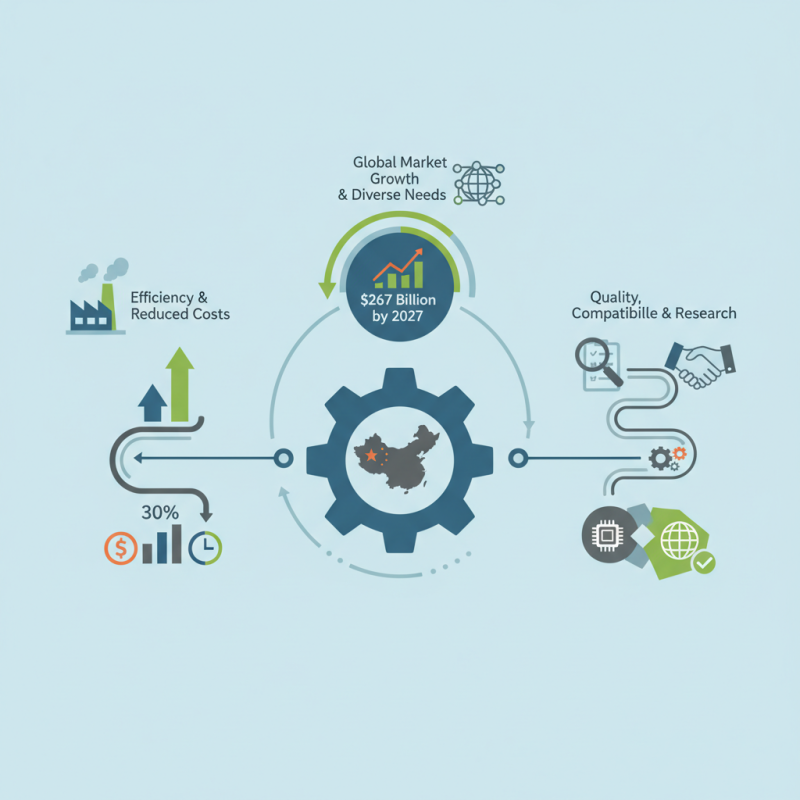
China has emerged as a global leader in developing automatic systems. These systems enhance efficiency and reduce labor costs across various industries. According to a report by McKinsey, automation can boost productivity by up to 30% in manufacturing. This has captured the attention of global buyers, seeking innovative solutions.
As industries evolve, the demand for advanced automatic systems continues to rise. The global market for automation is projected to reach $267 billion by 2027, as highlighted by a recent MarketsandMarkets report. Chinese manufacturers excel in providing cost-effective and reliable automatic systems that cater to diverse market needs. However, buyers must navigate a crowded marketplace, ensuring they choose systems that align with their technical requirements.
Despite the impressive growth, challenges persist. Quality control and technological compatibility are critical issues. Not every automatic system meets international standards, which can lead to operational setbacks. Thus, global buyers are encouraged to conduct thorough research and seek expert insights when sourcing these solutions. Understanding local manufacturing capabilities will pave the way for effective partnerships.
Overview of Automatic Systems in China's Market
The automatic systems market in China has witnessed substantial growth in recent years. As per a report by the China Automation Federation, the market is expected to reach approximately $280 billion by 2025. This growth reflects the increasing demand for efficient manufacturing and smart technologies. Industrial automation has been propelled by advancements in AI and machine learning. These trends indicate a shift towards integrated solutions in various sectors.
Tips: Focus on partnerships with local suppliers. Understanding regional needs can enhance efficiency and reduce costs.
Moreover, China's investment in R&D plays a vital role. According to the National Bureau of Statistics, spending in this area reached $65 billion last year. However, challenges persist. Many companies struggle with workforce training to manage sophisticated systems. Adapting to rapid technological changes can create uncertainty. Highlighting user-friendly interfaces is essential to address this gap.
Tips: Prioritize training programs. Empower your workforce to embrace automation technology effectively.
Key Industries Utilizing Automatic Systems in China
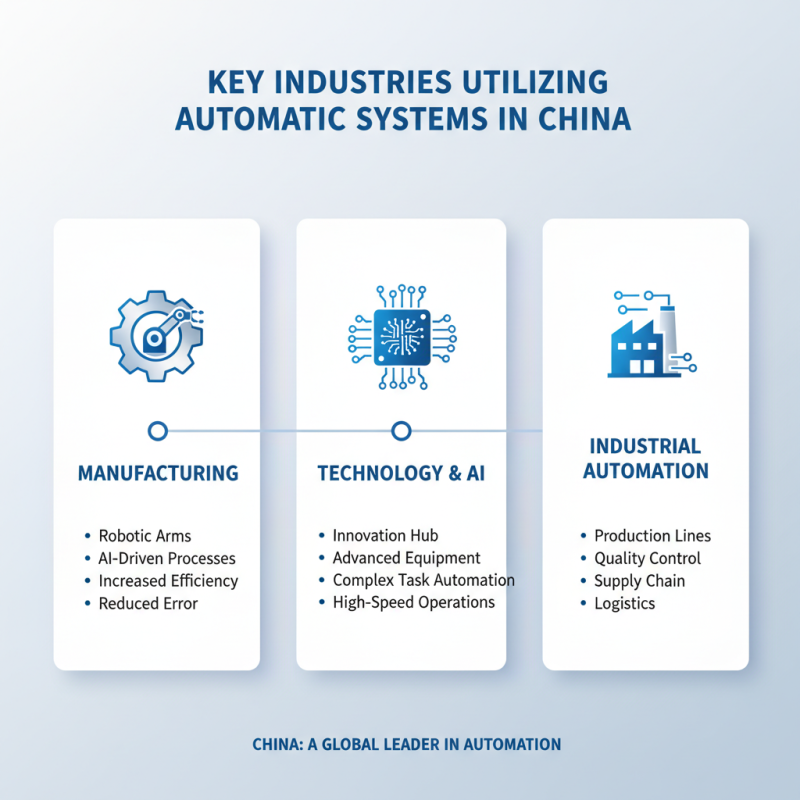
China has emerged as a leader in automatic systems, driving innovation across various industries. Manufacturing is one of the primary sectors harnessing automation. Factories utilize robotic arms and AI-driven processes, increasing efficiency and reducing human error. Equipment is now more advanced, with systems capable of performing complex tasks at high speed.
Logistics is another industry witnessing transformation through automation. Automated warehouses optimize storage and retrieval processes, lowering operational costs. Drone delivery systems are also gaining traction, improving last-mile logistics. These advancements not only streamline operations but also create new job opportunities that require specialized skills.
Tips: When exploring automatic systems, consider scalability. Look for solutions that can grow with your business. Additionally, invest in training for your team to maximize the benefits of new technologies. Another tip is to prioritize integration; seamless connectivity with existing systems can prevent costly disruptions. As industries evolve, the need for reliable automatic solutions becomes even more crucial.
Top Automatic System Manufacturers in China
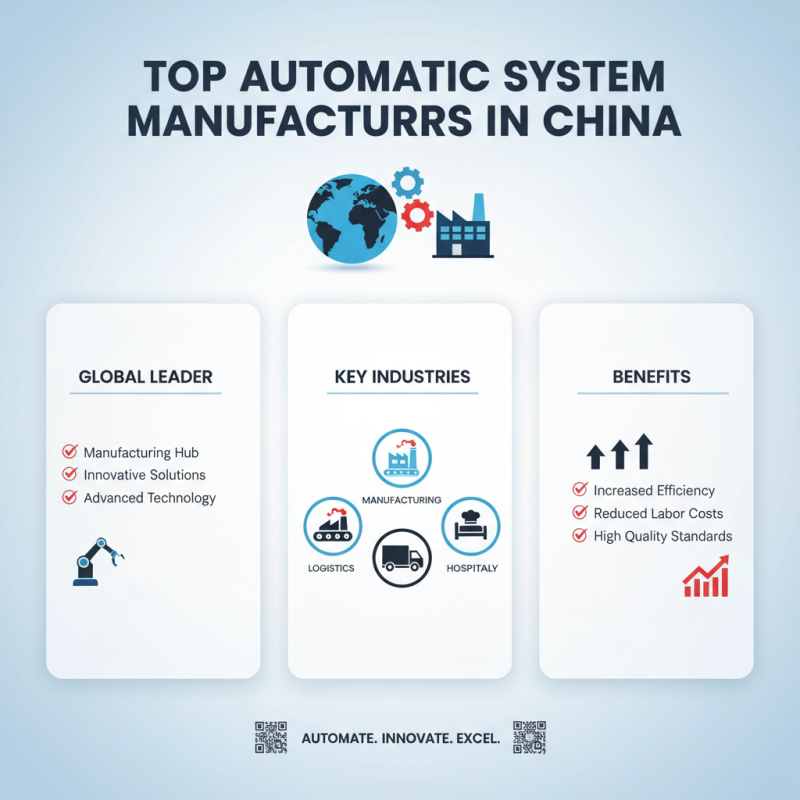
China has become a global leader in manufacturing automatic systems. Numerous companies specialize in creating innovative automated solutions. These systems are essential for various industries, including manufacturing, logistics, and hospitality. They enhance efficiency and reduce labor costs while maintaining high standards of quality.
Many top manufacturers focus on robotics, conveyor belts, and automated assembly lines. These technologies streamline production processes. However, not every company delivers equally trustworthy systems. Some emerging manufacturers may lack proper certifications or quality controls. This can lead to operational challenges and unexpected downtime for buyers.
When selecting an automatic system, buyers should consider reliability and support. Researching a company's experience and client feedback is vital. Some manufacturers excel in product offerings but may struggle with customer service. A balanced assessment will ensure making an informed choice. Investing time in due diligence pays off in the long run, even when options feel overwhelming.
Evaluation Criteria for Global Buyers of Automatic Systems
When considering automatic systems from China, global buyers must evaluate several key criteria. Functionality is vital. The system should effectively meet specific needs, whether it's assembly, packaging, or automation. Buyers should assess the technology’s adaptability as markets evolve. Compatibility with existing systems is also crucial to ensure smooth integration.
Reliability is another critical factor. Automatic systems should show consistent performance over time. Robustness affects long-term operational costs. Regular maintenance and repairs can add up for businesses, impacting the bottom line. A less robust system might raise questions about long-term sustainability.
Tips for buyers: Always request demonstrations. Witness the system in action. Don't hesitate to ask for case studies or references from previous clients. Feedback can provide invaluable insights regarding performance and support. Finally, compare warranties and service agreements. A strong commitment from the manufacturer can indicate reliable backing when issues arise. Always challenge assumptions: sometimes, the newest technology isn't the best choice for your operation.
Evaluation of Automatic Systems in China
Future Trends in China's Automatic Systems for Global Buyers
In recent years, China's automatic systems have seen significant advancements. This trend is especially noticeable in industries like manufacturing and logistics. According to a report from the International Federation of Robotics, China's robot installations increased by 20% in 2022, reflecting a growing reliance on automation.
Buyers globally should focus on innovations in AI and IoT integration within these systems. The adoption of smart technologies allows for more efficient production processes. In fact, a study by McKinsey & Company predicts that fully automated factories could improve productivity by up to 30%. This is a substantial figure, especially for businesses aiming to stay competitive.
Tip: Look for systems that offer flexibility and scalability. As your business grows, your automation needs may change. Some solutions may lead to over-investment, which can hinder agility. It's essential to assess the long-term value of each system. Balancing immediate needs with future growth potential is critical for success in a constantly evolving market.
Discover the Best Automatic Systems in China for Global Buyers
| Category |
Technology Type |
Application Area |
Year of Introduction |
Future Trends |
| Industrial Automation |
Robotics |
Manufacturing |
2022 |
Increased AI integration |
| Home Automation |
Smart Appliances |
Residential |
2021 |
Emphasis on energy efficiency |
| Logistics Automation |
Automated Guided Vehicles (AGVs) |
Warehousing |
2023 |
Growth in e-commerce delivery solutions |
| Agricultural Automation |
Drones |
Farming |
2020 |
Adoption of precision agriculture |
| Healthcare Automation |
Robotic Surgery |
Hospitals |
2022 |
Improved patient outcomes |