2026 Top Trends in the Automation Industry for Future Growth?
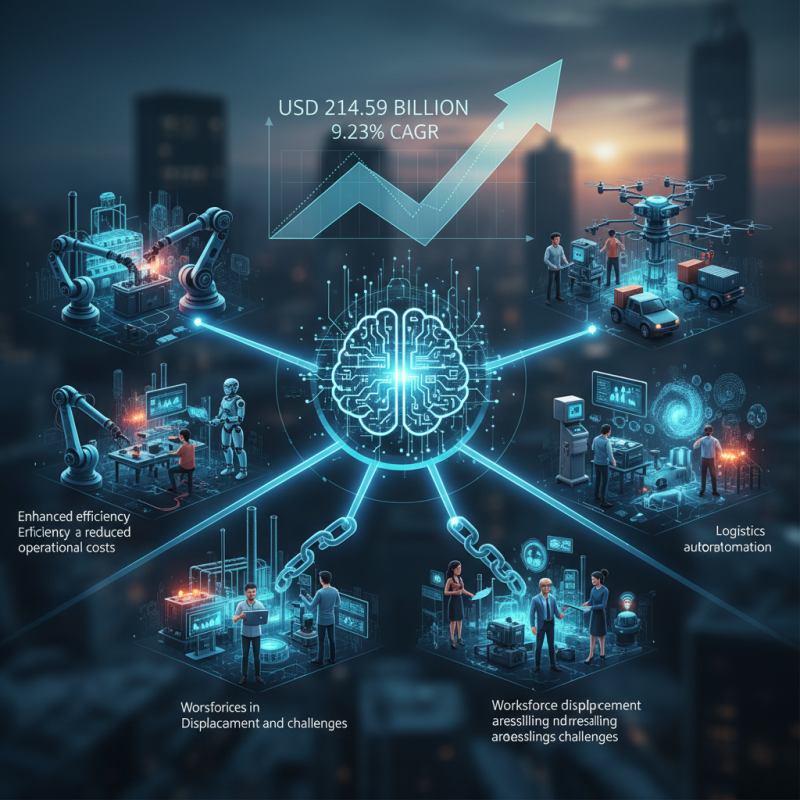
The automation industry is experiencing rapid transformation, driven by technological advancements and shifting market demands. According to a report by Fortune Business Insights, the global automation market size is projected to reach USD 214.59 billion by 2026, growing at a CAGR of 9.23%. This growth signifies the increasing reliance on automation across various sectors, including manufacturing, healthcare, and logistics. Companies are embracing automation to enhance efficiency and reduce operational costs.
Yet, while automation presents numerous benefits, it also raises challenges. The integration of AI and machine learning is not always seamless. Companies often struggle with workforce displacement and the need for reskilling employees. Reports indicate that 47% of jobs could be at risk due to automation. This highlights the importance of thoughtful implementation strategies. The automation industry must carefully navigate these challenges to foster growth responsibly.
As we look toward 2026, staying informed about the latest trends is crucial. Innovations in robotics, predictive analytics, and IoT are set to shape the future landscape. Understanding these trends will help businesses leverage automation effectively. Therefore, it is vital to continuously monitor these changes and adapt to the evolving environment.
Key Innovations Driving Automation in 2026
As we approach 2026, the automation industry is poised for transformative changes driven by key innovations. Increased adoption of artificial intelligence (AI) plays a critical role. AI enhances decision-making processes, allowing machines to learn and adapt quickly. This capability can streamline operations significantly, increasing efficiency across various sectors.
Robotic process automation (RPA) is another pivotal innovation. RPA allows businesses to automate repetitive tasks, freeing up human workers for complex roles. This shift can lead to increased job satisfaction and productivity, but there are challenges. Workers may feel threatened by automation. It’s important for companies to address these concerns with transparent communication and retraining programs.
Moreover, the integration of Internet of Things (IoT) devices is accelerating automation. These devices gather real-time data, enabling smarter operations. However, the reliance on connected devices raises cybersecurity issues. Organizations must prioritize robust security measures to protect their systems. Automation holds great promise but requires careful implementation to ensure a balanced workforce and secure environment.
Impact of Artificial Intelligence on Automation Technologies
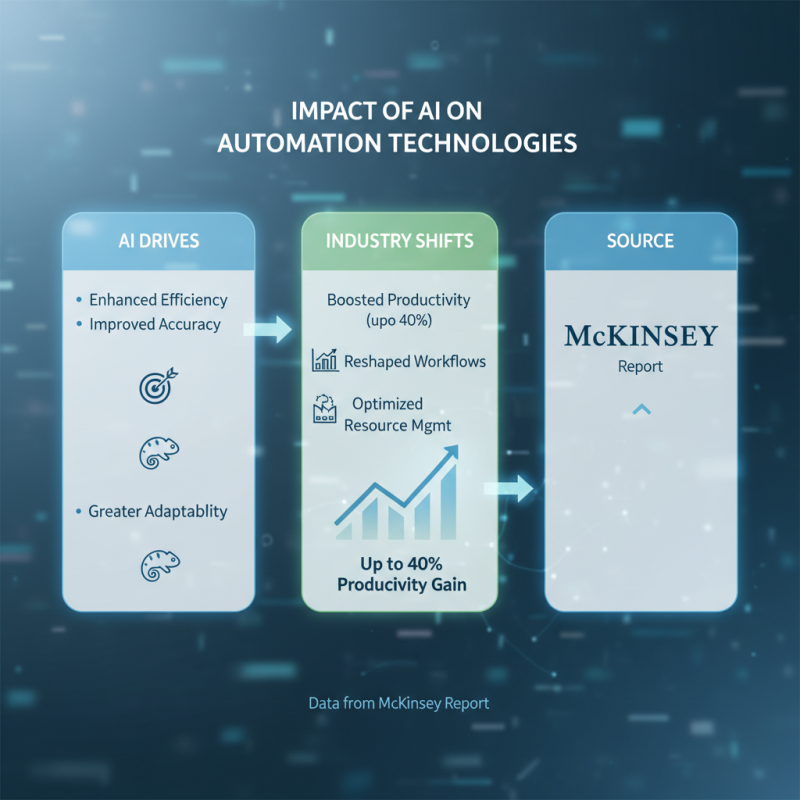
The automation industry is undergoing a significant transformation, largely driven by advancements in artificial intelligence (AI). AI technologies are enhancing efficiency, accuracy, and adaptability within automation systems. According to a recent report by McKinsey, companies that effectively integrate AI in automation can boost productivity by up to 40%. This is reshaping how industries approach their workflows and resource management.
In manufacturing, for example, AI-powered robots are not only performing repetitive tasks but also learning from their mistakes. This capability allows them to improve over time, leading to reduced operational costs. A study by Deloitte indicates that nearly 60% of businesses are now using AI to optimize their automation strategies. As AI evolves, the demand for skilled professionals who can bridge the gap between AI technology and practical application will also rise, highlighting a need for further education and training in this space.
Despite these advancements, challenges remain. The integration of AI in automation often requires significant investment and infrastructure updates. Many companies struggle with this transition due to budget constraints and the need for a cultural shift. It's crucial for businesses to reflect on these barriers, address skills gaps, and plan strategically for future AI integration to fully harness its potential in automation.
Emerging Robotics Trends Shaping the Industry Landscape
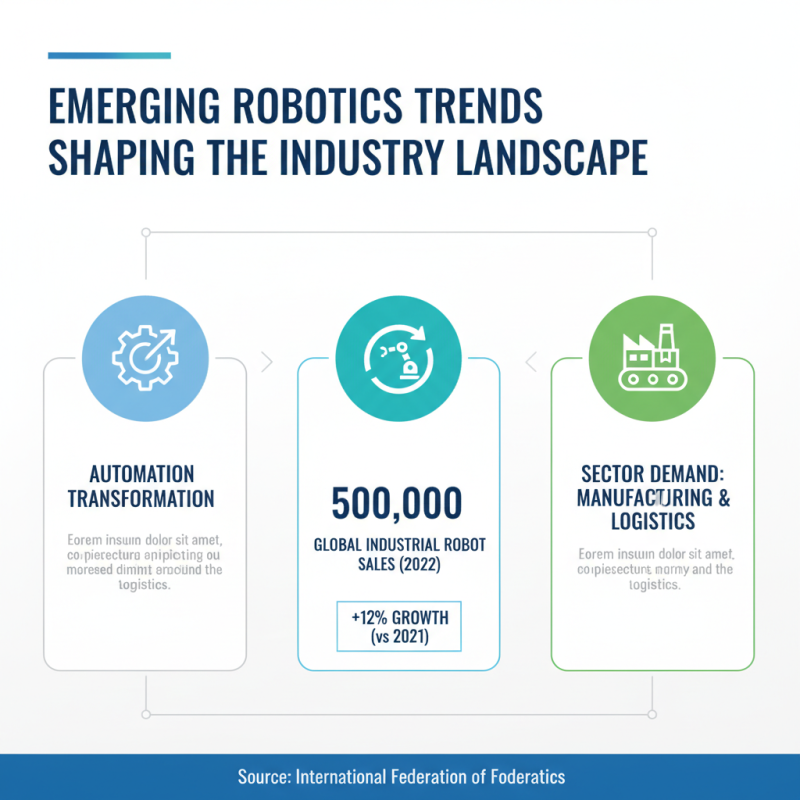
The automation industry is experiencing significant transformation, primarily shaped by emerging robotics trends. As reported by the International Federation of Robotics, the global sales of industrial robots reached nearly 500,000 units in 2022, marking a 12% growth compared to the previous year. This momentum indicates strong demand across various sectors, especially manufacturing and logistics. Companies are increasingly adopting robots to improve efficiency and reduce operational costs.
A notable trend is the rise of collaborative robots, or cobots. These robots are designed to work alongside humans, enhancing productivity while ensuring safety. According to a study by McKinsey, the cobot market is expected to grow at a rate of 25% annually, driven by advancements in AI and machine learning. As businesses embrace automation, questions about workforce implications arise. There is a growing need for workers to adapt to new technologies and develop necessary skills.
Moreover, the integration of AI with robotics is reshaping possibilities. AI-powered robots can learn from their environment, improving performance over time. This raises concerns about reliability and control, emphasizing the need for robust oversight mechanisms. As this field evolves, balancing innovation with ethical considerations will be crucial for sustainable growth in the automation landscape.
Sustainability and Green Technologies in Automation Solutions
Sustainability is becoming a driving force in the automation industry. As businesses face environmental pressures, green technologies are crucial. These innovations help reduce waste and lower energy consumption. For example, advanced sensors can monitor resource usage in real time. This immediate feedback encourages more efficient practices.
Automation solutions are evolving to integrate renewable energy sources. Wind and solar power are increasingly used in system operations. It’s not just about implementing technology; it’s also about finding balance. Many companies struggle with the initial costs. However, long-term savings often outweigh these investments.
Challenges remain, such as recycling older technologies. A push for circular economy principles is necessary. This can promote sustainable practices throughout the lifecycle of equipment. The focus on sustainability in automation is a journey, not a destination. Companies must continue to adapt and innovate for a greener future.
2026 Top Trends in the Automation Industry for Future Growth
| Trend |
Description |
Impact on Sustainability |
Technologies Involved |
| Increased Use of AI & ML |
Automation solutions incorporating AI and machine learning for improved efficiency and decision-making. |
Reducing waste and optimizing resource use leads to sustainable practices. |
AI algorithms, predictive analytics, data processing tools. |
| Robotics and Automation |
Integration of robotics in manufacturing to streamline processes and enhance productivity. |
Minimization of carbon footprint through efficient operation. |
Collaborative robots (cobots), industrial robots. |
| Sustainable Materials |
Usage of eco-friendly materials in automation components and systems. |
Helps in reducing environmental impact and promotes recycling. |
Biodegradable plastics, recycled metals. |
| Edge Computing |
Processing data closer to the source to enhance response times and reduce latency. |
Enables efficient data management and reduces energy consumption. |
IoT devices, edge servers. |
| Circular Economy Practices |
Adopting systems that focus on reuse, remanufacturing, and recycling in automation processes. |
Promotes sustainable business practices and resource management. |
Management software, analytics tools. |
The Role of Data Analytics in Enhancing Automation Efficiency
Data analytics is transforming automation efficiency. Companies are collecting vast amounts of data from various processes. This data holds the key to uncovering inefficiencies. Through analytics, businesses can pinpoint bottlenecks. They can also forecast demand levels accurately.
However, reliance on data can be a double-edged sword. Some organizations may struggle to interpret this data effectively. Inexperienced teams may overlook crucial insights hidden within the numbers. This can lead to misguided decisions that hinder progress.
Moreover, automation tools are continuously evolving. New trends emerge regularly. Keeping up with these trends is essential but challenging. Businesses must foster a culture of adaptability. Emphasizing ongoing training can help teams leverage data analytics. Balancing innovation with practical application is essential for future growth.